
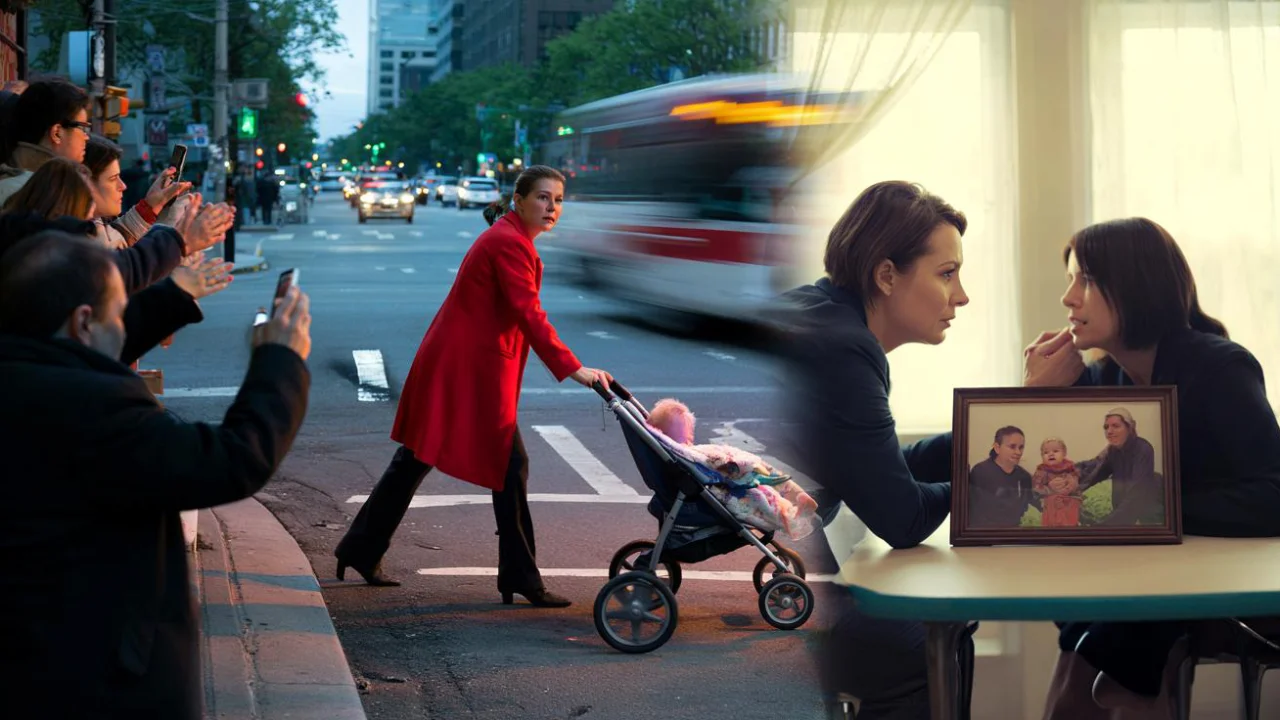
Maria’s hands were still shaking as she pushed open her front door that Tuesday evening. The video was already viral—17 seconds of her yanking a stranger’s child away from an oncoming bus. Her phone buzzed with congratulations from friends, but the house felt cold. Her husband Carlos sat at the kitchen table, staring at his coffee.
“The whole internet thinks you’re a hero,” he said quietly. “But what if you hadn’t made it back to our kids tonight?”
That question hung between them like a weight neither could lift. The woman who saved a stranger’s child suddenly felt like she’d betrayed her own family.
When heroic instincts collide with family loyalty
We tell ourselves we’d always help a child in danger. It’s one of those fundamental human responses—you see a toddler wandering toward traffic, a stroller rolling down a hill, a kid struggling in water. Your body reacts before your brain processes the risk.
But what happens when that split-second decision to save a stranger’s child creates lasting damage in your own home? When the people who love you most start questioning whether they matter less than someone you’ve never met?
Elena Vasquez from Madrid knows this conflict intimately. Last spring, she grabbed a runaway pram seconds before it rolled into busy traffic. The grateful mother hugged her. Strangers called her an angel. Her own husband, Javier, barely spoke to her for weeks.
“I kept thinking about our two kids at home,” Javier explains. “In that moment, she chose someone else’s child over being their mother. That’s what it felt like, anyway.”
The real cost of spontaneous heroism
When someone risks their life to save a stranger’s child, the aftermath rarely makes headlines. The viral video stops rolling, but the family drama continues at kitchen tables and in whispered late-night arguments across the world.
Dr. Sarah Chen, a family therapist in Seattle, sees this pattern regularly. “The hero experiences guilt for causing family distress. The family feels abandoned and unimportant. Nobody knows how to process these competing loyalties.”
Here’s what actually happens after someone saves a stranger’s child:
- Immediate public praise and media attention
- Family members experience delayed shock and fear
- Arguments about “reckless behavior” versus moral duty
- Children may develop separation anxiety
- Marriages face strain over differing values
- Some families seek counseling to process the trauma
The conflict runs deeper than most people expect. It’s not just about one dangerous moment—it’s about fundamental questions of where our deepest obligations lie.
| Public Response | Family Response |
|---|---|
| Praise for heroic action | Fear of losing loved one |
| Media interviews and attention | Feeling neglected or unimportant |
| Community recognition awards | Questioning family priorities |
| Social media celebration | Private arguments and tension |
Why families struggle to heal after heroic acts
Take the Johnson family from Phoenix. When Dave pulled a stranger’s child from a burning car last year, he expected his wife Lisa to be proud. Instead, she spent months in therapy processing her anger.
“I felt selfish for being upset,” Lisa admits. “How do you tell your husband you wish he hadn’t saved a child? But I also kept thinking—what if our daughter had to grow up without her father because he chose someone else’s kid over staying safe for us?”
The psychological toll affects everyone differently. Children of heroes often develop intense fear of their parent leaving. Spouses report feeling like their family’s safety matters less than strangers’ needs.
Relationship counselor Mark Thompson notes, “These families are dealing with survivor guilt, misplaced anger, and competing moral frameworks. The hero feels guilty for causing distress, while family members feel guilty for not celebrating the heroism.”
Recovery requires honest conversations about values, fears, and priorities. Some families grow stronger through the process. Others never fully reconcile the divide between public heroism and private loyalty.
Elena and Javier are still working through their differences eight months later. They’ve started couples therapy, but the tension lingers during school pickup and bedtime routines.
“I don’t regret saving that child,” Elena says. “But I understand now that heroic acts have consequences for everyone you love. I wish someone had prepared us for that part.”
The hidden aftermath of saving lives
Most people who save a stranger’s child report similar family struggles afterward. The initial rush of pride gives way to complex emotions nobody expects.
Mental health professionals increasingly recognize this pattern as a form of secondary trauma. Family members didn’t choose to be part of a life-threatening situation, yet they must process the fear and potential loss just like the hero does.
Consider these common impacts on families:
- Children develop clingy behavior and separation fears
- Spouses question their partner’s judgment and priorities
- Extended family may take sides in arguments
- Some relationships end over fundamental value differences
- Others grow stronger through honest communication
The key factor in family recovery appears to be validation. When heroes acknowledge their family’s fears as legitimate, healing can begin. When they dismiss concerns as selfish, resentment grows.
“My husband needed to hear that I understood his terror,” explains Rachel Martinez, whose split-second decision to grab a stranger’s child from a playground accident led to months of marriage counseling. “Once he felt heard, we could work on the real issues underneath.”
Professional counselors recommend immediate family discussions after any traumatic heroic act. Processing fear, anger, and competing values early prevents long-term relationship damage.
The cruel irony is that saving a stranger’s child—perhaps the most universally praised human act—can quietly destroy the relationships that matter most to the hero. Recognition of this hidden cost might help families prepare for and navigate these impossible emotional territories.
FAQs
Why do families get upset when someone saves a stranger’s child?
It’s not about the child being saved—it’s about the fear of losing their loved one and feeling like their family’s safety wasn’t considered in that crucial moment.
Is it normal for spouses to feel angry about heroic acts?
Absolutely. The anger usually stems from fear, feeling unimportant, or realizing how close they came to losing their partner. These are natural responses to trauma.
How long do family tensions last after someone saves a stranger’s child?
It varies widely. Some families resolve conflicts within weeks through open communication, while others struggle for months or even years without professional help.
Should people think twice before helping children in danger?
No—saving lives is important. But being aware of potential family impacts can help heroes prepare their loved ones for difficult conversations afterward.
Do these family conflicts affect the children involved?
Yes, children often develop anxiety about their parent leaving or getting hurt. They may also feel confused about whether their parent did something right or wrong.
Can couples therapy help after heroic incidents?
Many couples find therapy essential for processing competing emotions and values. Professional guidance helps families validate each other’s fears while maintaining their moral convictions.


