
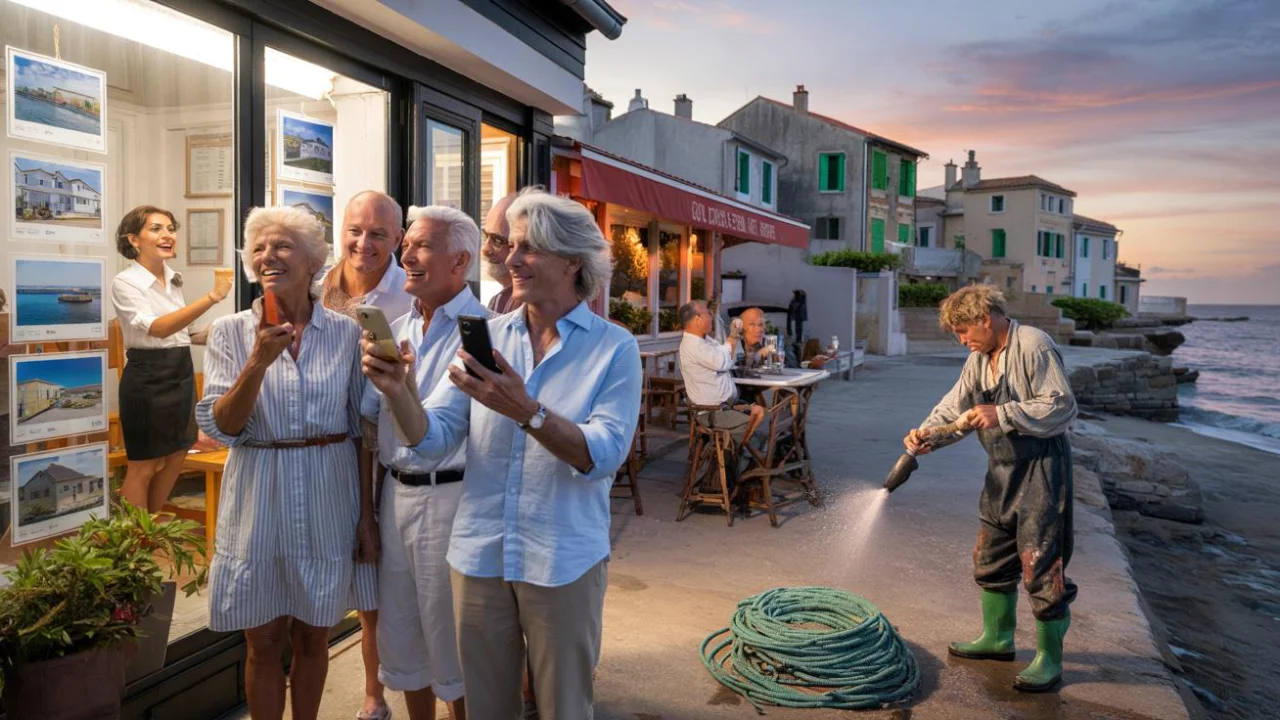
Maria watches from her kitchen window as another moving truck pulls up across the street. French voices drift through her open door as the new neighbors examine their freshly purchased ocean-view apartment. She sighs and turns back to her laptop, scrolling through rental listings that now cost more than her monthly pension.
Her son David, a 32-year-old teacher, was supposed to buy that same apartment last year. The seller had given him a handshake promise, a gentleman’s agreement common in their tight-knit Atlantic coast community. Then a French couple arrived with a cash offer 30% above asking price.
“My family has lived here for four generations,” Maria says, stirring her coffee with visible frustration. “Now I’m not sure my grandchildren will ever afford to stay.”
The Great Portuguese Exodus
French retirees are abandoning Portugal in droves, and they’re not heading back to France. Instead, they’re discovering a hidden gem along Spain’s Atlantic coast that locals are calling their own slice of paradise under siege.
For over a decade, Portugal dominated European retirement dreams. The Golden Visa program, favorable tax treatments, and affordable coastal living made places like the Algarve and Lisbon magnets for French pensioners. But rising prices and overcrowding have shifted the tide.
“Portugal became too expensive and too crowded,” explains Pierre Dubois, a retired engineer from Nantes who moved to Spain’s Atlantic coast two years ago. “Here, I found what Portugal used to offer—authenticity, affordability, and peace.”
This Atlantic coast town, nestled between dramatic cliffs and pristine beaches, has become the new darling of French retirement communities. Real estate forums buzz with descriptions of “the France of the 1980s, but with better weather and half the cost.”
The Numbers Tell the Story
The transformation happening in this Spanish coastal town is reflected in stark statistics that reveal both opportunity and crisis:
| Metric | 2019 | 2024 | Change |
|---|---|---|---|
| Average Property Price | €180,000 | €320,000 | +78% |
| French Residents | 340 | 1,250 | +268% |
| Local Home Ownership Rate | 72% | 54% | -25% |
| Rental Properties (Seasonal) | 85 | 340 | +300% |
Real estate agencies report that French buyers now represent 60% of all property purchases above €250,000. Most arrive with cash offers, eliminating the need for mortgages and pricing out local families dependent on bank financing.
The appeal for French retirees is undeniable:
- Property prices still 40% lower than comparable French coastal towns
- 2.5-hour flight from Paris
- High-quality healthcare system
- Growing French-speaking community
- Stable political environment
- Favorable tax treaties between France and Spain
“We’re seeing retired couples sell their Parisian apartments for €800,000 and buy beautiful homes here for €400,000,” notes Carmen Rodriguez, a local real estate agent. “With €400,000 left over, they feel wealthy and secure.”
Paradise Lost: When Dreams Collide
The influx of French retirees to the Atlantic coast has created a complex web of winners and losers that’s reshaping the community’s identity.
Local restaurant owner Miguel Santos has mixed feelings about the changes. His bistro now serves French wine and prints menus in both languages. Revenue has doubled, but he struggles to find affordable housing for his seasonal staff.
“My dishwasher lives 40 kilometers inland now because he can’t afford anything closer,” Santos explains. “The people who make this town run are being pushed further and further away.”
Young Spanish families face an impossible choice: leave their hometown or live with multiple generations crammed into increasingly expensive rental properties. Local teachers, nurses, and shop workers find themselves competing against French pensions that often exceed their annual salaries.
Dr. Elena Morales, who runs the town’s health clinic, sees the human cost daily. “Stress levels are rising among local families. Housing insecurity affects everything from children’s school performance to elderly people’s mental health.”
The French community, meanwhile, feels unfairly vilified. They argue they’re investing in local businesses, paying taxes, and bringing international energy to a previously sleepy town.
“We’re not invaders,” insists Claude Martin, president of the local French residents’ association. “We choose to spend our retirement money here instead of staying in France. That should be good for everyone.”
The Ripple Effects Spread
The transformation extends far beyond housing costs. Local schools now offer French language classes to serve the growing expat children population. The municipal government prints official documents in French. Even the weekly market has adapted, with vendors learning basic French phrases and stocking specialty items like Roquefort cheese and Bordeaux wines.
Some changes bring unexpected benefits. The increased international profile has attracted tourism, creating jobs in hospitality and services. Property values have risen for everyone, not just newcomers. Several residents have sold family homes at substantial profits.
But the cultural shift runs deeper than economics. Traditional festivals now include French participants who don’t always understand local customs. Long-standing social networks fragment as longtime residents move away and newcomers form separate communities.
“It’s not that we don’t want change,” explains Ana Lopez, a third-generation resident. “But when change happens too fast, we lose what made this place special in the first place.”
The local government is scrambling to address the crisis. Proposed solutions include limiting foreign property purchases in certain areas, mandating minimum rental periods to reduce short-term vacation rentals, and requiring new developments to include affordable housing units.
However, legal experts question whether such measures would survive European Union court challenges, leaving the community caught between inevitable market forces and the desire to preserve their way of life.
FAQs
Why are French retirees leaving Portugal for Spain’s Atlantic coast?
Portuguese coastal property prices have risen dramatically, making Spain’s Atlantic coast towns more attractive with similar amenities at lower costs.
How much cheaper is Spanish Atlantic coast property compared to France?
Properties typically cost 40-50% less than comparable French coastal towns, allowing retirees to maintain their lifestyle while reducing living costs.
What impact are French buyers having on local residents?
Local families are being priced out of the housing market as cash offers from French retirees outbid mortgage-dependent Spanish buyers, forcing younger generations to move away.
Are there any restrictions on foreign property purchases?
Currently, EU citizens can freely purchase property in Spain, though local governments are exploring legal options to protect affordable housing for residents.
How are local businesses responding to the French influx?
Many businesses are adapting by hiring French-speaking staff, translating menus and signage, and stocking products popular with French residents to capture this growing market.
What solutions are being proposed to address housing affordability?
Local governments are considering limits on foreign purchases in certain areas, restrictions on short-term rentals, and requirements for affordable housing in new developments, though legal challenges remain.


