
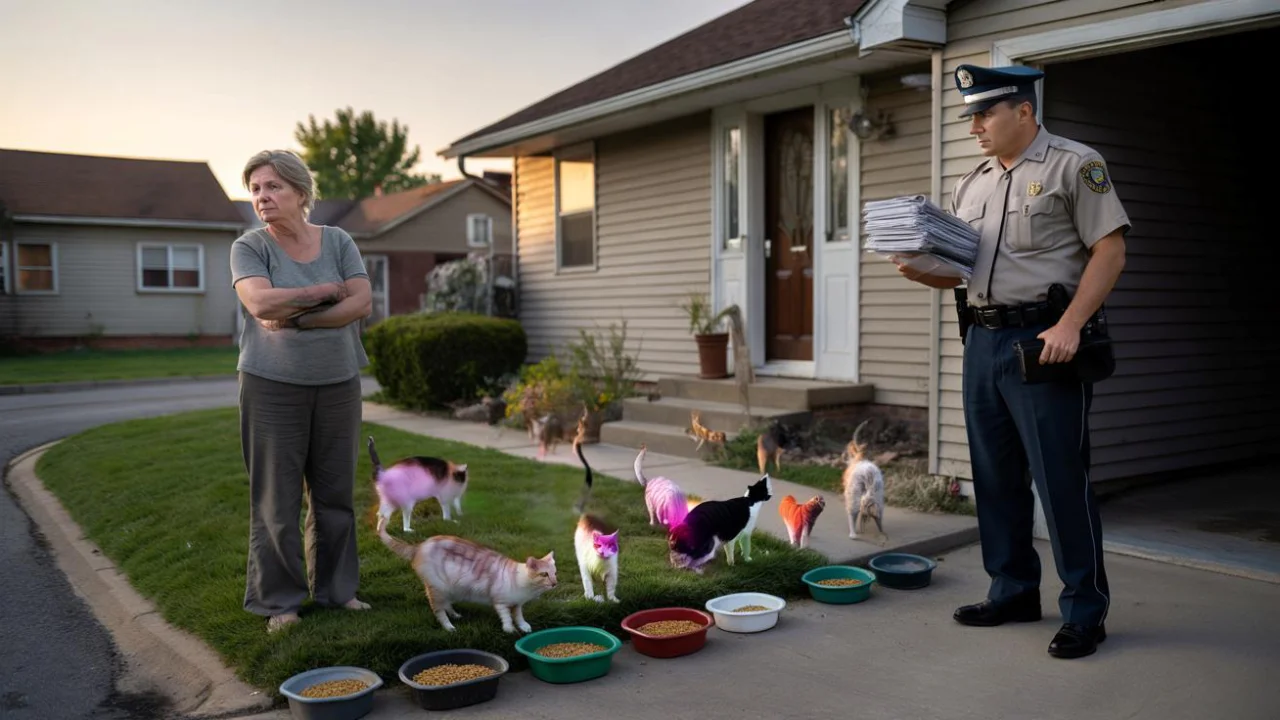
Sarah Martinez never thought feeding stray cats would land her in court. Every evening at 6 PM, she’d set out small bowls of kibble and water along her back fence, watching through her kitchen window as a handful of scraggly cats emerged from the shadows. They were clearly hungry, clearly homeless, and clearly grateful for the simple meal.
Three months later, she received a citation in the mail. The fine? $3,500. Her crime? Violating the city’s “animal feeding ordinance” by providing food to stray animals on her own property. What started as an act of compassion had suddenly become a legal nightmare.
Sarah’s story isn’t unique. Across America, hundreds of people are facing similar penalties for feeding stray cats, creating a heated debate about where kindness ends and public responsibility begins.
The Growing Crackdown on Cat Feeding
Feeding stray cats has become a surprisingly controversial issue in communities nationwide. Local governments are increasingly passing ordinances that prohibit residents from providing food or water to free-roaming animals, even on their own property.
These laws typically classify feeding stray cats as a public nuisance, arguing that it encourages the formation of colonies, increases noise complaints, and can lead to property damage. Cities from Ohio to California have enacted similar regulations, with fines ranging from hundreds to thousands of dollars.
“We’re seeing more communities adopt these ordinances because they’re dealing with complaints about cat populations,” explains Dr. Jennifer Walsh, a veterinary behaviorist who studies feral cat management. “But the enforcement often targets well-meaning residents who are just trying to help hungry animals.”
The penalties can be severe. Some jurisdictions treat repeat offenses as misdemeanors, potentially resulting in jail time. Others impose escalating fines that can reach $5,000 or more for persistent violations.
Who Gets Caught in the Crossfire
The people most often cited for feeding stray cats share common characteristics. They’re typically:
- Middle-aged or elderly women living alone
- Homeowners with stable housing situations
- First-time offenders with no criminal history
- Animal lovers who see feeding as a moral obligation
- Residents in suburban or urban neighborhoods
Many describe feeling blindsided by the citations. They often assume that feeding cats on their own property is perfectly legal, only discovering otherwise when they receive official notices.
| State | Typical Fine Range | Repeat Offense Penalty |
|---|---|---|
| Ohio | $500-$2,500 | Up to 30 days jail |
| Texas | $200-$1,000 | Misdemeanor charges |
| Florida | $250-$500 | Escalating fines |
| California | $100-$1,500 | Community service |
“I never imagined that putting out a bowl of cat food could result in a criminal record,” says Maria Rodriguez, who was fined $1,200 in Phoenix. “These cats were starving, and I have a big heart. Now I feel like I’m being punished for caring.”
The Arguments on Both Sides
City officials defend these ordinances by pointing to legitimate concerns about uncontrolled cat populations. Feeding stray cats without also addressing spaying and neutering can lead to rapid population growth, they argue.
Unfixed cats can produce dozens of offspring annually, creating colonies that may damage property, spread disease, and impact local wildlife. Neighbors often complain about noise, odors, and cats using their yards as litter boxes.
“We don’t want to punish compassionate people, but feeding without sterilization makes the problem worse,” says Tom Bradley, animal control director for a mid-sized Ohio city. “We need comprehensive solutions, not just good intentions.”
However, animal welfare advocates argue that these laws criminalize compassion without offering viable alternatives. They point out that many communities lack adequate resources for trap-neuter-return programs or affordable spay/neuter services.
“These ordinances essentially tell people to let animals starve,” says Rebecca Chen, director of a regional animal rescue organization. “That’s not a humane approach to population management.”
The Real-World Impact
The enforcement of cat feeding bans has far-reaching consequences beyond the immediate fines. Many cited individuals report feeling criminalized for acts of kindness, leading to emotional distress and community tensions.
Some people continue feeding cats secretly, creating a culture of fear around animal compassion. Others stop feeding entirely, potentially leading to increased suffering among stray populations.
The legal costs can be devastating. Beyond the initial fines, many people hire attorneys to fight the charges, accumulating thousands in legal fees. Court appearances mean missed work and additional stress.
Property values can also be affected when cat colonies become established in neighborhoods, creating conflicts between animal lovers and other residents.
“I’ve seen families go into debt fighting these citations,” notes attorney Michael Thompson, who specializes in animal law cases. “The financial impact extends far beyond the original fine.”
Alternative Approaches Gaining Ground
Some communities are exploring more nuanced approaches that balance compassion with population control. These include:
- Trap-neuter-return programs with feeding guidelines
- Permits for supervised cat feeding with spay/neuter requirements
- Community education programs about responsible animal care
- Subsidized spay/neuter services for low-income residents
- Designated feeding areas away from residential properties
Cities implementing these alternative strategies report better outcomes for both cats and communities, with fewer complaints and more sustainable population management.
The debate over feeding stray cats reflects broader questions about individual responsibility, community welfare, and how we treat vulnerable animals in urban environments. As more people face citations for acts of kindness, communities are being forced to examine whether punishment is truly the most effective approach to managing stray cat populations.
FAQs
Is it illegal to feed stray cats on my own property?
This varies by location. Many cities have ordinances prohibiting feeding stray or feral cats anywhere within city limits, including private property.
What should I do if I receive a citation for feeding cats?
Contact a local attorney who handles animal law cases and check if your city offers alternative compliance options like trap-neuter-return programs.
Can I get in trouble for feeding cats just once or twice?
Yes, most ordinances don’t require repeated behavior. A single instance of feeding can result in a citation.
Are there legal ways to help stray cats?
Many communities allow participation in official trap-neuter-return programs or volunteer work with licensed animal rescue organizations.
How can I find out if my city has a cat feeding ban?
Check your city’s municipal code online or contact your local animal control department for information about current ordinances.
What’s the difference between stray and feral cats in the eyes of the law?
Most ordinances don’t distinguish between stray and feral cats, treating all free-roaming cats the same regardless of their socialization level.


