
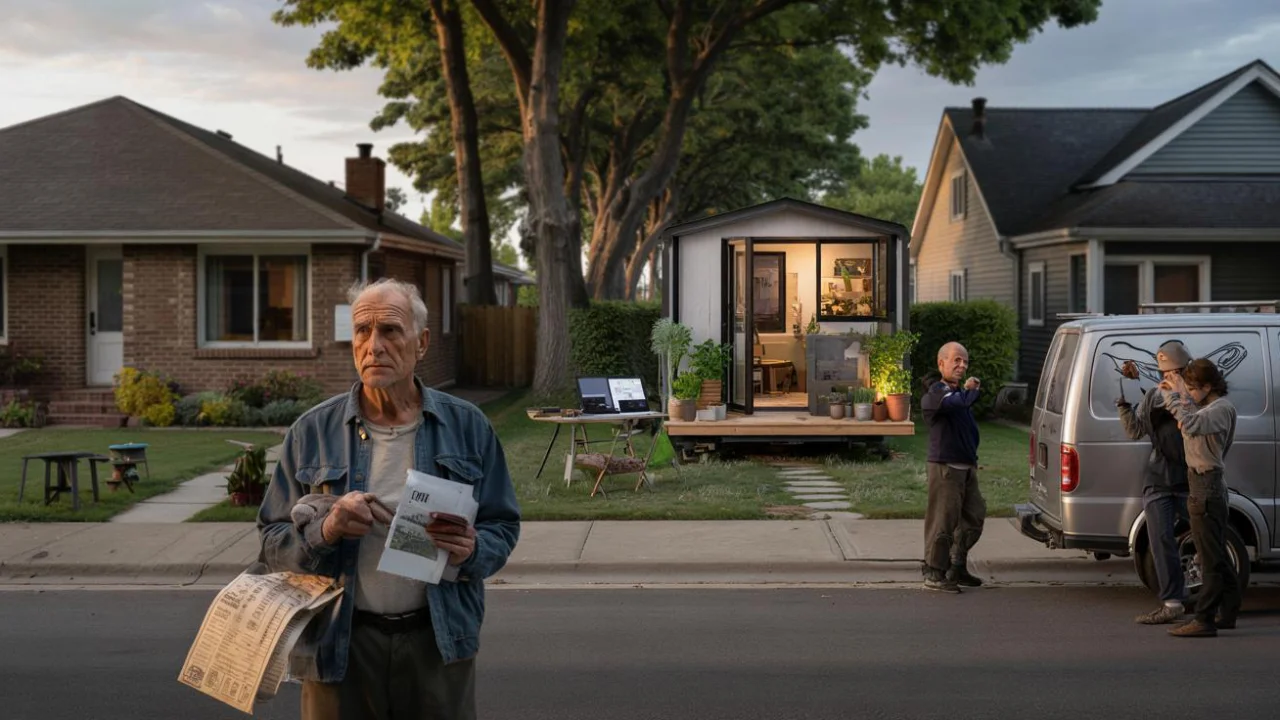
Tom Henderson never expected his act of kindness would cost him $4,200 a year. The 71-year-old retiree was just trying to help a struggling young graphic designer find an affordable place to live when he let her park her tiny home on his back lot. What seemed like a simple good deed has now triggered a massive property tax reassessment that’s turned his quiet neighborhood into a battleground.
The county assessor arrived unannounced on a Tuesday morning, clipboard in hand, measuring tape stretched across Tom’s formerly empty back yard. Three weeks later, the tax bill landed in his mailbox like a sledgehammer. His property value had jumped 30%, and his annual taxes skyrocketed from $2,800 to $7,000.
“I just wanted to help someone get started,” Tom says, shaking his head as he looks out at the tiny home that’s caused such a stir. “Now I’m being punished for being decent.”
How One Tiny Home Triggered a Tax Avalanche
The trouble began when Maya Chen, a 26-year-old graphic designer, couldn’t find affordable housing in the rapidly gentrifying village. Rental prices had doubled in two years, pushing young professionals like her to the margins. Her solution was creative: build a 240-square-foot tiny home on wheels and find someone willing to let her park it.
Tom had nearly half an acre behind his brick ranch house, mostly unused except for a vegetable garden and storage shed. The informal arrangement seemed perfect – Maya would pay utilities plus $300 monthly for the space, giving her time to build her design business while Tom got some company and help with yard work.
But county officials saw something different when they investigated neighbor complaints about the arrangement. They saw an “accessory dwelling unit” that had transformed bare land into improved property, triggering an automatic property tax reassessment.
“The presence of any habitable structure, whether temporary or permanent, constitutes a property improvement under state law,” explains County Assessor Patricia Mills. “We have to assess based on current use, not the owner’s intentions.”
The Real Cost of Good Intentions
Property tax reassessments like Tom’s are becoming more common as housing shortages drive creative living arrangements. The financial impact can be devastating for property owners who weren’t prepared for the tax consequences of their generosity.
| Before Tiny Home | After Reassessment |
| Property Value: $140,000 | Property Value: $182,000 |
| Annual Taxes: $2,800 | Annual Taxes: $7,000 |
| Monthly Cost: $233 | Monthly Cost: $583 |
| Increase: N/A | Increase: $4,200/year |
The key factors that triggered Tom’s reassessment include:
- Addition of a habitable structure (even if temporary)
- Installation of utilities to serve the tiny home
- Evidence of commercial activity (Maya’s design consultations)
- Improved property access and landscaping
- Perceived rental income potential
“Property tax law doesn’t distinguish between helping a friend and running a business,” notes tax attorney James Rodriguez. “If you’re generating rental income or allowing commercial use, you’re likely to face reassessment regardless of your motivations.”
When Neighbors Turn Against Each Other
The property tax reassessment has split the small village down the middle. Some residents see Tom as a victim of bureaucratic overreach, while others believe he’s trying to skirt zoning laws and tax obligations.
Neighbor Susan Walsh, who lives three houses down, filed the original complaint with the village. “It’s not about being mean,” she insists. “It’s about fairness. If Tom can rent out his backyard without permits or proper taxes, what’s to stop everyone from doing it? Property values, zoning laws – they exist for a reason.”
But across the street, retired teacher Bob Mitchell sees it differently. “Tom’s helping a young person who can’t afford housing in this market. Now he’s being financially penalized for doing the right thing. It’s backwards.”
The controversy has exposed deeper tensions about housing affordability, property rights, and community values. Village council meetings have become heated affairs, with residents arguing about whether the town should welcome creative housing solutions or maintain strict residential standards.
“We’re seeing this conflict play out in communities nationwide,” observes urban planning expert Dr. Sarah Kim. “There’s a fundamental tension between people trying to address housing shortages through informal arrangements and local governments trying to maintain order through zoning and taxation.”
The Ripple Effects Beyond One Backyard
Tom’s situation highlights a growing problem affecting property owners across the country. As housing costs soar and zoning laws struggle to keep pace with innovative living arrangements, more people are finding themselves caught between compassion and compliance.
Maya has since moved her tiny home to a legal RV park 30 miles away, adding an hour each way to her commute. Tom is appealing the property tax reassessment, but legal fees are already approaching $3,000. He’s considering taking out a home equity loan to cover the increased taxes while the appeal winds through the system.
“I thought I was helping someone achieve the American dream,” Tom reflects. “Instead, I’m learning that kindness can be expensive in ways I never imagined.”
The case has caught the attention of housing advocates who argue that current property tax systems penalize exactly the kind of flexible, affordable housing solutions communities desperately need. Some municipalities are beginning to create “safe harbor” provisions for temporary housing arrangements, but most property owners remain vulnerable to reassessment surprises.
Village officials maintain they’re simply following established law and treating all property owners equally. But as housing costs continue rising and creative living solutions multiply, Tom’s story may become increasingly common – a cautionary tale about the hidden costs of trying to help in a system not designed for generosity.
FAQs
Can allowing someone to park a tiny home on my property trigger a tax reassessment?
Yes, any structure that can be lived in, even temporarily, may be considered a property improvement subject to reassessment.
Do I need permits to let someone park a tiny home on my land?
Most municipalities require permits for any dwelling unit, including temporary ones. Check local zoning laws before making arrangements.
Can I appeal a property tax reassessment?
Yes, but the appeals process can be lengthy and expensive, often requiring legal representation and professional appraisals.
What should I do before helping someone with housing on my property?
Consult with a tax professional and local zoning office to understand potential tax and legal implications before agreeing to any arrangement.
Are there ways to help with housing that won’t trigger reassessment?
Some options include helping with security deposits for legal rentals or connecting people with approved housing programs, but on-property solutions typically carry tax risks.
How common are property tax reassessments for tiny homes?
They’re becoming increasingly common as assessors crack down on unpermitted dwelling units and informal rental arrangements in response to housing shortage workarounds.


