
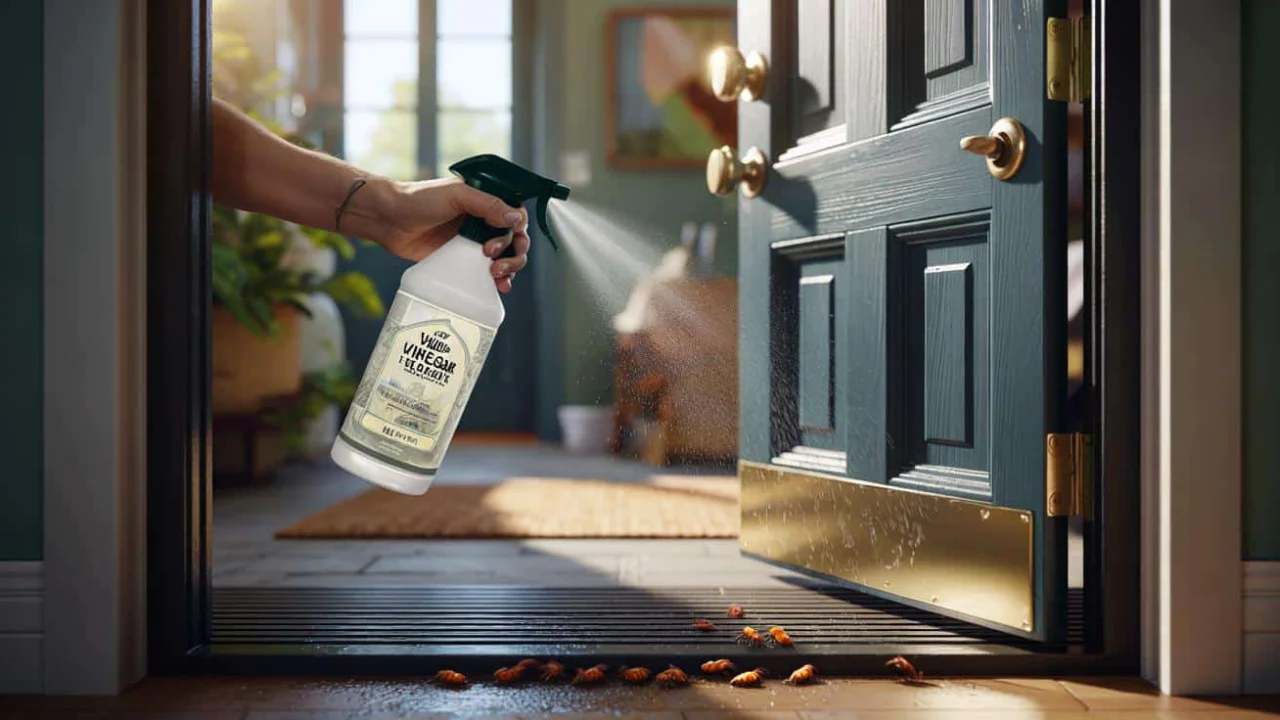
Maria noticed it first during her morning jog. Her elderly neighbor, Mrs. Chen, was standing on her front porch with a small spray bottle, methodically misting the door frame from top to bottom. The sharp scent of vinegar drifted across the yard as Maria slowed her pace, curious.
“Good for the wood,” Mrs. Chen called out with a knowing smile, as if reading Maria’s thoughts. “And good for other things too.” She gave the door handle an extra spray before heading back inside, leaving Maria wondering what those “other things” could possibly be.
That was three months ago. Now Maria sees it everywhere – neighbors with spray bottles, friends posting about their “front door rituals” on social media, and her own mother asking if she’s tried “the vinegar thing” yet. What started as a curious observation has become a neighborhood trend that no one seems to fully understand, yet everyone swears by.
The Real Reasons Behind This Unexpected Trend
Spraying vinegar on the front door isn’t just another cleaning hack that went viral. It’s a practice rooted in both practical benefits and cultural beliefs that have merged into something surprisingly effective.
The trend combines old-world folk wisdom with modern homemaking strategies. Your grandmother might have used vinegar to clean everything, but today’s homeowners are discovering it does much more than just remove grime from surfaces.
“I started doing this because my sister swore it kept ants away,” explains Sarah Martinez, a Phoenix homeowner. “But I kept doing it because guests always comment on how welcoming our entrance feels.”
The practice has practical cleaning benefits, pest deterrent properties, and – according to many practitioners – some kind of psychological effect that makes homes feel more welcoming. Whether you believe in the spiritual aspects or not, the tangible results keep people coming back to their spray bottles.
What Vinegar Actually Does to Your Front Door
The science behind spraying vinegar on your front door is more straightforward than the mystical claims suggest. White vinegar contains acetic acid, which creates several measurable effects when applied to door surfaces.
Here’s what happens when you spray vinegar on different parts of your entrance:
| Surface | Effect | Duration |
|---|---|---|
| Wood frames | Removes mineral deposits, mild disinfection | 1-2 weeks |
| Metal hardware | Dissolves rust spots, removes fingerprints | 2-3 weeks |
| Glass panels | Streak-free cleaning, removes water spots | 1-2 weeks |
| Threshold/step | Ant deterrent, odor neutralization | 3-7 days |
The pest control aspect is particularly interesting. Ants follow scent trails, and vinegar disrupts these chemical pathways. Many homeowners report significant reductions in ant activity around treated entrances.
For cleaning purposes, vinegar works as a mild degreaser and disinfectant. It removes the buildup of oils from hands, weather residue, and general grime without harsh chemicals. The acetic acid also neutralizes alkaline odors, which explains why many people notice their entrances smell fresher.
“The first time I tried it, I was skeptical,” admits home maintenance expert Tom Richardson. “But the results speak for themselves – cleaner surfaces, fewer bugs, and honestly, it just looks better.”
The Unexpected Benefits People Actually Experience
Beyond the practical cleaning effects, people who regularly spray vinegar on their front doors report some surprising benefits that go beyond what you’d expect from a simple household acid.
Many practitioners describe their homes feeling more “welcoming” to guests. While this could be psychological, there might be a sensory explanation. Vinegar neutralizes lingering odors that we become nose-blind to – pet smells, cooking odors, mustiness from weather. When these background scents disappear, spaces genuinely feel fresher.
The ritual aspect matters too. Taking a few minutes to clean and care for your entrance creates a sense of pride and ownership. People who maintain this practice often extend it to other areas, leading to generally cleaner, more organized homes.
- Reduced ant and spider activity around doorways
- Elimination of water spots and mineral buildup on glass
- Removal of sticky residue from tape or decorations
- Better-looking metal hardware (less tarnish and corrosion)
- Neutralization of pet odors that concentrate near entrances
- Improved curb appeal from cleaner-looking doors
Some people swear by timing their vinegar application with the full moon or specific days of the week, but the cleaning benefits remain consistent regardless of celestial schedules.
“I do it every Sunday morning with my coffee,” says Janet Walsh, who’s been practicing this routine for two years. “It’s become my way of setting intentions for the week, and my front door has never looked better.”
How to Do It Right (And What Not to Do)
If you’re ready to try spraying vinegar on your front door, there are right and wrong ways to approach this practice. The key is using the right concentration and applying it to appropriate surfaces.
Start with a 1:1 ratio of white vinegar to water in a clean spray bottle. This concentration is strong enough to be effective but won’t damage most door materials. Test on a small, inconspicuous area first, especially if you have a painted or stained door.
The best time for application is early morning or late afternoon when the door isn’t in direct sunlight. This prevents the vinegar from evaporating too quickly and gives it time to work on surfaces.
Focus on these key areas for maximum benefit: door handles, the threshold, window glass if present, and the door frame where dirt tends to accumulate. Don’t forget the doorbell button and any decorative hardware.
“I learned the hard way not to spray vinegar on natural stone,” warns homeowner David Kim. “It etched my limestone step permanently. Stick to wood, metal, and glass surfaces.”
Avoid using vinegar on natural stone, unsealed concrete, or antique finishes. The acid can cause permanent damage to these materials. Also, don’t mix vinegar with other cleaning products – it can create harmful chemical reactions.
For best results, apply the solution, let it sit for 2-3 minutes, then wipe with a clean cloth. The smell will dissipate within 10-15 minutes, leaving behind clean surfaces and the satisfaction of a small ritual completed.
FAQs
How often should I spray vinegar on my front door?
Most people find once a week provides good results, though you can do it daily if you prefer the routine.
Will vinegar damage my painted door?
Properly diluted vinegar won’t damage most paint finishes, but always test a small area first to be safe.
Can I use apple cider vinegar instead of white vinegar?
White vinegar works best because it doesn’t leave residue or discoloration – apple cider vinegar might stain light-colored surfaces.
Does the vinegar smell linger?
The vinegar smell typically fades within 15-20 minutes, leaving surfaces clean without any lasting odor.
Will this actually keep bugs away?
Many people report fewer ants and spiders around treated doorways, though results may vary depending on your local pest population.
Is there any spiritual significance to this practice?
While some people attribute spiritual benefits to the practice, the measurable effects are primarily cleaning and pest deterrent related.


