
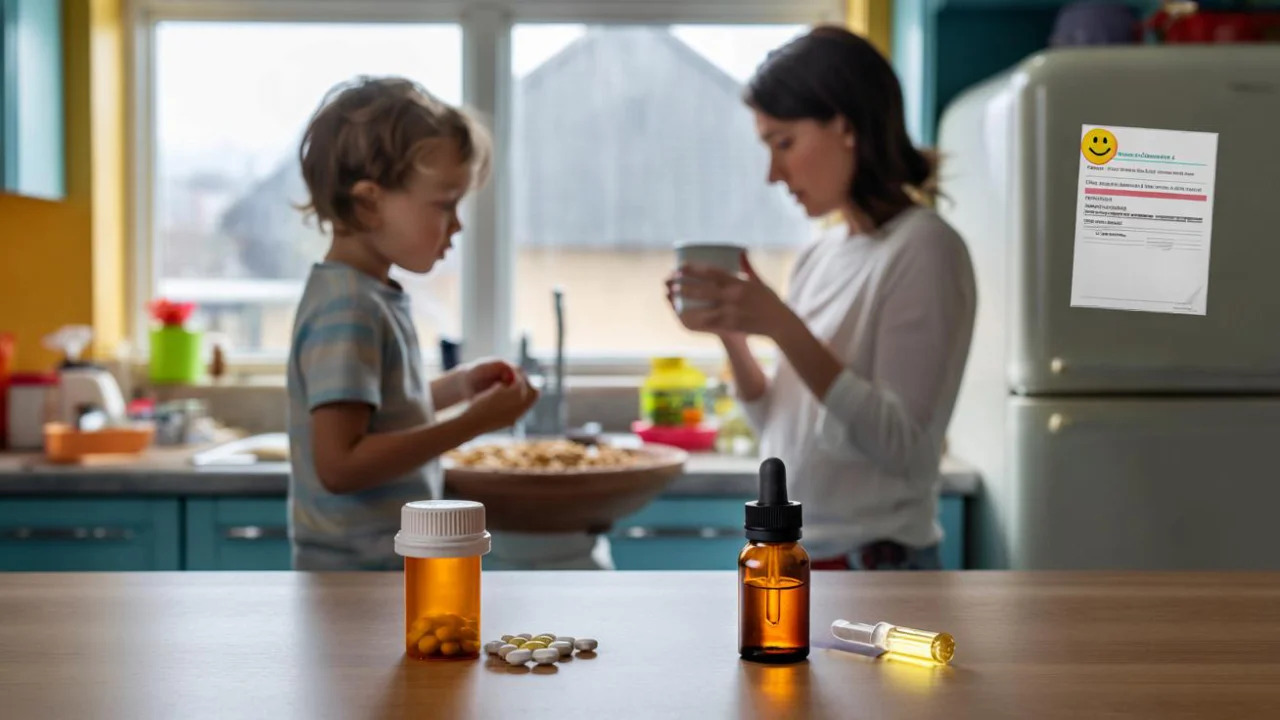
Sarah stares at the amber bottle in her palm, no bigger than a shot glass. Her 8-year-old son Jake bounces his leg under the breakfast table, untouched toast growing cold beside him. Three months ago, she was crushing his ADHD pills into applesauce because he couldn’t swallow them whole. Now she’s measuring out 0.25 milliliters of cannabis oil with a tiny syringe, her hands shaking slightly as neighbors walk their dogs past her kitchen window.
Her mother-in-law refuses to visit anymore. Her husband sleeps on the couch most nights. Their family doctor won’t return her calls. But Jake? For the first time in two years, he finished his homework yesterday without melting down, built an entire Lego spaceship, and asked for seconds at dinner.
She’s either saving her child or destroying her family. Maybe both.
When Traditional ADHD Treatment Stops Working
Sarah’s story mirrors thousands of families caught between conventional medicine and desperate innovation. After Jake’s ADHD diagnosis at age 6, methylphenidate seemed like the obvious choice. It worked for millions of kids, their pediatrician assured them. The side effects would level out.
They didn’t. Jake lost 12 pounds in four months. His creativity vanished. He’d sit motionless for hours, then explode into rage when the medication wore off. Sleep became impossible. His teacher reported improvements in focus, but Sarah watched her vibrant child disappear behind glassy eyes.
“I felt like I was poisoning him to make him more convenient for everyone else,” Sarah explains. “That’s when I started researching alternatives.”
Cannabis oil microdosing emerged from her late-night research binges. Unlike recreational marijuana, these formulations contain precisely measured ratios of CBD and THC – often as low as 1mg of THC per dose. Parents in online forums shared dosing charts, success stories, and warnings about legal risks.
Dr. Michael Verbora, a cannabinoid medicine specialist, sees families like Sarah’s regularly. “These parents aren’t drug-seekers. They’re watching traditional medications fail their children and exploring alternatives that preliminary research suggests might help.”
The Science Behind Cannabis Oil Microdosing
Cannabis oil microdosing for ADHD operates on emerging theories about the endocannabinoid system’s role in attention regulation. While research remains limited, early studies suggest cannabinoids might help balance dopamine levels differently than traditional stimulants.
Here’s what current research reveals about cannabis oil microdosing:
- Dosage ranges: Typically 0.5-2mg of THC combined with 5-20mg of CBD
- Administration: Usually sublingual oils taken 1-2 times daily
- Reported benefits: Improved sleep, appetite recovery, emotional regulation
- Legal status: Varies dramatically by location, often requiring medical marijuana cards
- Medical supervision: Critical for proper dosing and safety monitoring
| Traditional ADHD Medication | Cannabis Oil Microdosing |
|---|---|
| Stimulates dopamine production | Modulates endocannabinoid receptors |
| Common side effects: appetite loss, sleep issues, mood changes | Reported side effects: minimal at proper microdoses |
| Extensive clinical trials and FDA approval | Limited research, mostly anecdotal evidence |
| Widely accepted by medical community | Controversial, varies by practitioner |
Dr. Bonni Goldstein, medical director of Canna-Centers, emphasizes caution: “While some families report positive results, we need more rigorous studies before making broad recommendations about cannabis for pediatric ADHD.”
Families Divided by an Impossible Choice
Sarah’s decision fractured her support network immediately. Her husband Mark initially supported exploring alternatives, but balked when she mentioned cannabis. “He kept saying ‘You want to give our son drugs?’ I told him we were already giving him drugs – just legal ones that were making him miserable.”
Their marriage counselor suggested they table the discussion. Their pediatrician threatened to report them to child protective services. Sarah’s mother stopped babysitting Jake, fearing legal liability. Even close friends began avoiding playdates.
The isolation pushed Sarah toward online communities where parents share dosing schedules, supplier recommendations, and legal strategies. These forums become lifelines for families feeling abandoned by traditional medicine.
“The medical system failed us first,” argues Tom, a father from Colorado who switched his 10-year-old daughter to cannabis oil after stimulants triggered anxiety attacks. “We’re not rebels – we’re desperate parents trying evidence-based alternatives when conventional treatments don’t work.”
Child psychiatrist Dr. Amanda Chen sees both sides daily. “I understand parent frustration with medication side effects. But moving to unregulated treatments without medical supervision creates different risks. The solution isn’t choosing between systems – it’s improving the ones we have.”
Legal Minefields and Medical Ethics
Cannabis oil microdosing exists in a legal gray zone that varies dramatically by location. Some states allow medical marijuana for pediatric conditions, while others criminalize any cannabis use. Parents like Sarah often source oils from legal dispensaries but use them for unapproved purposes.
Child protective services reports have increased in areas where parents openly discuss cannabis treatments. Legal experts advise extreme caution, as custody battles can emerge even in medical marijuana states.
Medical professionals face ethical dilemmas too. Some doctors quietly support families exploring cannabis alternatives while officially maintaining opposition. Others refuse to see patients using unauthorized treatments, creating care gaps.
“We need honest conversations about treatment failures and alternative approaches,” suggests pediatric neurologist Dr. Sarah Kim. “Driving families underground doesn’t protect children – it eliminates medical oversight completely.”
FAQs
Is cannabis oil microdosing legal for children with ADHD?
Legality varies by state and country. Most locations require medical marijuana cards and physician oversight, though ADHD isn’t always a qualifying condition.
What’s the difference between microdosing and regular cannabis use?
Microdosing involves precisely measured, very small amounts (often under 2mg THC) designed to provide therapeutic benefits without psychoactive effects.
Are there serious side effects to cannabis oil in children?
Proper microdoses typically produce minimal side effects, but dosing errors can cause drowsiness, coordination issues, or psychological effects. Medical supervision is essential.
How do parents obtain cannabis oil for ADHD treatment?
Options include medical marijuana dispensaries (where legal), compounding pharmacies, or online suppliers of varying legality and quality.
Should parents try cannabis oil if ADHD medications aren’t working?
Medical experts recommend exhausting conventional alternatives and seeking specialized consultation before considering cannabis treatments, especially given legal and safety considerations.
What research exists on cannabis for pediatric ADHD?
Current research is limited to small studies and anecdotal reports. Large-scale clinical trials are needed to establish safety and efficacy for children.


