
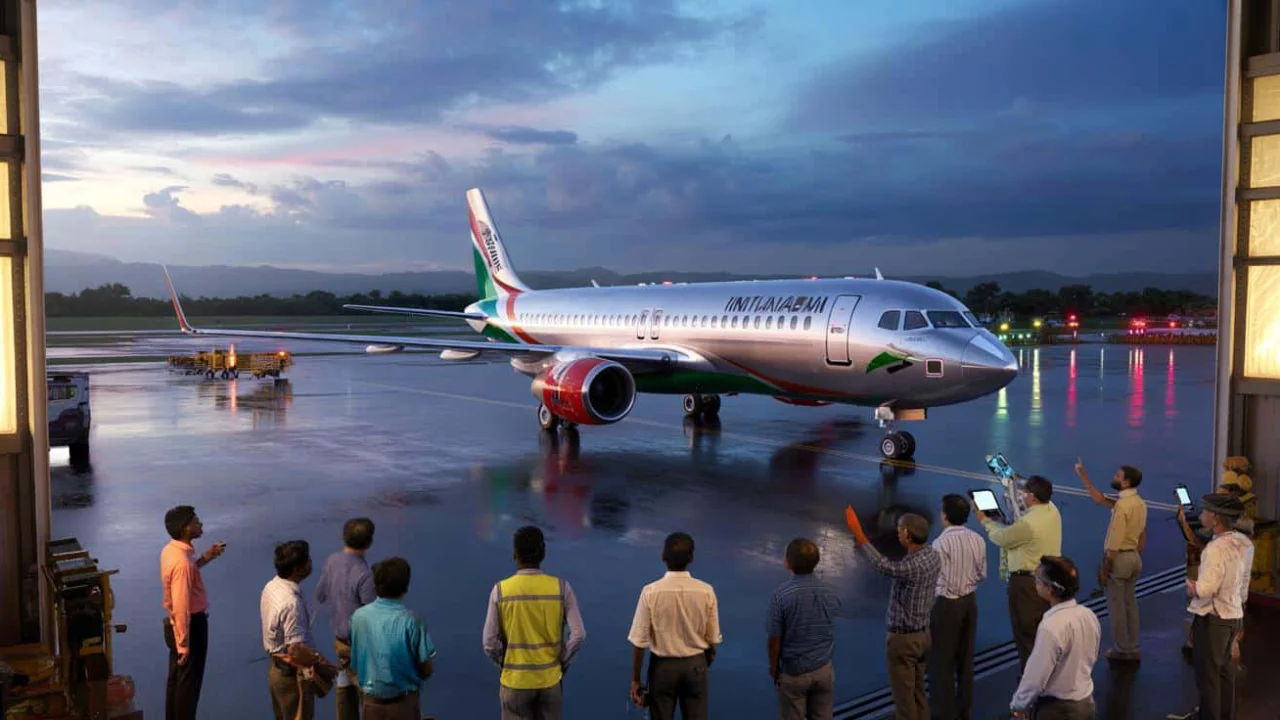
Rajesh Kumar stared at his boarding pass in Delhi airport, flight delayed for the third time this month. The gate agent’s voice crackled through the speakers: “Equipment from Seattle is running behind schedule.” Around him, frustrated passengers scrolled through their phones, cursing airlines that seemed perpetually at the mercy of two distant manufacturers.
“When will we ever have our own planes?” muttered the businessman next to him, adjusting his tie with visible annoyance.
That question, asked by millions of Indian travelers over the years, might finally have an answer. And it’s not the one anyone expected.
India Quietly Builds a Rival to Airbus and Boeing
For most travelers, commercial aviation feels like a closed club with only two real names on the door. Airbus or Boeing stamped on the fuselage. Maybe COMAC making headlines. The idea that Indian passenger jets could one day pull up to boarding gates in Frankfurt or Chicago still sounds like science fiction.
Yet behind the scenes, Indian engineers and policymakers have spent recent years sketching a different map of the skies. A map where mid-range aircraft, designed and assembled in India, compete for the same orders that Gulf carriers, European low-cost airlines, and African startups now hand almost automatically to Toulouse or Seattle.
The world just hasn’t fully noticed yet.
“We’re not trying to reinvent aviation overnight,” explains Dr. Anil Sharma, a former HAL engineer now consulting on commercial aircraft projects. “We’re building on decades of defense aerospace experience and applying it to passenger transport. The foundation is already there.”
The project growing out of Hindustan Aeronautics Limited (HAL), the Council of Scientific and Industrial Research, and private suppliers already feeding global aircraft manufacturers represents more than national pride. It’s a strategic play in a $150 billion annual market currently dominated by just two Western companies.
What Makes Indian Aircraft Different
Indian passenger jets aren’t attempting to copy existing designs. Instead, they’re targeting specific market gaps that Boeing and Airbus often overlook.
- Regional focus: Aircraft optimized for India’s unique operating conditions – hot weather, high altitude airports, monsoon challenges
- Cost efficiency: Lower manufacturing costs passed on as competitive pricing for airlines
- Maintenance simplicity: Designs prioritizing ease of service in developing market conditions
- Fuel efficiency: Advanced engines and lightweight materials reducing operating costs
- Flexible configurations: Easy reconfiguration between passenger and cargo layouts
The development draws heavily from India’s successful space program and defense aviation experience. The same engineers who built indigenous fighter jets and satellite launch vehicles are now applying that knowledge to commercial aviation.
| Specification | Indian Aircraft (Projected) | Boeing 737 MAX | Airbus A320neo |
|---|---|---|---|
| Seating Capacity | 140-180 | 138-230 | 140-240 |
| Range | 2,500-3,500 km | 3,500-7,100 km | 3,400-6,500 km |
| Target Price | $35-45 million | $80-135 million | $85-140 million |
| First Delivery | 2028-2030 (est.) | Currently available | Currently available |
“The beauty of starting later is learning from everyone else’s mistakes,” notes aviation analyst Priya Menon. “Indian manufacturers can incorporate the latest technologies without legacy design constraints.”
The Market Opportunity Nobody’s Talking About
While media attention focuses on US-China aviation rivalry, India represents the world’s fastest-growing aviation market. Domestic air passenger traffic has exploded from 60 million annual passengers in 2010 to over 140 million today.
This growth creates unique opportunities for Indian passenger jets:
- Domestic market advantage: Indian airlines may prefer locally-manufactured aircraft for political and economic reasons
- Regional export potential: Southeast Asian, Middle Eastern, and African airlines seeking alternatives to Western duopoly
- Government support: Potential subsidies and favorable financing for Indian aviation manufacturers
- Supply chain benefits: Existing automotive and technology manufacturing infrastructure supporting aircraft production
The timing couldn’t be better. Global aircraft backlogs stretch years into the future, with airlines desperate for delivery slots. A reliable alternative manufacturer could capture significant market share simply by offering shorter delivery times.
“Airlines don’t care about the flag on the fuselage if the plane is reliable, efficient, and available,” explains former airline executive Vikram Patel. “They care about moving passengers profitably.”
Challenges That Could Ground the Dream
Building competitive passenger aircraft isn’t just about engineering expertise. It requires navigating complex international certification processes, establishing global maintenance networks, and convincing risk-averse airlines to bet on unproven manufacturers.
The certification hurdle alone typically takes 5-7 years and costs billions of dollars. Indian manufacturers must prove their aircraft meet stringent safety standards set by regulatory bodies worldwide.
Additionally, airlines consider total lifecycle costs, not just purchase prices. Fuel efficiency, maintenance requirements, spare parts availability, and resale values all factor into buying decisions.
“The graveyard of aviation is littered with promising aircraft that couldn’t crack the commercial market,” warns industry consultant Sarah Johnson. “Technical capability is just the entry fee. You need financial staying power and customer confidence.”
Yet India possesses advantages that previous challengers lacked. A massive domestic market provides guaranteed initial customers. Established aerospace suppliers already meet international quality standards. And government backing offers financial stability during development phases.
What This Means for Travelers
If Indian passenger jets succeed, the benefits extend far beyond national pride. More competition typically means lower airfares, faster delivery times for new aircraft, and increased innovation as manufacturers compete for market share.
Regional routes currently underserved by major airlines could see improved connectivity. Smaller cities might gain direct flights as airlines access more affordable aircraft suited to thinner routes.
The ripple effects could reshape global aviation. Airlines wielding more manufacturer options gain negotiating leverage. Passengers benefit from improved service as carriers compete more aggressively.
For India specifically, successful commercial aircraft manufacturing could generate hundreds of thousands of jobs across engineering, manufacturing, and support services. The aerospace sector’s high-value exports would boost the economy while establishing India as a serious player in advanced manufacturing.
FAQs
When will the first Indian passenger jets enter service?
Current projections suggest first deliveries around 2028-2030, though development timelines often extend beyond initial estimates.
Will Indian aircraft be safe to fly?
They must meet the same international safety standards as Boeing and Airbus aircraft before receiving certification for commercial operation.
How much cheaper will Indian aircraft be?
Projected prices suggest 30-40% lower costs than comparable Western aircraft, though final pricing depends on development costs and market positioning.
Which airlines might buy Indian passenger jets first?
Domestic Indian carriers are likely early customers, followed by airlines in Southeast Asia, Africa, and the Middle East seeking cost-effective alternatives.
Could this impact Boeing and Airbus sales?
Initially minimal, but successful Indian aircraft could capture 5-10% market share within a decade, particularly in price-sensitive markets.
What happens if the project fails?
The investment in aerospace technology and manufacturing capability would still benefit India’s defense aviation sector and industrial development goals.


