
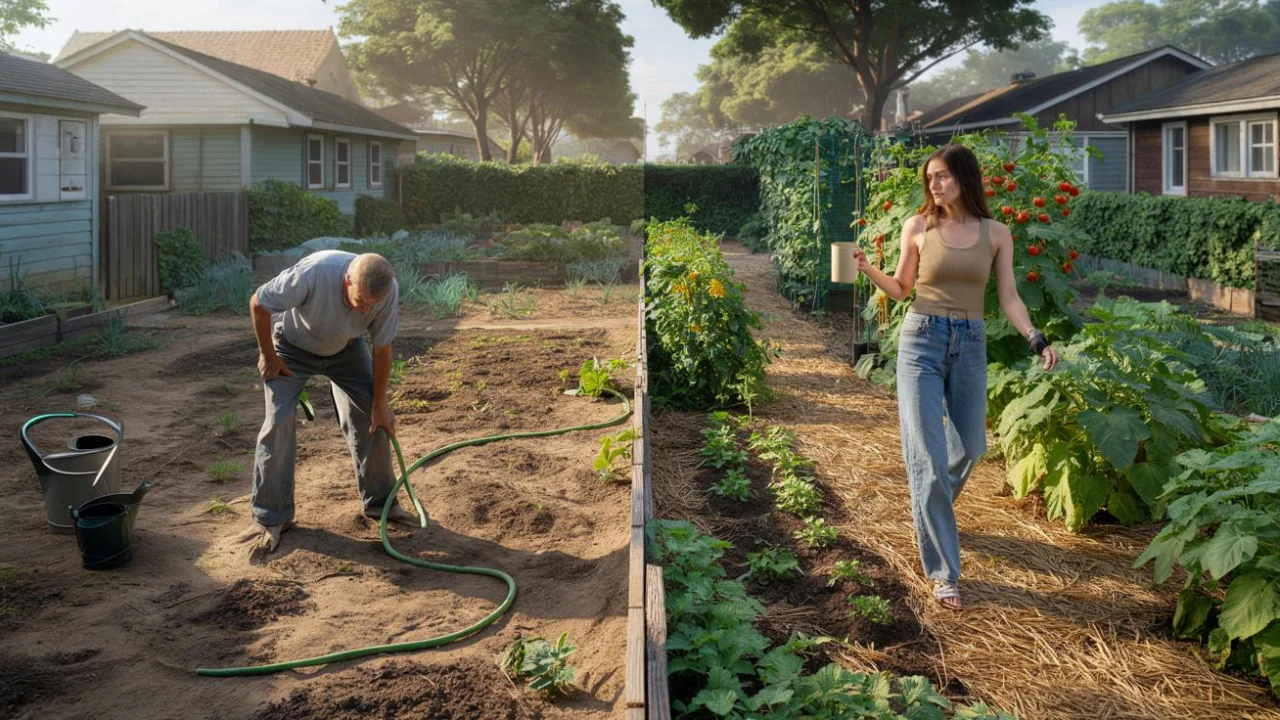
Last Tuesday, Sarah watched her neighbor Tom spend three hours hunched over his vegetable plot, pulling weeds from bone-dry soil under the blazing afternoon sun. His shirt was soaked with sweat, and his back was clearly aching as he straightened up every few minutes to stretch.
Meanwhile, Sarah sipped iced tea on her porch, glancing occasionally at her own garden beds—completely covered with a thick layer of straw and wood chips. Her tomatoes were twice the size of Tom’s, her soil stayed dark and moist even after days without rain, and she hadn’t pulled a single weed in weeks.
When Tom finally limped inside, muttering something about “lazy gardening techniques,” Sarah just smiled. Her harvest basket would do the talking.
The Great Soil Mulching Debate That’s Dividing Neighborhoods
Soil mulching has become the gardening world’s most controversial topic, splitting communities down the middle. On one side, you have traditionalists who believe that proper gardening requires pristine, bare soil rows and constant cultivation. On the other side, progressive gardeners are covering every square inch of earth with organic materials—and their results speak volumes.
“I’ve been gardening for forty years, and nothing prepared me for the backlash I got when I started mulching heavily,” says Maria Rodriguez, a master gardener from Phoenix. “Neighbors actually stopped talking to me because they thought I was being lazy. Two years later, they’re asking for my vegetable surplus.”
The resistance to soil mulching often stems from deeply ingrained cultural beliefs about what “real” gardening should look like. Clean, dark rows of exposed earth represent order, control, and hard work—values that many gardeners learned from previous generations.
But science tells a different story. Covered soil retains moisture up to three times longer than bare earth, reduces weed pressure by 85%, and creates an environment where beneficial soil organisms thrive.
What Science Says About Covered Soil vs. Traditional Methods
The benefits of soil mulching extend far beyond reduced maintenance. Here’s what research reveals about this “lazy” gardening approach:
| Factor | Bare Soil | Mulched Soil |
|---|---|---|
| Water Retention | 24-48 hours | 5-7 days |
| Soil Temperature Variation | ±20°F daily | ±5°F daily |
| Weed Germination | High | Reduced 80-90% |
| Soil Compaction | Increases over time | Significantly reduced |
| Beneficial Soil Life | Moderate | 3x higher activity |
Dr. James Patterson, a soil scientist at UC Davis, explains: “Mulch essentially mimics what happens in nature. Forest floors aren’t bare—they’re covered with layers of organic matter that feed the soil ecosystem while protecting it from extremes.”
The most effective mulching materials include:
- Straw (not hay, which contains seeds)
- Shredded leaves
- Wood chips for pathways and perennial beds
- Grass clippings (pesticide-free)
- Compost as a base layer
- Cardboard for initial weed suppression
“The key is applying mulch 3-4 inches thick and refreshing it as it decomposes,” notes Patterson. “That’s where many people go wrong—they put down a thin layer and wonder why it doesn’t work.”
Why the Results Speak Louder Than the Critics
Gardens using soil mulching techniques consistently outperform traditional bare-soil methods in multiple areas. Yield increases of 20-40% are common, while water usage drops by up to 50%.
Consider the experience of the Riverside Community Garden in Portland, Oregon. When they switched to no-till, heavily mulched beds three years ago, initial resistance was fierce. Long-time gardeners complained about the “messy” appearance and predicted crop failures.
“Our harvest records tell the real story,” says garden coordinator Lisa Chen. “Last season, our mulched plots produced 35% more vegetables per square foot than the traditional plots. Plus, people who switched to mulching spend about two hours less per week on maintenance.”
The time savings alone convert many skeptics. Traditional gardening often requires:
- Daily watering during hot weather
- Weekly weeding sessions
- Regular tilling or cultivation
- Frequent soil amendments
Meanwhile, soil mulching reduces these tasks to occasional maintenance and seasonal mulch renewal.
“I was the biggest mulch skeptic in our neighborhood,” admits retired teacher Robert Kim from Seattle. “Now I’m the guy giving away bags of wood chips to anyone who’ll take them. My wife jokes that I’ve become the mulch evangelist.”
Real Gardens, Real Results: The Evidence Keeps Growing
The transformation stories are remarkably consistent across different climates and soil types. In drought-prone areas, mulched gardens survive extended dry periods while bare-soil plots struggle. In regions with heavy rainfall, covered soil prevents erosion and nutrient loss.
Jennifer Walsh, a home gardener in Denver, documented her transition from traditional to mulched beds over two growing seasons. “Year one with bare soil: spent $200 on water bills during summer, pulled weeds every weekend, lost half my plants during a heat wave. Year two with mulch: water bills cut in half, maybe twenty minutes of weeding all season, plants thrived even during record temperatures.”
The economic benefits extend beyond reduced water and labor costs. Mulched soil builds organic matter content over time, reducing the need for expensive fertilizers and soil amendments.
Professional farmers are taking notice too. No-till operations using cover crops and mulching techniques report improved soil health, reduced input costs, and often higher yields compared to conventional tillage systems.
“We’re seeing a fundamental shift in how people think about soil management,” observes agricultural extension agent Carol Thompson. “The old model was about control and manipulation. The new approach works with natural processes instead of fighting them.”
The evidence continues mounting as more gardeners experiment with soil mulching. Seed germination rates often improve in mulched beds due to consistent moisture levels. Root development flourishes in the loose, biologically active soil that develops under organic mulch layers.
Perhaps most importantly, plants grown in mulched soil show increased resistance to pests and diseases. The diverse soil ecosystem that develops under mulch supports beneficial insects and microorganisms that protect plant health naturally.
FAQs
Does mulch attract pests to my garden?
Properly applied mulch actually reduces pest problems by supporting beneficial insects and creating unfavorable conditions for many harmful species.
Will thick mulch prevent seeds from germinating?
Pull mulch aside to create small planting pockets for direct seeding, then replace it around seedlings once they’re established.
How often should I replace my mulch?
Organic mulch naturally decomposes, so add fresh layers 2-3 times per growing season or whenever the existing layer gets thin.
Can I use grass clippings from a treated lawn as mulch?
Only use clippings from lawns that haven’t been treated with herbicides or pesticides, as these chemicals can harm your vegetables.
Does soil mulching work in all climates?
Yes, but mulch types may vary by region—use lighter colored materials in very hot climates and darker materials where you want to warm soil faster.
How thick should my mulch layer be?
Apply 3-4 inches for most crops, keeping mulch a few inches away from plant stems to prevent moisture-related problems.


