
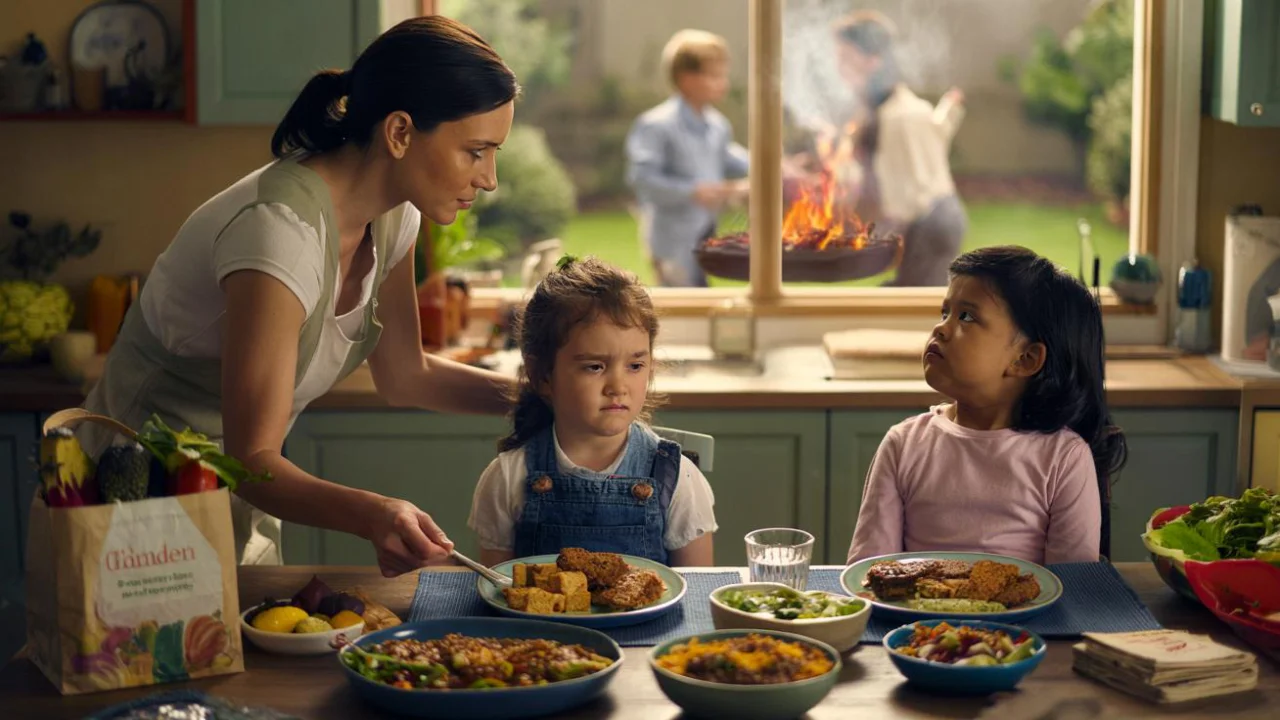
The kitchen timer buzzes at 6:30 PM, and Sarah’s stomach knots. Not from hunger, but from anticipation of the nightly battle about to unfold. Her eight-year-old son Jake peers over her shoulder as she stirs the lentil shepherd’s pie, his face already twisting into that familiar expression of disappointment.
“Can’t we just have real meat like Tommy’s mom makes?” he pleads, tugging at her apron. His younger sister Mia joins in from the dining room: “Yeah! Why do we always have to eat weird food?”
Sarah takes a deep breath, wooden spoon trembling slightly in her hand. This vegan mother refuses cooking meat for her children, despite their daily protests, because she believes something they can’t see yet. In her mind, she pictures them at twenty-five, maybe thirty, calling to thank her for the foundation she’s building now, one plant-based meal at a time.
When Family Values Clash at the Dinner Table
Across kitchens worldwide, a growing number of vegan mothers are standing firm against their children’s requests for meat, creating household tensions that extend far beyond what’s served for dinner. These families navigate a complex emotional landscape where love, ethics, and childhood desires collide daily.
The conflict runs deeper than simple food preferences. For many vegan mothers, refusing to cook meat represents a fundamental ethical boundary they cannot cross, even when faced with tears and tantrums. They view their stance not as deprivation, but as protection—shielding their children from what they see as unnecessary animal suffering while building healthier eating habits.
Dr. Amanda Richards, a family nutritionist specializing in plant-based diets, explains: “These mothers often face the hardest parenting moments when their values directly conflict with their children’s immediate wants. They’re playing the long game while kids live in the present moment.”
Children, however, experience this boundary differently. To them, mom’s refusal feels like punishment or embarrassment, especially when friends enjoy chicken nuggets and hamburgers that seem forbidden in their household. The gap between parental intention and childhood perception creates daily friction that can strain family relationships.
The Real-World Challenges Vegan Families Face
Beyond the dinner table arguments, vegan mothers who refuse to cook meat encounter numerous practical challenges that affect the entire family dynamic:
- Social isolation during birthday parties and family gatherings where meat is the centerpiece
- Increased meal preparation time and grocery costs for specialty ingredients
- Criticism from extended family members and friends who view the restriction as extreme
- School lunch complications where children feel different from their peers
- Restaurant visits that become exercises in negotiation rather than family bonding
- Constant need to justify parenting choices to other adults and authority figures
The emotional toll on children shouldn’t be underestimated. Many report feeling embarrassed when friends come over, frustrated by limited food choices, and confused about why their family follows different rules than others.
Child psychologist Dr. Mark Thompson notes: “Kids this age desperately want to fit in. When their home life feels dramatically different from their peers, it can create real anxiety and resentment that parents need to acknowledge and address.”
| Child’s Age | Common Reactions | Typical Duration | Parental Strategy |
|---|---|---|---|
| 5-7 years | Confusion, acceptance with occasional protests | Brief episodes | Simple explanations, focus on fun foods |
| 8-10 years | Embarrassment, peer comparison, active resistance | Extended arguments | Involve in cooking, educate about choices |
| 11-13 years | Rebellion, testing boundaries, social anxiety | Ongoing tension | Compromise on special occasions, open dialogue |
| 14+ years | Independent food choices, questioning values | Gradual resolution | Respect autonomy while maintaining home rules |
The Long-Term Vision These Mothers Hold
Despite daily struggles, vegan mothers who refuse cooking meat maintain unwavering belief in their approach. They envision their adult children appreciating the ethical foundation, environmental consciousness, and health benefits they received through childhood.
Many point to research showing plant-based diets can reduce risks of heart disease, certain cancers, and obesity. They hope their children will thank them for establishing healthy eating patterns early, even if those patterns felt restrictive at the time.
Environmental concerns also drive their conviction. These mothers believe they’re raising children who understand their food choices impact climate change, animal welfare, and global sustainability. They see themselves as preparing the next generation for a more conscious relationship with food.
Registered dietitian Lisa Chen observes: “The mothers I work with aren’t trying to punish their kids. They genuinely believe they’re giving them advantages that will become apparent in adulthood—better health, clearer values, and a broader perspective on food systems.”
Some adult children of vegan families do indeed express gratitude for their upbringing. They report feeling more adventurous with vegetables, having better cooking skills, and possessing a stronger ethical framework around food choices than their peers.
Finding Balance Between Values and Family Harmony
The challenge for vegan mothers lies in maintaining their ethical boundaries while preserving positive family relationships. Some find success through compromise strategies that honor both their values and their children’s social needs.
Flexible approaches might include allowing meat at restaurants or friends’ houses while maintaining a plant-based home environment. Others focus on making vegan versions of favorite foods or involving children in cooking to increase buy-in.
Communication plays a crucial role. Mothers who explain their reasoning in age-appropriate ways, acknowledge their children’s feelings, and remain open to dialogue tend to experience less family conflict over time.
Family therapist Dr. Jennifer Walsh suggests: “The key is helping children understand this isn’t about control or punishment, but about deeply held beliefs. When kids feel heard and respected, even within firm boundaries, they’re more likely to eventually appreciate their parents’ consistency.”
Ultimately, each vegan mother who refuses to cook meat makes a calculated bet on the future. They endure present-day tears and arguments because they believe their adult children will look back with understanding, maybe even gratitude, at the values-based foundation they received during childhood.
FAQs
Can children be healthy on a vegan diet without any meat?
Yes, well-planned vegan diets can meet all nutritional needs for children when properly supplemented and monitored by healthcare providers.
What do vegan mothers do when their kids refuse to eat the food provided?
Most maintain consistent boundaries while ensuring variety and involving children in meal planning and preparation to increase acceptance.
Do children of vegan families eventually appreciate their upbringing?
Many adult children express gratitude for learning diverse cooking skills, developing ethical food awareness, and having strong vegetable consumption habits.
How do vegan families handle social situations involving meat?
Strategies vary from bringing separate foods to events, choosing restaurants with vegan options, or allowing flexibility outside the home while maintaining household rules.
What’s the biggest challenge for children in vegan families?
Social pressure and feeling different from peers, especially during school lunches, parties, and gatherings where meat-based foods are central.
Should vegan parents force their dietary choices on their children?
Parenting experts suggest explaining values clearly, maintaining consistent household rules, but allowing increased autonomy as children mature and can make informed choices.


