
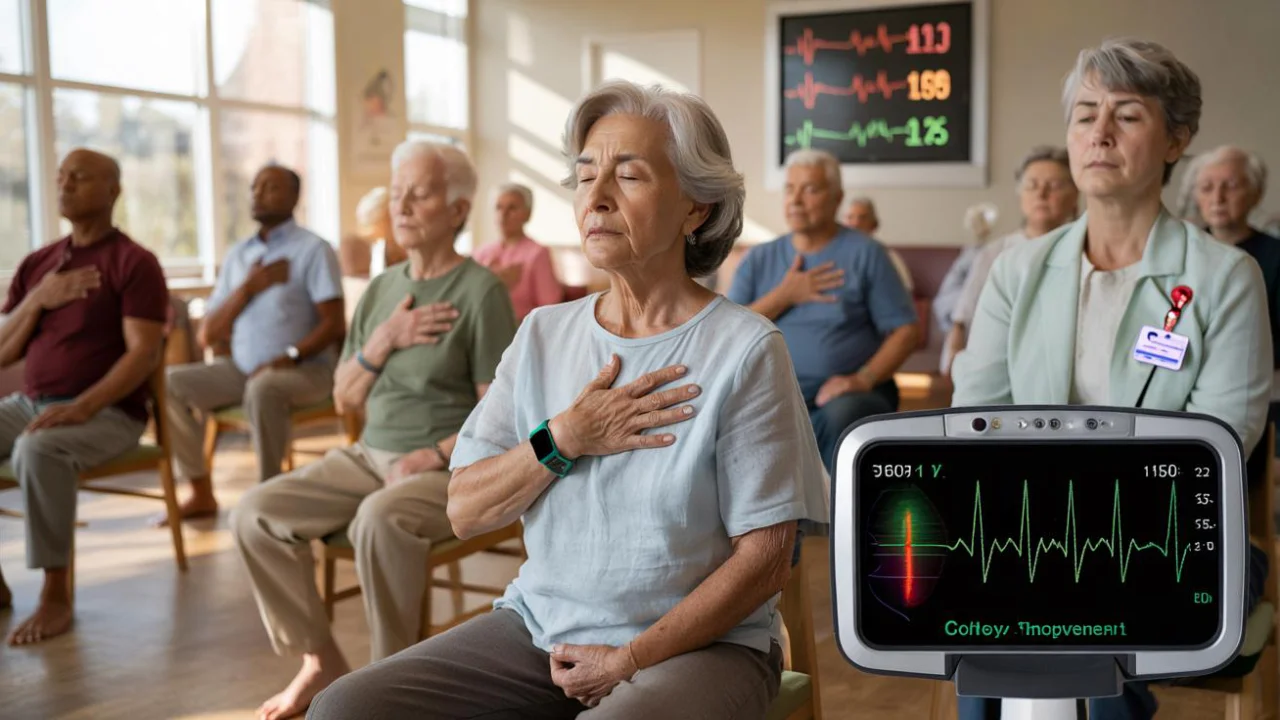
Margaret clutched her phone, staring at the numbers with growing panic. Her resting heart rate had jumped from 58 to 71 overnight, and she couldn’t understand why. For months, she’d religiously followed her breathing exercise routine, watching those digital digits drop like a personal victory scoreboard. At 75, she’d become obsessed with achieving the “perfect” pulse her wellness app promised would keep her healthy.
But that Tuesday morning, as she sat in her kitchen feeling dizzy after her usual deep breathing session, Margaret wondered if she’d been chasing the wrong goal all along. Her neighbor, a retired cardiologist, had mentioned something that stuck with her: “Sometimes our bodies know better than our gadgets.”
The truth about breathing exercises for older adults isn’t as simple as “lower equals better.” Behind those satisfying numbers lies a more complex story that many seniors are just beginning to understand.
The breathing exercise that became a numbers game
The technique itself seems harmless enough. You settle into a comfortable chair, place one hand on your chest and another on your belly, then breathe slowly through your nose for four counts. Hold for a moment, then exhale through pursed lips for six to eight counts. Within minutes, your smartwatch celebrates with falling heart rate numbers and stress reduction scores.
For older adults managing multiple health concerns, this breathing exercise offers something precious: control. After decades of doctors’ visits, medication schedules, and health uncertainties, here’s finally something they can influence directly.
“I started seeing patients who were more focused on their breathing app scores than their actual symptoms,” says Dr. Patricia Chen, a geriatric cardiologist at Johns Hopkins. “They’d come in worried about a heart rate of 68 when they’d been celebrating 62 the week before.”
The problem isn’t the breathing technique itself. Controlled breathing can reduce stress, improve sleep quality, and help manage anxiety. But when older adults fixate on achieving lower and lower resting heart rates, the exercise transforms from wellness practice to wellness trap.
What the heart rate numbers really mean for seniors
Here’s what many breathing exercise programs don’t emphasize clearly enough: resting heart rate ranges vary significantly with age, medication, and individual health conditions. The “ideal” numbers promoted by fitness trackers often reflect younger, healthier populations.
| Age Group | Typical Resting HR Range | Concerning Low Range |
|---|---|---|
| 60-70 years | 60-80 bpm | Below 55 bpm |
| 70-80 years | 65-85 bpm | Below 60 bpm |
| Over 80 years | 70-90 bpm | Below 65 bpm |
The hidden risks of aggressively lowering heart rate through breathing exercises include:
- Dizziness and lightheadedness during daily activities
- Increased fall risk due to inadequate blood flow
- Fatigue and reduced exercise tolerance
- Potential medication interactions, especially with heart medications
- Anxiety about “failing” to maintain low numbers
“We’re seeing older adults skip their regular walks because they don’t want to ‘ruin’ their resting heart rate,” explains Dr. Michael Rodriguez, a pulmonologist specializing in breathing disorders. “They’re missing the bigger picture of overall cardiovascular health.”
When wellness tracking becomes health anxiety
Sarah Chen knows this pattern well. The 68-year-old retired teacher discovered breathing exercises during the pandemic lockdown. Initially, the practice helped her manage stress and sleep better. But gradually, checking her heart rate became a morning ritual more important than breakfast.
She began timing her breathing sessions to optimize her “recovery scores.” She’d sit motionless for longer periods, avoiding activities that might elevate her pulse. When her numbers didn’t cooperate, she felt genuine distress.
“I realized I wasn’t actually healthier,” Sarah recalls. “I was just better at manipulating a number on my wrist.”
Her wake-up call came during a family gathering when she felt faint after standing up quickly. Her doctor discovered that while her resting heart rate looked impressive on paper, her cardiovascular system wasn’t responding appropriately to normal daily demands.
Finding the balance between breathing benefits and obsession
The solution isn’t abandoning breathing exercises entirely. These techniques offer genuine benefits for older adults, including stress reduction, better sleep, and improved emotional regulation. The key lies in shifting focus from numbers to actual well-being.
Healthcare experts recommend a more holistic approach:
- Practice breathing exercises for relaxation, not heart rate manipulation
- Focus on how you feel rather than what your device displays
- Maintain regular physical activity alongside breathing practice
- Discuss heart rate goals with healthcare providers
- Consider turning off real-time heart rate notifications
“The best breathing exercise is the one that helps you feel calmer and more centered,” notes Dr. Lisa Park, a behavioral medicine specialist. “If you’re checking your pulse every five minutes, you’ve missed the point entirely.”
For older adults taking heart medications, the conversation becomes even more nuanced. Beta blockers, calcium channel blockers, and other cardiac medications already influence heart rate. Adding aggressive breathing techniques to lower it further could create unwanted interactions.
The real measure of breathing exercise success
Margaret eventually found her balance. She still practices her breathing exercises, but she’s learned to judge success differently. Instead of celebrating a low heart rate number, she notices whether she slept well, feels less anxious, or enjoyed her daily walk without breathlessness.
Her resting heart rate settled into the high 60s, and she stopped trying to push it lower. More importantly, she stopped feeling dizzy and resumed her normal activities without fear of “ruining” her scores.
The uncomfortable truth about breathing exercises for older adults isn’t that they’re harmful. It’s that our relationship with health metrics can sometimes overshadow actual health. A lower resting heart rate achieved through mindful breathing can be wonderful. But when that number becomes more important than feeling well, moving confidently, and living fully, we’ve lost sight of what wellness really means.
FAQs
Are breathing exercises safe for all older adults?
Most breathing exercises are safe, but seniors with heart conditions or on cardiac medications should consult their doctor before starting intensive breathing practices.
What’s a healthy resting heart rate for someone over 65?
Generally 60-85 beats per minute is normal, but individual ranges vary based on fitness level, medications, and health conditions.
How often should older adults do breathing exercises?
Five to ten minutes daily is typically sufficient for stress reduction benefits without risking obsessive behavior around heart rate numbers.
Can breathing exercises cause dizziness in seniors?
Yes, aggressive deep breathing can cause lightheadedness, especially in older adults with circulation issues or those taking blood pressure medications.
Should I stop using my fitness tracker during breathing exercises?
Consider turning off real-time notifications and checking your overall patterns weekly rather than obsessing over daily fluctuations.
When should I be concerned about my resting heart rate?
Contact your healthcare provider if your resting heart rate consistently drops below 60 or rises above 90, or if you experience dizziness, fatigue, or chest discomfort.


