
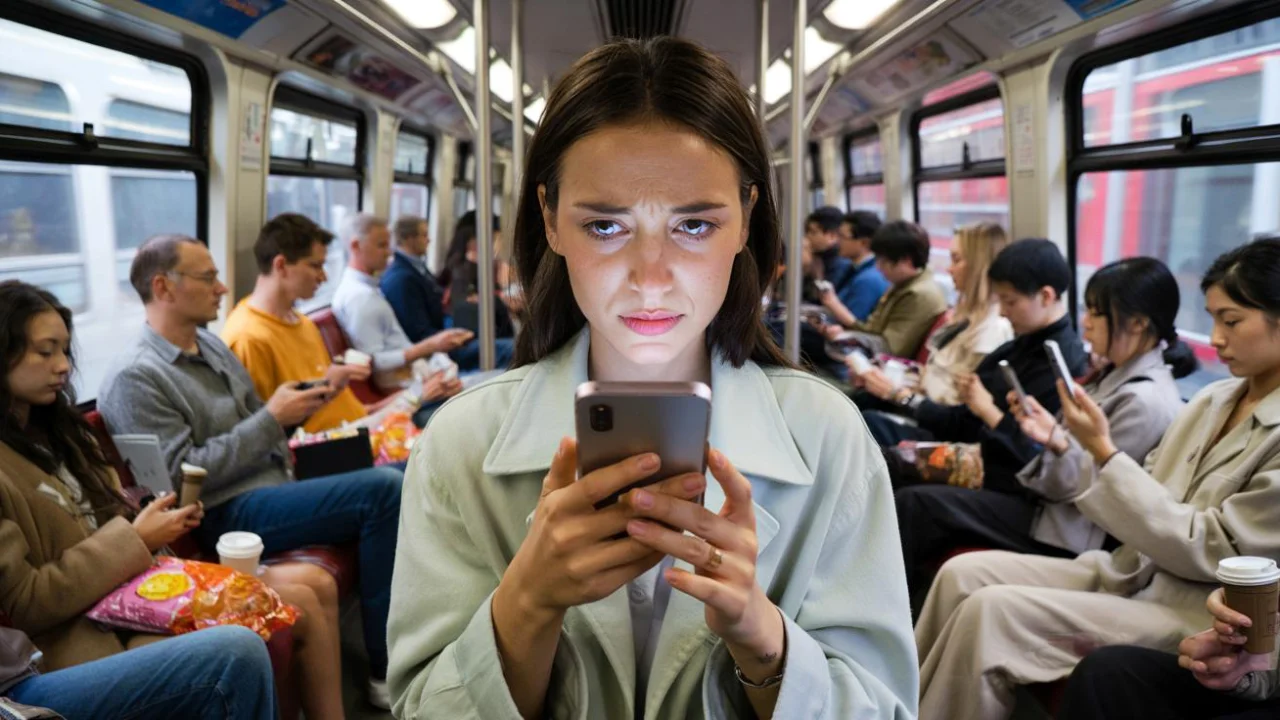
Sarah stares at her phone screen at 6:30 AM, watching two notifications fight for her attention. Her meditation app cheerfully reminds her it’s time for “mindful morning breathing,” while DoorDash tempts her with a breakfast burrito deal that expires in twelve minutes. She taps the meditation app, closes it after thirty seconds, then orders the burrito.
This isn’t weakness. It’s the daily reality of living with a virtuous smartphone that’s programmed to both enable and judge us. Your phone has become the most conflicted object in your life, simultaneously your enabler and your conscience, your dealer and your therapist.
Welcome to the age of the righteous rectangle in your pocket, where every swipe reveals which tribe you belong to today.
When Your Phone Becomes Your Moral Compass
The modern smartphone doesn’t just connect you to the world—it judges your every move. It tracks how many steps you didn’t take, how many hours you wasted scrolling, how many times you picked it up when you promised yourself you wouldn’t. Dr. Rachel Chen, a digital wellness researcher, explains it simply: “We’ve created devices that are simultaneously the source of our problems and the solution to them.”
This contradiction has split smartphone users into two distinct camps. On one side are the comfort addicts—people who embrace their phone’s ability to make life effortless. They order groceries with a tap, binge-watch shows in bed, and use their devices to eliminate every possible friction from daily life.
On the other side are the digital ascetics. They download apps to block other apps, set their phones to grayscale, and celebrate screen-free Sundays like religious holidays. They use the same technology to fight technology itself.
The irony? Both groups are using identical devices. The only difference is which apps they choose to hate themselves for using.
The Battle for Your Home Screen
Your smartphone’s home screen tells the story of this internal war. Take a close look at any phone today and you’ll see the evidence:
- The Comfort Camp: Food delivery apps prominently displayed, shopping shortcuts, entertainment apps grouped for easy access, and social media apps that never get buried in folders
- The Ascetic Army: Meditation timers front and center, screen time tracking widgets, minimalist wallpapers, and focus apps trying to tame the chaos
- The Conflicted Middle: Fitness apps next to pizza ordering, productivity planners beside mindless games, creating a home screen that looks like a battlefield
This split reveals something deeper about our society. “We’re living through a period where convenience and self-improvement have become competing religions,” says behavioral economist Dr. Marcus Rivera. “Your phone is the church where you worship both.”
| Comfort Addicts | Digital Ascetics |
|---|---|
| Embrace ease and instant gratification | Pursue digital minimalism and delayed gratification |
| Use apps to eliminate daily friction | Use apps to create intentional friction |
| See phones as life enhancement tools | View phones as necessary evils to be controlled |
| Average 6+ hours daily screen time | Target under 2 hours daily screen time |
The most fascinating part? Most people switch between these camps multiple times per day. You might start your morning with a mindfulness app, spend lunch scrolling TikTok, use a productivity tracker all afternoon, then fall asleep watching Netflix.
The Psychology Behind Our Phone Personalities
This smartphone split reflects deeper anxieties about modern life. The comfort addicts aren’t lazy—they’re overwhelmed. They use their phones to outsource decision-making in a world that demands too many choices. Why spend twenty minutes planning dinner when an app can deliver something decent in fifteen minutes?
The digital ascetics aren’t superior—they’re terrified. They’ve seen what unlimited convenience does to human agency and they’re fighting back with the only tools they have. They use their virtuous smartphone features like digital armor against their own worst impulses.
“Both responses are rational,” explains Dr. Lisa Park, a technology anthropologist. “We’re the first generation trying to maintain human agency in a world designed to eliminate it. Some people surrender, others resist, most do both.”
The smartphone companies know this. That’s why the same device that suggests you order dessert at 11 PM also offers to help you track your eating habits. They’re not being hypocritical—they’re being smart. They’ve created a product that serves both your impulses and your regrets.
What This Means for Society
This smartphone divide is creating new forms of social class. The comfort addicts and digital ascetics don’t just use different apps—they’re developing different values, different daily rhythms, and different relationships with time itself.
The implications are already visible. In offices, the digital ascetics arrive early, phones silenced, ready for deep work. The comfort addicts slide in checking notifications, ordering coffee through apps, managing their lives through screens. Neither approach is wrong, but they’re increasingly incompatible.
Dating apps report that “digital wellness compatibility” has become a common dealbreaker. Parents argue about whether screen time tracking makes kids more responsible or more anxious. Restaurants notice some customers photographing their “mindful eating” while others barely look up from their phones while eating.
“We’re witnessing the birth of two different ways of being human in the digital age,” says sociologist Dr. James Wilson. “The question isn’t which one wins—it’s whether they can coexist.”
The answer might lie in recognizing that your virtuous smartphone isn’t the problem or the solution. It’s just a mirror reflecting your own complicated relationship with control, comfort, and choice in the modern world.
Maybe the real victory isn’t choosing a side in this digital civil war. Maybe it’s learning to live with the contradiction, accepting that sometimes you need the burrito and sometimes you need the breathing exercise, and your phone will cheerfully provide both while gently judging you for wanting either.
FAQs
What exactly is a “virtuous smartphone” feature?
These are built-in tools designed to promote healthier phone usage, like screen time trackers, focus modes, meditation reminders, and app usage limits that your phone uses to gently scold your digital behavior.
Are comfort addicts actually addicted to their phones?
Not necessarily. Many are simply using their devices to manage overwhelming daily demands, choosing convenience over complexity in a world that offers too many options.
Do digital ascetics actually use their phones less?
Studies show they often use their phones just as much as everyone else, but they feel more guilty about it and spend more time trying to control their usage patterns.
Can you be both a comfort addict and digital ascetic?
Absolutely. Most people switch between these modes throughout the day, using their phone for convenience in some moments and practicing digital discipline in others.
Is this smartphone split actually causing social problems?
Emerging research suggests it’s creating new forms of social division, affecting everything from workplace dynamics to romantic relationships, as people develop incompatible approaches to technology use.
Will this divide get worse over time?
As smartphones become more sophisticated at both enabling and monitoring behavior, the tension between convenience and control will likely intensify, potentially creating even more distinct digital lifestyle tribes.


