
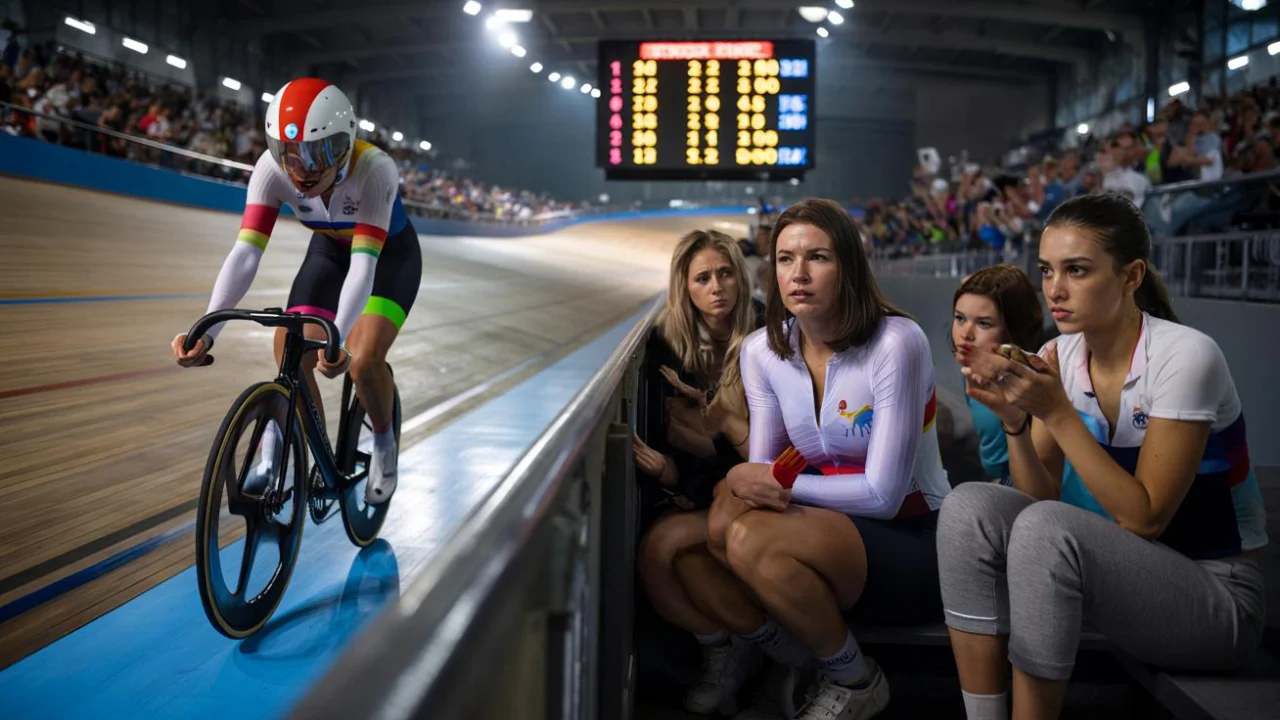
Sarah clutched her daughter’s hand as they walked toward the cycling track, the familiar pre-race buzz filling the air. Emma had been training for months, dreaming of breaking her personal best in the junior women’s championship. But as they approached the start line, Sarah noticed something different in the atmosphere. The usual excited chatter among parents had been replaced by hushed conversations and sideways glances.
When the race began, one cyclist pulled away from the pack with an ease that seemed almost otherworldly. Emma, who had never finished outside the top three, crossed the line in seventh place, her face a mixture of confusion and disappointment.
“Mom, I don’t understand,” Emma whispered as they watched the winner celebrate on the podium. “I’ve never been beaten by that much before.”
The Growing Debate Around Transgender Women’s Sport
Across the country, scenes like this are becoming increasingly common in women’s athletics. The participation of transgender women in female sports categories has created a complex debate that touches the very heart of competitive fairness, inclusion, and what it means to have separate sporting categories for men and women.
The issue has moved beyond academic discussions into real-world consequences that are reshaping the landscape of women’s sport. Records are being broken, scholarships redistributed, and young athletes are questioning their place in competitions they’ve trained years to enter.
“We’re seeing a fundamental shift in how women’s sports operate,” explains Dr. Michael Thompson, a sports physiologist at Manchester University. “The biological advantages that typically separate male and female athletic performance don’t simply disappear with transition.”
The silence in many venues speaks louder than any protest. Parents, coaches, and athletes find themselves caught between supporting inclusion and protecting the integrity of women’s competitions.
What the Numbers Tell Us About Performance Gaps
The statistics surrounding transgender participation in women’s sport paint a complex picture that varies significantly across different disciplines:
| Sport | Average Performance Gap (Pre-transition) | Retention After Transition | Impact on Records |
|---|---|---|---|
| Cycling | 12-15% | 8-10% | Significant |
| Swimming | 10-12% | 6-8% | Moderate |
| Track & Field | 10-14% | 7-9% | Varies by event |
| Weightlifting | 15-20% | 10-12% | Substantial |
Key factors influencing the debate include:
- Bone density and muscle mass retention during transition
- Height and limb length advantages in certain sports
- Lung capacity and cardiovascular differences
- Age at which transition begins
- Duration of hormone therapy treatment
“The science is still evolving, but what we know suggests that some athletic advantages persist even after hormone therapy,” notes sports medicine researcher Dr. Emma Richardson. “Each sport needs to be evaluated individually.”
Real Stories From the Starting Line
Behind every statistic is a human story. Take the case of 16-year-old Jessica, who had been swimming competitively since age eight. After years of 5 AM training sessions and strict dietary regimens, she qualified for her state championships in three events.
At the meet, she found herself competing against a transgender athlete who had transitioned two years prior. Despite achieving personal best times in all her events, Jessica finished outside the medal positions for the first time in her high school career.
“I’m not angry at anyone personally,” Jessica explains. “But I’ve worked so hard to get where I am, and now I’m wondering if all that effort matters anymore.”
Her mother, Lisa, struggles with the situation: “We want to be inclusive and supportive, but we also want our daughter to have the same opportunities we had growing up. It feels like an impossible balance.”
The ripple effects extend beyond individual competitions. College scouts who once watched Jessica’s races have redirected their attention. Scholarship opportunities that seemed within reach now feel distant.
Policy Responses Across Different Organizations
Sports governing bodies worldwide are grappling with how to create fair and inclusive policies. The responses vary dramatically:
- World Athletics has implemented strict testosterone limits and restrictions on transgender participation
- Swimming’s governing body FINA created an “open” category alongside male and female divisions
- The International Olympic Committee has shifted policy decisions to individual sports federations
- Many collegiate and high school systems are still developing their approaches
“There’s no perfect solution that satisfies everyone,” admits former Olympic swimmer turned policy advisor Sarah Chen. “We’re trying to balance competing values of fairness, inclusion, and competitive integrity.”
Some proposed alternatives include:
- Open categories that welcome all athletes regardless of gender identity
- Handicapping systems similar to golf or sailing
- Separate transgender divisions in larger competitions
- Sport-specific policies based on physiological advantages
The Voices Often Left Unheard
While much of the public debate focuses on policy and physiology, the emotional impact on young female athletes often gets overlooked. Many feel caught between supporting their transgender peers and protecting their own competitive opportunities.
“I don’t want to sound mean or exclusionary,” says 17-year-old track athlete Maria. “But I’ve been working toward a college scholarship since I was 12. When someone with clear physical advantages competes in my category, it feels like those dreams are slipping away.”
The psychological impact extends beyond competition results. Female athletes report increased anxiety about their future in sports, questioning whether continued investment in training makes sense.
Parents find themselves in equally difficult positions, wanting to support inclusion while advocating for their daughters’ opportunities.
“We taught our kids that hard work pays off and that everyone deserves respect,” explains one father whose daughter lost a regional title. “Now we’re struggling to explain why both of those things can be true at the same time.”
Looking Toward Uncertain Futures
The debate around transgender women’s sport shows no signs of resolving quickly. Legal challenges are mounting, policies continue evolving, and individual stories accumulate on both sides of the discussion.
What seems certain is that the traditional model of simply having male and female categories may no longer be sufficient to address the complexities of modern athletic competition.
Young athletes like Emma continue training, hoping that by the time they reach their competitive peak, the sports world will have found solutions that honor both inclusion and fair play.
Until then, the silence in the stands speaks volumes about a community grappling with questions that have no easy answers.
FAQs
Do transgender women have unfair advantages in sports?
Scientific studies suggest some physical advantages from male puberty may persist even after hormone therapy, though the extent varies by sport and individual circumstances.
What policies currently govern transgender participation in women’s sports?
Policies vary widely by organization, ranging from testosterone limits to complete exclusions to open categories, with many still developing their approaches.
Are scholarships being affected by transgender participation?
Yes, some female athletes report losing scholarship opportunities or having reduced chances at college recruitment due to changed competitive landscapes.
What alternatives to current gender categories are being considered?
Options include open categories, handicapping systems, separate transgender divisions, and sport-specific policies based on physiological advantages.
How are young female athletes responding to these changes?
Many report increased anxiety about their competitive futures, with some questioning whether continued intensive training is worthwhile.
Is there a solution that satisfies everyone?
Currently, no policy approach has achieved universal acceptance, as the debate involves competing values of inclusion, fairness, and competitive integrity.


