
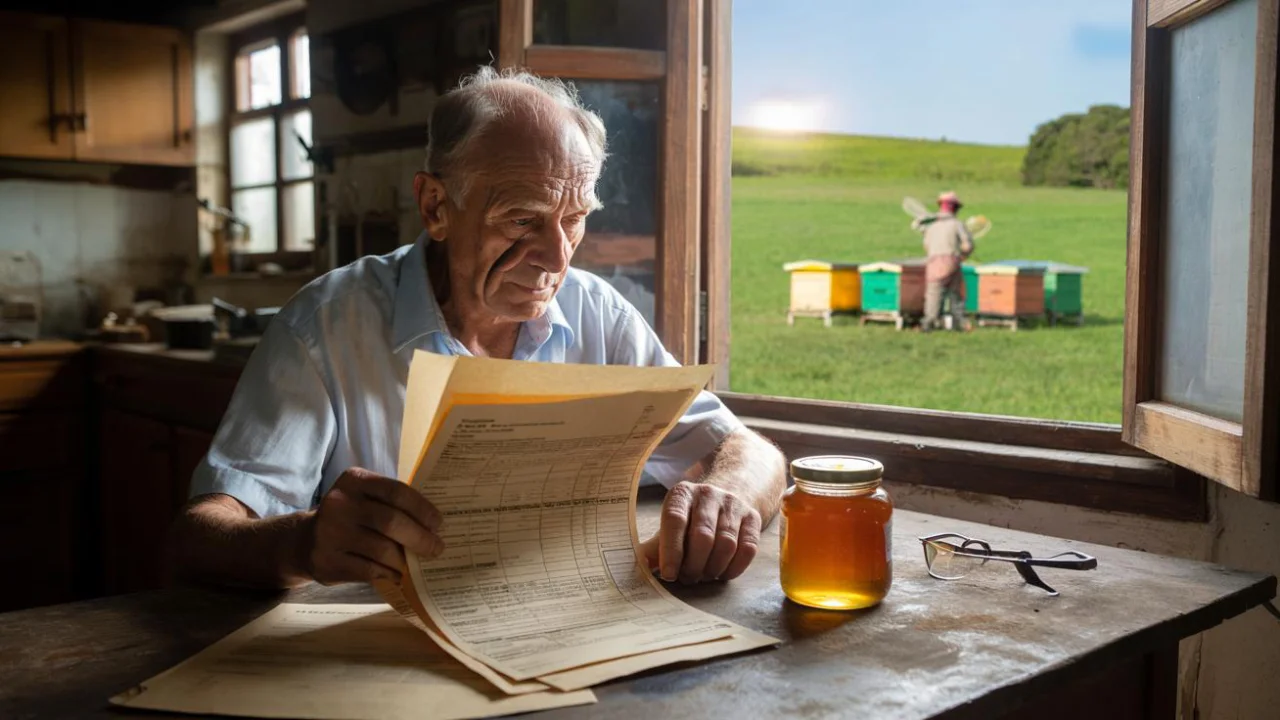
The letter arrived on a Tuesday morning, the kind of pale brown envelope that makes your stomach drop before you even open it. Jean Moreau, a 72-year-old retired metalworker, was having his morning coffee when he tore it open at his kitchen table. Right next to his daily cup sat a jar of golden honey – the same honey that had just turned his quiet retirement into a bureaucratic nightmare.
For three years, Jean had let his young neighbor Martin place a few beehives at the back of his unused field. No rent, no contracts, just a friendly handshake and the promise of a dozen jars of honey each year. It seemed like the neighborly thing to do. Martin was struggling to start his beekeeping business and couldn’t afford to lease proper land.
But according to the tax office letter in Jean’s trembling hands, this simple act of kindness had transformed him into something he never imagined: a commercial farmer liable for agricultural taxes and social contributions. The beekeeper land tax issue had just become his personal crisis.
How a Digital Algorithm Turned Kindness Into Commerce
The trouble started with routine bureaucratic cross-checking. Martin, being a responsible small business owner, had properly declared his beekeeping activity to authorities. He listed the location of his hives, mentioned the land parcels, and filled out all the required forms. Those parcels, officially registered under Jean’s name, created a red flag in the tax system’s database.
“The algorithm doesn’t understand human relationships,” explains Marie Dubois, a rural tax consultant who has seen dozens of similar cases. “It sees land being used for commercial production and automatically assumes the landowner is profiting.”
What the computer couldn’t process was the reality: Jean received no money, charged no rent, and had never sold a single drop of honey. His “payment” was purely the satisfaction of helping a neighbor and enjoying fresher vegetables thanks to the increased pollination in his garden.
But tax systems aren’t designed for neighborly goodwill. They operate on binary logic: commercial or personal, profit or loss, taxable or exempt. The gray area of community cooperation simply doesn’t compute.
The Real Cost of Bureaucratic Misunderstanding
The financial implications of this beekeeper land tax classification can be devastating for retirees on fixed incomes. Here’s what Jean suddenly faced:
| Tax Category | Annual Cost | Retroactive Period |
|---|---|---|
| Agricultural Social Contributions | €800-1,200 | 3 years |
| Professional Tax | €300-600 | 3 years |
| Income Tax on “Benefits” | €150-300 | 3 years |
| Administrative Penalties | €200-500 | Current year |
For Jean, this meant a potential bill of over €4,000 – money he simply didn’t have. His monthly pension barely covered his living expenses, and the idea of paying taxes on honey he’d never sold felt absurd.
The psychological toll proved equally damaging. “I felt like I was being punished for being a good neighbor,” Jean recalls. “It made me question whether I should have just said no when Martin asked for help.”
Stories like Jean’s are becoming increasingly common as automated tax systems struggle to interpret real-world relationships. The rigid categories that work for large-scale agriculture fail spectacularly when applied to small-scale community cooperation.
Why This Affects More Than Just Rural Neighbors
“This case highlights a fundamental problem with how we define economic activity,” says Professor Laurent Mercier, who studies rural economics at the University of Toulouse. “When acts of community support get reclassified as commercial ventures, we’re essentially discouraging social cohesion.”
The ripple effects extend far beyond individual cases:
- Rural communities become less willing to help small entrepreneurs
- Young farmers struggle to find affordable land arrangements
- Traditional forms of community cooperation disappear
- Legal costs increase as people seek protection through formal contracts
- Social trust erodes when kindness becomes a liability
Martin, the beekeeper at the center of Jean’s troubles, had to relocate his hives after the tax dispute erupted. “I felt terrible about what happened to Jean,” he explains. “Now I only work with commercial landlords who charge proper rent. It’s more expensive, but at least it’s clear.”
The irony is striking: the tax system, designed to ensure fairness, ended up penalizing the very behavior that builds stronger communities.
Fighting Back Against Algorithmic Injustice
Jean’s story doesn’t end with defeat. With help from a local taxpayer advocacy group, he successfully appealed the decision. The key was proving that no commercial relationship existed and that the honey represented genuine gifts between neighbors, not payment for land use.
Tax attorney Sarah Blanchard, who handled similar cases, offers this advice: “Document everything, even informal arrangements. Keep records showing no money changed hands, and be prepared to demonstrate that any benefits received were truly gifts, not compensation.”
Several European countries are now reviewing their agricultural tax codes to better accommodate community cooperation arrangements. France introduced a “good neighbor exemption” in 2023, specifically addressing cases where land use doesn’t involve monetary exchange.
But the damage to rural communities may already be done. Many potential helpers now think twice before offering assistance, worried about unexpected tax consequences. The unintended result: fewer opportunities for young entrepreneurs and weakened community bonds.
“We’ve created a system where being generous can make you a criminal in the eyes of the tax code,” observes rural sociologist Dr. Claire Fontaine. “That’s not the kind of society most people want to live in.”
Jean still grows vegetables in his garden, and they’re still beautifully pollinated – he found wild bees have moved in where Martin’s hives used to sit. But he admits he’s more cautious now about helping neighbors. The lesson of the beekeeper land tax dispute lingers: sometimes the cost of kindness is higher than anyone should have to pay.
FAQs
Can I be taxed for letting someone use my land for free?
Generally no, but if the arrangement looks commercial to tax authorities, you might face agricultural tax obligations. Proper documentation is crucial.
What counts as “commercial” land use for tax purposes?
Regular productive use, especially when the landowner receives benefits like crops or products, can trigger commercial classification even without cash payments.
How can I protect myself when helping neighbors with land use?
Keep clear records showing no commercial relationship exists, document that any benefits are genuine gifts, and consider consulting a tax professional.
Are there legal protections for community cooperation arrangements?
Some countries have “good neighbor” exemptions, but laws vary significantly. Check with local authorities before making informal arrangements.
What should I do if I receive a tax bill for helping someone?
Don’t ignore it. Gather documentation proving the non-commercial nature of the arrangement and consider appealing with professional help.
Will this issue affect urban areas too?
Similar problems can arise with community gardens, shared workshops, or any situation where property is used cooperatively without formal rental agreements.


