
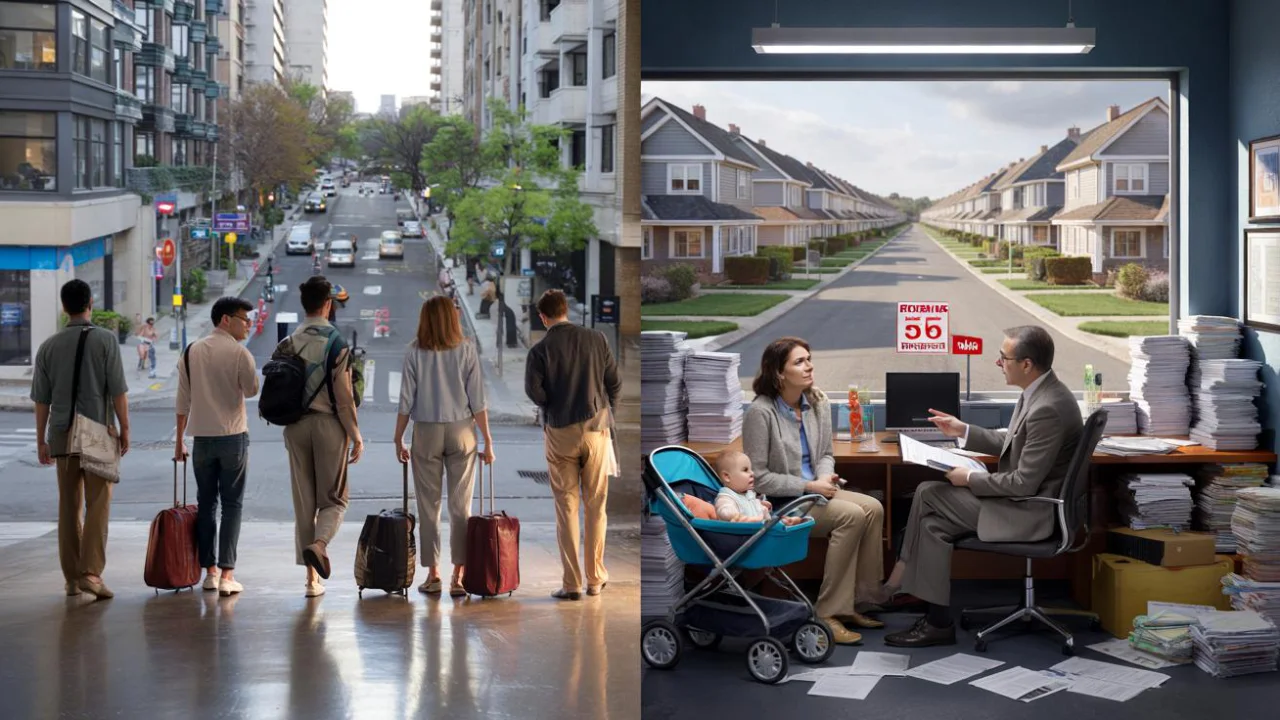
Sarah stared at the mortgage calculator on her laptop screen, the numbers blinking like a warning sign. Twenty-eight years old, solid job, decent savings—everything her parents said she needed to “get on the property ladder.” But as she scrolled through house listings, something gnawed at her stomach that wasn’t excitement.
Her friend Jake had just bought a condo across town. Three months later, his company relocated him to another state. Now he was stuck paying two rents—one for his new apartment, another disguised as mortgage payments on an empty box he couldn’t sell quickly enough.
Sarah closed the laptop and looked around her rental apartment. Clean, functional, flexible. No broken pipes to fix at midnight. No property taxes eating her paycheck. No chains tying her to one spot while the world shifted around her.
Maybe her parents were wrong. Maybe renting for life wasn’t giving up the dream—maybe it was the only rational choice left.
Why We’ve Been Sold a Lie About Homeownership
The obsession with buying homes runs deeper than economics. It’s woven into how we measure success, stability, and even adulthood itself. But this cultural programming ignores a fundamental truth: human beings are mobile creatures living in an increasingly mobile world.
“We’ve created this mythology that owning property equals security,” says housing economist Dr. Maria Rodriguez. “But for most people under 40, a mortgage is actually the biggest financial risk they’ll ever take.”
The numbers tell a stark story. The average American moves 11 times during their lifetime. Job markets shift every five years. Entire industries disappear overnight. Yet we’re supposed to sign up for 30-year financial commitments to single locations?
Renting for life offers something that homeownership can’t: the freedom to adapt when life changes direction. And life always changes direction.
The Hidden Costs That Make Mortgages a Luxury Most Can’t Afford
Beyond the monthly payment, homeownership comes with a mountain of hidden expenses that drain resources and limit options. Here’s what the real estate industry doesn’t advertise:
| Expense Category | Annual Cost Range | Renter Pays |
|---|---|---|
| Property Maintenance | $3,000-$8,000 | $0 |
| Property Insurance | $800-$2,500 | $200-$400 |
| Property Taxes | $2,000-$15,000 | $0 |
| Emergency Repairs | $1,500-$5,000 | $0 |
| HOA Fees | $0-$6,000 | $0 |
| Transaction Costs (buying/selling) | $15,000-$40,000 | Moving costs: $500-$2,000 |
The financial burden extends beyond individual households. When young professionals tie up their savings in down payments and monthly mortgage obligations, they have less money to spend on local businesses, start companies, or invest in their skills.
“Every dollar locked into home equity is a dollar that can’t circulate through the economy,” explains financial planner Tom Chen. “We’re creating a generation of house-poor people who own assets they can’t access.”
Meanwhile, renters maintain financial flexibility. They can pivot careers, relocate for opportunities, or weather economic downturns without the anchor of mortgage debt dragging them down.
- No responsibility for major repairs or renovations
- Ability to move quickly for job opportunities
- Lower monthly housing costs in most markets
- No risk of underwater mortgages during market crashes
- Access to amenities (pools, gyms, maintenance) without ownership burdens
How the Mortgage System Hurts Everyone Else
Homeownership isn’t just a personal financial choice—it’s a system that creates winners and losers across society. When governments prioritize homeowners through tax deductions, subsidies, and zoning policies, they effectively punish renters and newcomers.
The mortgage interest deduction alone costs taxpayers over $25 billion annually. That’s money that could fund education, infrastructure, or healthcare, instead going to subsidize the housing choices of people who already have enough wealth to buy homes.
“We’ve created a two-tier citizenship system,” says urban planning professor Dr. Lisa Park. “Homeowners get tax breaks and political representation. Renters get told they’re not ‘invested’ in their communities.”
This system drives up housing costs for everyone. When buying becomes artificially subsidized, it inflates property values and makes rental markets more expensive for those who can’t or won’t purchase homes.
Cities with the highest homeownership rates often have the worst housing affordability problems. San Francisco, with its obsession over property ownership, has priced out entire generations of workers. Meanwhile, cities like Berlin and Vienna, with strong rental cultures, maintain diverse, affordable neighborhoods.
The environmental impact is equally troubling. Suburban homeownership patterns create urban sprawl, longer commutes, and higher carbon footprints per person. Dense rental housing uses resources more efficiently and supports public transportation systems.
What Renting for Life Actually Looks Like
Contrary to popular belief, lifetime renters aren’t unstable or unsuccessful. They’re often more financially secure and professionally flexible than their mortgage-bound peers.
Consider Marcus, a 42-year-old software developer who has rented his entire adult life. While his friends stretched to buy homes in expensive suburbs, he chose well-located rental apartments. He invested his would-be down payment in index funds and his career development.
Today, his investment portfolio is worth more than most of his friends’ home equity. When the tech industry shifted, he relocated across the country in two weeks. When the pandemic hit, he downsized to save money without worrying about underwater mortgages or foreclosure.
“I own my freedom,” Marcus says. “My friends own houses, but their houses own them.”
The stigma around long-term renting is purely cultural. In many successful countries—Germany, Switzerland, Austria—renting for life is normal and respected. These nations often have stronger tenant protections and more stable rental markets than the United States.
Professional lifetime renters often display several advantages:
- Higher liquid savings and investment portfolios
- Greater career mobility and earning potential
- Lower stress levels around housing maintenance
- More time for family, hobbies, and personal development
- Stronger connection to urban centers and public transportation
The key is shifting perspective. Instead of seeing rent as “money down the drain,” recognize it as payment for flexibility, freedom, and professional services. You’re not building equity in a building—you’re investing in your ability to adapt and thrive in a changing world.
FAQs
What about building equity through homeownership?
Home equity is often an illusion—you can’t eat your walls or pay bills with theoretical property value. Most homeowners see minimal real returns after accounting for maintenance, taxes, and transaction costs.
Don’t landlords just raise rent every year?
In well-regulated rental markets, rent increases are limited and predictable. Meanwhile, homeowners face unpredictable costs for repairs, property taxes, and insurance that often exceed rental increases.
What happens when I’m old and still paying rent?
Smart lifetime renters invest the money they save by not buying homes. These investment returns often provide more retirement security than home equity, plus the flexibility to move to areas with lower living costs.
Isn’t renting just making someone else rich?
Homeownership also makes others rich—banks, insurance companies, real estate agents, and contractors all profit from mortgage debt. At least with renting, you’re paying for actual services and flexibility.
How do I find long-term rental stability?
Build good relationships with landlords, choose properties in stable neighborhoods, and consider longer-term lease agreements. Many landlords prefer reliable long-term tenants over constant turnover.
What about raising children while renting?
Children benefit more from financial stability and engaged parents than from specific buildings. Families who rent often live in more diverse neighborhoods with better schools and amenities than they could afford to purchase in.


