
Maria stared at her son’s empty lunchbox every morning, knowing she had nothing to put inside. The eight-year-old would grab it anyway, stuff it in his backpack, and pretend everything was normal at school. She worked two jobs but groceries kept getting more expensive. When her neighbor told her about the man who got arrested for feeding hungry schoolchildren, Maria felt something break inside her chest.
“They fined him for what I couldn’t do for my own kid,” she whispered, holding back tears. This wasn’t just about one man’s kindness anymore. This was about a system that punishes compassion while children go hungry in plain sight.
The case has sparked outrage across communities where feeding hungry schoolchildren has somehow become controversial instead of celebrated.
The shocking courtroom drama that changed everything
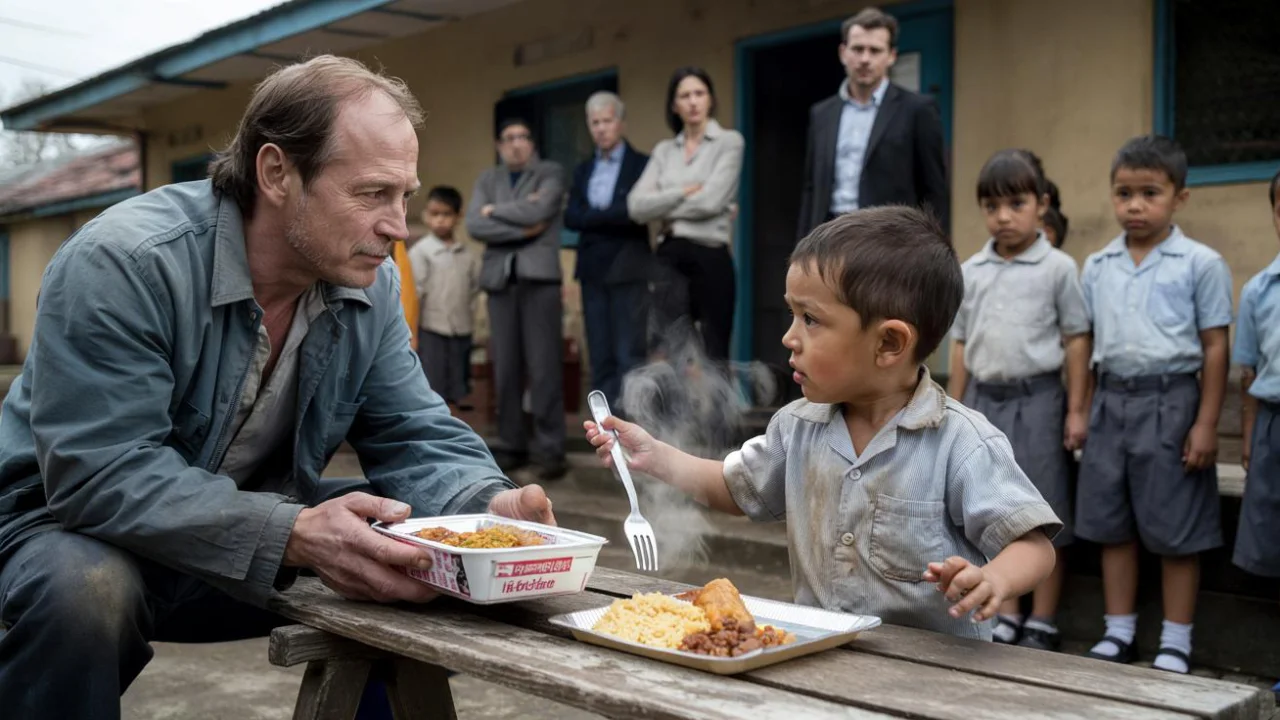
Daniel Martinez never thought his Tuesday would end in handcuffs. The 47-year-old restaurant owner had simply noticed the same group of children sitting empty-handed during lunch break, day after day. Their uniforms were clean but worn. Their backpacks light. Their eyes followed every student who walked by with food.
“I’ve been feeding my community for fifteen years,” Daniel told the judge. “When I see hungry kids, I don’t think about paperwork. I think about my own childhood.”
The prosecutor painted a different picture. They argued that feeding hungry schoolchildren without proper authorization created safety risks, disrupted school operations, and violated food distribution regulations. The fine? $500 plus court costs.
Parents packed the small courtroom, some supporting Daniel, others worried about the precedent. Teachers sat quietly in the back, caught between their hearts and their employment contracts.
The judge called it “well-intentioned but legally problematic behavior.” Daniel called it “doing what adults should do when children are hungry.”
Breaking down the legal maze around child hunger
The legal issues surrounding feeding hungry schoolchildren reveal a complex web of regulations that often prioritize procedure over basic human needs. Here’s what Daniel faced in court:
- Unauthorized food distribution charges
- Disruption of educational environment
- Failure to follow proper school visitor protocols
- Food safety regulation violations
- Trespassing on school property during restricted hours
| Legal Challenge | Potential Penalty | Daniel’s Situation |
|---|---|---|
| Unauthorized food distribution | $200-800 fine | $300 fine imposed |
| School safety violation | $100-500 fine | $150 fine imposed |
| Disrupting school operations | $50-300 fine | $50 fine imposed |
| Court costs | $75-200 | $125 charged |
Child welfare advocates argue these regulations create barriers to helping hungry children. “We’re criminalizing kindness while kids go without meals,” says Dr. Sarah Chen, a pediatric nutrition specialist. “The system is backwards.”
School administrators face their own dilemma. They want to help but worry about liability, health department violations, and district policies that could cost them their jobs.
The food Daniel provided met basic safety standards. It came from his licensed restaurant, was properly heated, and distributed in clean containers. Yet none of that mattered in the eyes of the law.
The ripple effect hitting communities nationwide
Daniel’s case isn’t isolated. Across the country, good Samaritans face similar challenges when feeding hungry schoolchildren becomes a legal issue instead of a moral imperative.
In Texas, a grandmother was warned against bringing sandwiches to her grandson’s school after other hungry children asked for food. In Oregon, a church group faced citations for distributing meals outside a middle school. In Florida, volunteers were told they needed permits to hand out fruit to students waiting for buses.
“We’re creating a society where helping hungry kids requires a lawyer,” observes Mark Rodriguez, a former school principal who now advocates for food access rights. “This should terrify every parent.”
The impact goes beyond legal fees and court dates. Children learn that hunger is acceptable, that bureaucracy matters more than basic needs, and that adults who try to help face punishment.
Teachers report feeling helpless when they see students struggling with hunger. Many use their own money to buy snacks for students, but they do it quietly to avoid the same legal issues Daniel faced.
Parents in low-income communities now fear asking for help, worried that seeking assistance for their children’s hunger might attract unwanted attention from authorities.
What happens next for hungry children
Daniel plans to appeal his case, with legal support from a children’s rights organization. His story has inspired donations to school lunch programs and sparked conversations about reforming food distribution laws.
“If helping hungry kids is illegal, then the law needs to change,” Daniel stated after leaving court. “I’ll pay the fine, but I won’t stop caring about these children.”
Some school districts are reviewing their policies around volunteer food programs. Others are expanding free meal eligibility. A few brave administrators are publicly supporting community members who want to help feed students.
The broader question remains: In a society where childhood hunger persists, should we be arresting the people trying to solve it?
Legal experts suggest the case could set precedent for how communities handle unofficial food assistance programs. The outcome may determine whether feeding hungry schoolchildren becomes easier or gets pushed further underground.
Meanwhile, children still arrive at school with empty stomachs, hoping someone cares enough to help—and hoping that someone won’t get arrested for doing so.
FAQs
Is it illegal to give food to hungry children at schools?
It depends on local laws and school policies, but many jurisdictions require permits or official approval for distributing food to minors on school property.
What happened to Daniel after his trial?
He was fined $500 plus court costs for feeding hungry schoolchildren, but he plans to appeal the decision and continue helping students.
Can parents bring extra food for other children at school?
Most schools have specific policies about food sharing due to allergy concerns and regulatory requirements, so it’s best to check with school administration first.
Are there legal ways to help feed hungry students?
Yes, many schools have official volunteer programs, food pantries, or partnerships with local organizations that allow community members to help within legal frameworks.
Why are there laws against feeding hungry children?
The laws exist primarily for food safety, liability protection, and maintaining school security, but critics argue they create unnecessary barriers to helping needy students.
How common is childhood hunger in schools?
Studies show that millions of children in the United States experience food insecurity, with many relying on school meal programs as their primary source of nutrition during the week.


