
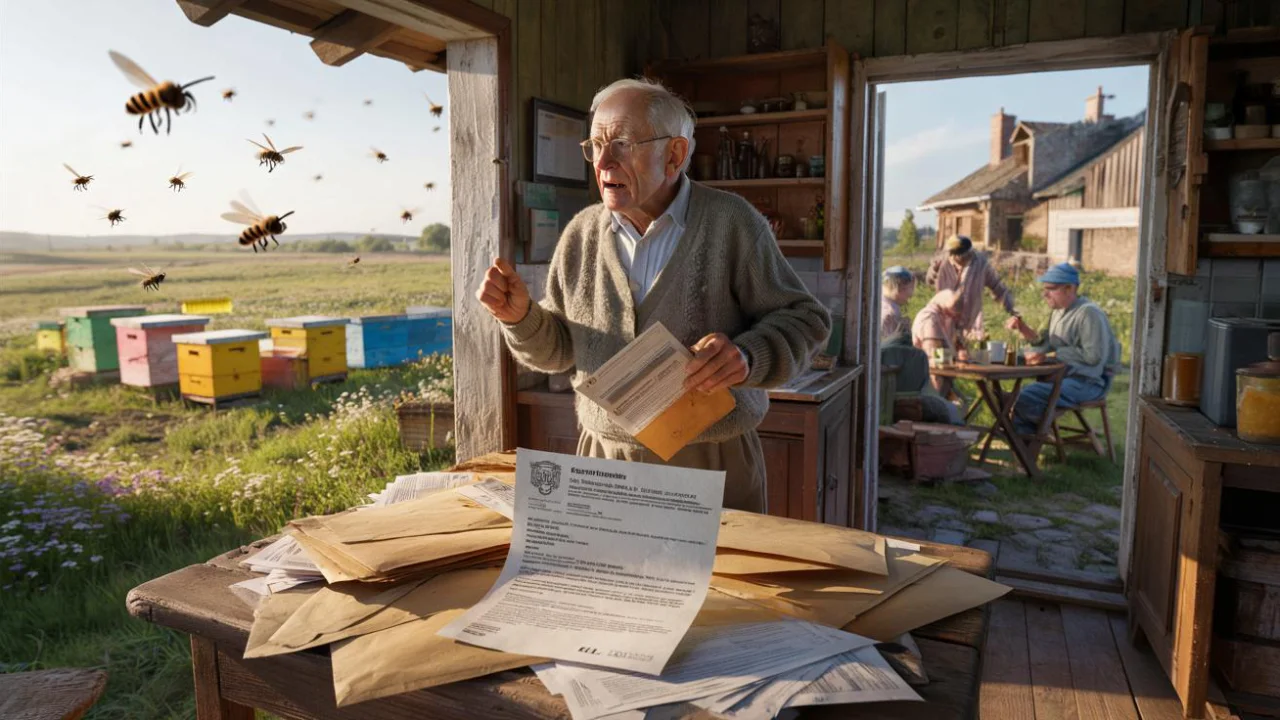
Marie-Claire still remembers the exact moment her neighbor’s kindness turned into a nightmare. She was watering her garden when she heard shouting from the house next door. Through the fence, she could see André waving a piece of paper in the air, his face red with anger and disbelief. The retired teacher who had spent decades helping struggling students was now struggling himself – all because he’d let a young beekeeper use his land for free.
“I just wanted to help the bees,” André told her later that evening, his voice shaking. “Now they’re treating me like I’m some kind of tax cheat.” The farmland tax bill in his hand had tripled overnight, transforming a simple act of environmental solidarity into a bureaucratic battle that would divide their entire community.
This isn’t just André’s story anymore. It’s become a symbol of something much bigger – a nation wrestling with the gap between what we say we value and how our systems actually work.
How a handshake became a tax nightmare
André Dubois never imagined that saying “yes” to a struggling beekeeper would land him in the center of a national debate about farmland tax policy. The 72-year-old retired literature teacher inherited three hectares of farmland from his parents, but his aging knees meant he couldn’t work it himself.
When 28-year-old beekeeper Thomas Leroux knocked on his door last spring, the conversation lasted barely five minutes. Thomas needed space for his hives but couldn’t afford the rental rates local farmers were charging. André’s land sat unused, covered in wildflowers that would be perfect for the bees.
“It seemed like the most natural thing in the world,” André recalls. “He needed help, I had land sitting empty, and everyone talks about saving the bees. What could go wrong?”
Everything, as it turned out. Six months later, tax authorities reclassified André’s property from agricultural land to commercial use. The reasoning? Beekeeping for honey production constitutes commercial activity, even when the landowner receives no compensation. The farmland tax assessment jumped from €340 per year to €1,247 – an increase that would strain any retiree’s budget.
“The bureaucrats see everything in black and white,” explains tax lawyer Patricia Moreau. “Either it’s agriculture or it’s not. There’s no category for ‘helping your neighbor save the environment.'”
Breaking down the farmland tax crisis
The controversy has exposed deep flaws in how France handles agricultural tax policy. Here’s what landowners and environmental advocates need to know:
| Land Classification | Tax Rate | Requirements |
|---|---|---|
| Active Agriculture | €113-€180 per hectare | Direct farming or formal lease agreement |
| Non-agricultural | €415-€490 per hectare | Any other land use |
| Commercial Activity | €520-€680 per hectare | Business operations on property |
The current farmland tax system creates several problems:
- Informal agreements get penalized, even when they support environmental goals
- Landowners face surprise tax bills with no advance warning
- Appeals processes can take years while payments remain due
- Rural communities lose incentive to cooperate on conservation projects
Tax assessor Jean-Luc Martineau defends the current approach: “We can’t make exceptions based on good intentions. That would open the door to massive abuse and revenue loss.”
But environmental lawyer Sophie Delaforge sees it differently: “We’re punishing exactly the kind of local cooperation that environmental policy should encourage. It’s completely backwards.”
The controversy has revealed how many similar cases exist across the country. Farmers lending strips of land for pollinator corridors, retirees allowing community gardens, landowners hosting solar cooperatives – all potentially facing unexpected farmland tax increases.
The ripple effects of rigid rules
André’s case has become a lightning rod for broader frustrations about bureaucratic inflexibility. Local newspapers picked up the story first, then regional television, and finally national media outlets. Social media amplified the outrage, with thousands sharing stories of their own encounters with seemingly heartless administrative decisions.
The beekeeper, Thomas, feels terrible about the situation. “André was helping me get started, and now he’s being punished for it,” he says. “I offered to pay the extra tax myself, but he won’t let me. He says it’s about the principle now.”
That principle has divided their small town. Some residents support André completely, organizing a petition and fundraising campaign to help pay his tax bill. Others worry that bending rules, even for good causes, sets dangerous precedents.
“Where does it end?” asks local council member François Durand. “If we excuse this case, what about the next person who claims they’re just helping someone? The tax system has to be fair and predictable.”
The controversy has practical implications beyond André’s wallet. Other landowners are now hesitant to make informal agreements with environmental groups. Beekeepers report difficulty finding placement for new hives. Community conservation projects face new uncertainty about potential tax consequences.
“People are scared to be generous now,” observes rural development specialist Dr. Amélie Rousseau. “That’s exactly the opposite of what we need to address environmental challenges.”
Meanwhile, André continues his appeal process, supported by a growing network of advocates who see his case as emblematic of broader problems with administrative rigidity. The outcome could influence how France balances environmental goals with tax policy for years to come.
The retired teacher who once taught his students about civic responsibility now finds himself at the center of a debate about what civic responsibility actually means in practice. As he puts it: “I thought I was being a good citizen. Turns out being a good citizen and following the rules aren’t always the same thing.”
FAQs
Can landowners avoid farmland tax increases when helping environmental projects?
Currently, only formal agricultural lease agreements qualify for reduced rates, even for environmental uses like beekeeping.
How long does it take to appeal a farmland tax reclassification?
Appeals typically take 12-18 months, but taxes remain due during the process.
Are other countries facing similar conflicts between environmental goals and tax policy?
Yes, similar cases have emerged across Europe as governments promote conservation while maintaining strict tax frameworks.
What changes are advocates pushing for in farmland tax law?
Proposed reforms include environmental exemptions for conservation activities and advance notification before reclassification.
Can beekeepers help landowners avoid tax increases?
Some legal experts suggest formal lease agreements for minimal rent might qualify for agricultural rates, but this remains untested.
How common are surprise farmland tax increases like André’s case?
Tax authorities don’t release specific numbers, but rural advocacy groups report hundreds of similar cases annually.


