
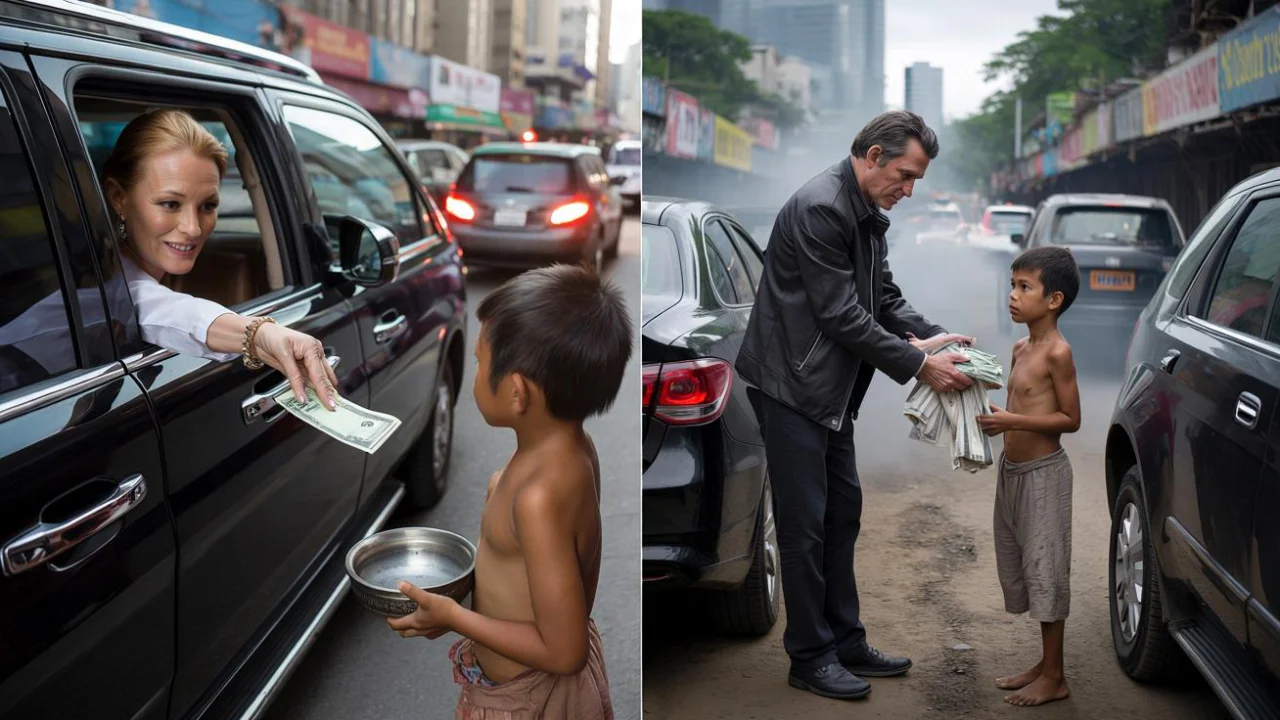
Sarah stared at the receipt in her hand, feeling that warm glow of righteousness. She’d just donated $500 to a children’s charity at the mall kiosk, complete with a glossy brochure showing smiling kids in matching school uniforms. The volunteer had been so grateful, so passionate about “changing lives.” As Sarah walked to her car, she passed a homeless veteran holding a cardboard sign. She avoided eye contact and hurried past, her good deed quota already filled for the month.
Three weeks later, Sarah learned that less than 20% of her donation would actually reach children. The rest disappeared into administrative costs, executive salaries, and marketing budgets designed to extract more money from people just like her.
Sometimes the most generous hearts fund the most heartless systems.
The billion-dollar feel-good industry
Every year, Americans alone give over $450 billion to charitable causes. That’s more than the GDP of most countries, flowing through a vast network of nonprofits, NGOs, and aid organizations. We donate because we want to help, because we believe our money will reach the people who need it most.
But charitable donations often follow a twisted path between your wallet and actual help. The charity sector has evolved into a massive industry where helping people has become secondary to sustaining the organizations themselves.
“I’ve worked in international development for 15 years,” says Maria Rodriguez, a former program director for a major NGO. “The dirty secret is that many organizations spend more energy chasing funding than solving problems. Success is measured by how much money you raise, not how many lives you actually improve.”
The numbers paint a sobering picture. Administrative costs routinely consume 30-50% of donations at major charities. Executive compensation packages often exceed $300,000 annually, even at organizations claiming to fight poverty. Meanwhile, the people these charities claim to serve remain trapped in cycles of dependency.
How your kindness creates corruption
The most dangerous charitable donations aren’t the obviously fraudulent ones. They’re the well-intentioned gifts that inadvertently strengthen corrupt systems. When foreign aid floods into developing countries, it creates perverse incentives that can actually increase suffering.
Local governments learn they don’t need to provide basic services because international donors will step in. Politicians can redirect public funds into their own pockets while charities build the schools and clinics they should be funding. This creates what economists call “moral hazard” on a national scale.
Consider these troubling patterns in charitable giving:
- Donated clothing destroys local textile industries, eliminating jobs and economic opportunities
- Food aid creates dependency while undermining local agriculture and markets
- Medical missions provide temporary relief but fail to build sustainable healthcare systems
- Educational programs impose foreign curricula that don’t match local needs or job markets
- Emergency aid gets diverted by warlords, corrupt officials, and criminal networks
“We’ve created an aid industrial complex where the primary beneficiaries are the aid organizations themselves,” explains Dr. James Chen, an economics professor who studies development patterns. “The incentive structure rewards organizations for perpetuating problems, not solving them.”
| Charity Type | Typical Admin Costs | Money Reaching Recipients | Long-term Impact |
|---|---|---|---|
| Large International NGOs | 35-50% | 50-65% | Often creates dependency |
| Celebrity-backed Causes | 40-60% | 40-60% | Highly variable |
| Religious Organizations | 15-30% | 70-85% | Mixed results |
| Local Community Groups | 5-15% | 85-95% | Often more sustainable |
The people paying the real price
Behind every feel-good charity story lies a harder truth about who actually benefits from our generosity. The most vulnerable people often become props in a system designed to extract money from donors rather than solve problems.
Take the “sponsorship” model used by many child-focused charities. Donors believe they’re directly supporting a specific child, receiving photos and letters that create an emotional bond. The reality is often very different.
Children in these programs frequently receive little to no direct benefit from sponsorships. Instead, they’re coached to write letters to strangers and pose for photos that fuel more fundraising. The psychological impact of being treated as a charity case, rather than a whole human being, can last a lifetime.
Adult recipients of charitable aid face similar dehumanization. They’re reduced to statistics, sob stories, and photo opportunities. Their actual needs and preferences become secondary to what donors want to fund.
“The charity industry has turned poverty into a commodity,” says Dr. Amara Okafor, who researches aid effectiveness in West Africa. “Poor people become raw material for fundraising campaigns, not partners in solving problems.”
Local communities suffer when charitable donations undermine their own institutions and leadership. Well-meaning outsiders arrive with solutions to problems they don’t fully understand, often ignoring existing community knowledge and resources. This creates a colonial dynamic where help flows downward from wealthy outsiders to “grateful” recipients.
The accountability gap
Most donors never see the full picture of where their money goes. Charity watchdog organizations provide some oversight, but they focus mainly on financial transparency rather than actual effectiveness. A charity can spend money efficiently on programs that accomplish nothing meaningful and still receive high ratings.
The lack of real accountability creates a moral hazard where charitable organizations optimize for fundraising rather than results. They invest heavily in marketing campaigns that tug at heartstrings while spending minimal resources on actually measuring impact.
Consider these red flags that most donors miss:
- Vague mission statements that promise to “help” or “support” without specific goals
- Fundraising materials heavy on emotional appeals but light on concrete outcomes
- Programs that have operated for decades without measurably improving conditions
- Organizations that refuse to share detailed impact reports with donors
- Charities that spend more on fundraising and administration than direct services
The current system allows ineffective charities to persist indefinitely as long as they can keep raising money. There’s no market mechanism to eliminate organizations that aren’t actually helping people.
Rethinking how we help
This doesn’t mean charitable donations are always harmful or that we should stop trying to help others. It means we need to be much more thoughtful about how we give and what we expect from our generosity.
The most effective charitable donations tend to share certain characteristics. They support local organizations led by people from the communities they serve. They focus on building capacity and systems rather than providing temporary relief. They measure success based on long-term outcomes, not just money raised or services delivered.
“The best help I’ve seen comes from donors who see themselves as partners, not saviors,” explains Rebecca Martinez, who coordinates community development programs in rural Guatemala. “They invest in local leadership and let communities determine their own priorities.”
Before making charitable donations, ask yourself these questions: Does this organization measure and report actual outcomes? Are local communities genuinely involved in designing and running programs? Will this help build long-term capacity or just provide temporary relief?
Sometimes the most generous thing you can do is not give money at all. Instead, you might support political changes that address root causes of problems, buy products from social enterprises, or use your skills to volunteer directly with local organizations.
FAQs
How can I tell if a charity is actually effective?
Look for organizations that publish detailed impact reports, involve local communities in program design, and focus on measurable long-term outcomes rather than just feel-good stories.
What percentage of my donation should go to actual programs?
At least 75% should reach direct services, with the remainder covering legitimate administrative costs. Be suspicious of charities where less than 60% goes to programs.
Are local charities always better than large international ones?
Not always, but they’re often more effective because they understand local contexts better and have lower overhead costs. They’re also more accountable to the communities they serve.
Should I stop giving to charity altogether?
No, but be more strategic about it. Research organizations thoroughly, prioritize those with proven track records, and consider giving your time and skills in addition to money.
Why do so many charities focus on fundraising instead of results?
Because donors respond more to emotional appeals than evidence of effectiveness. Charities that invest in good marketing often raise more money than those that focus solely on programs.
How can I make sure my donation actually helps people?
Give to organizations that let beneficiaries decide how money is used, publish regular impact reports, and operate with full financial transparency. Consider direct cash transfer programs that put money directly into recipients’ hands.


