
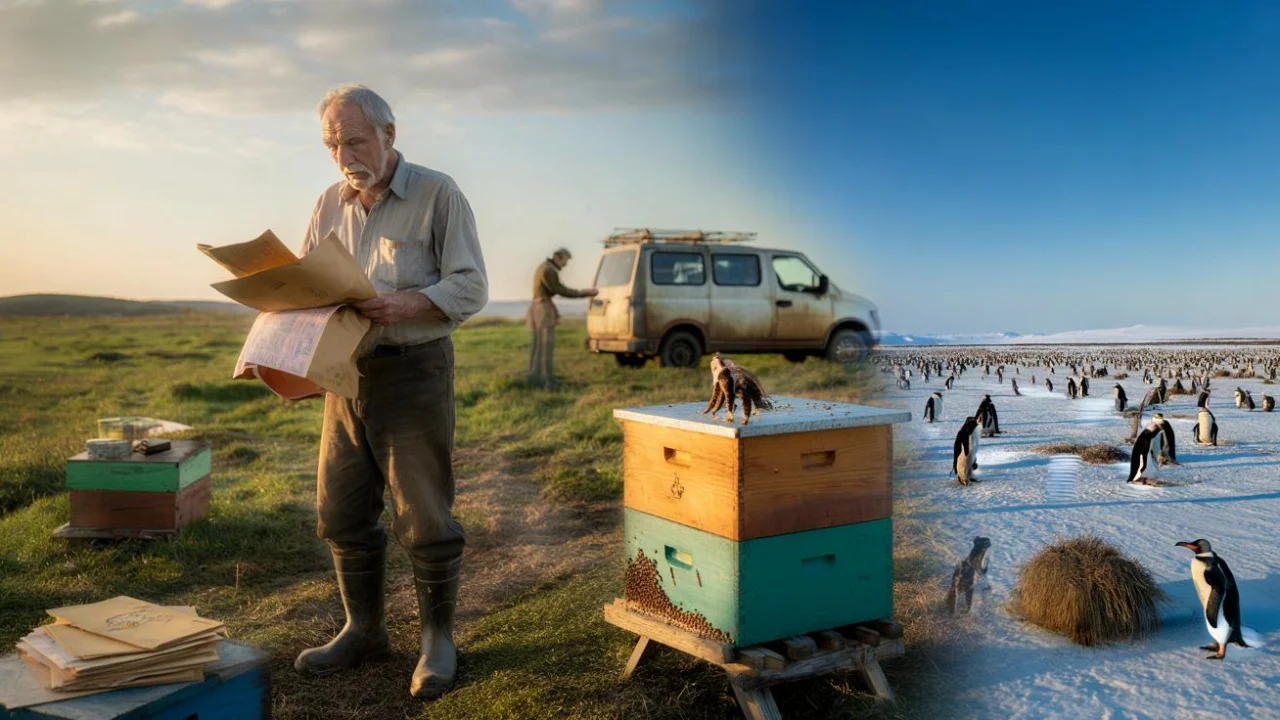
Margaret Thompson had always been proud of her sprawling countryside property in rural Devon. At 68, she watched her late husband’s vegetable garden slowly return to wildflowers, feeling both peaceful and guilty about the unused land. When Tom, a young beekeeper with calloused hands and genuine enthusiasm, asked if he could place three hives in her back field, it felt like destiny.
“Just help the bees,” she told him over tea. “That’s payment enough.” No contracts, no lawyers, just a handshake and the sound of buzzing life returning to her quiet acres.
Six months later, an envelope from Her Majesty’s Revenue and Customs changed everything. Margaret’s property had been reclassified for agricultural tax purposes. The bill was £2,400 annually – more than her monthly pension. Her act of kindness had become a financial nightmare that threatened to force her from the home she’d shared with her husband for thirty years.
How Agricultural Tax Classifications Are Catching Generous Landowners Off Guard
Margaret’s story reflects a growing crisis across rural Britain and beyond. Tax authorities are increasingly aggressive about reclassifying residential properties that host any form of agricultural activity, regardless of scale or profit motive. The agricultural tax system, designed for commercial farming operations, doesn’t distinguish between a multinational agribusiness and a retired teacher helping local wildlife.
“We’re seeing this pattern everywhere,” explains rural tax advisor James Mitchell. “People think they’re doing good for the environment, then get hammered with tax bills they never saw coming.”
The trigger isn’t always obvious. Sometimes it’s beehives, sometimes it’s allowing a neighbor to graze sheep, or letting someone grow vegetables for the local market. In each case, tax authorities interpret these activities as commercial agriculture, regardless of the landowner’s intentions or financial involvement.
Meanwhile, satellite technology has revealed something extraordinary in Antarctica: tens of thousands of previously unknown penguin nesting sites scattered across the icy continent. This discovery has reignited fundamental questions about land ownership, environmental protection, and who has the right to claim territories – especially when those territories are home to wildlife that recognizes no human boundaries.
The Hidden Costs of Helping Others Use Your Land
The agricultural tax trap operates through a complex web of regulations that most property owners never encounter until it’s too late. Here’s what triggers the reclassification:
- Commercial beekeeping operations, even small-scale ones
- Regular crop production for sale, regardless of profit levels
- Livestock grazing arrangements lasting more than six months
- Timber harvesting or tree farming activities
- Any agricultural activity generating reportable income
The financial impact varies dramatically by location and land value, but the pattern remains consistent: generous property owners face unexpected tax burdens that can reach thousands of pounds annually.
| Activity Type | Typical Tax Increase | Common Duration Before Detection |
|---|---|---|
| Beekeeping (1-5 hives) | £1,500-£4,000 annually | 6-18 months |
| Small market gardening | £800-£2,500 annually | 12-24 months |
| Sheep/cattle grazing | £1,200-£3,500 annually | 3-12 months |
| Timber operations | £2,000-£8,000 annually | 1-6 months |
“The system punishes kindness,” says property law specialist Sarah Chen. “You can’t be generous with your land without potentially facing serious financial consequences.”
When Nature Defies Human Claims of Ownership
The Antarctic penguin discovery adds another layer to this complex debate about land use and ownership. Scientists using advanced satellite imagery have identified massive emperor penguin colonies in areas previously thought uninhabitable. These findings challenge existing territorial claims and research agreements across the frozen continent.
Unlike Margaret’s predicament with tax authorities, the Antarctic situation involves multiple nations asserting claims over territories that support wildlife populations existing long before any human ever set foot on the ice. The penguins, oblivious to political boundaries, have established thriving communities in areas that several countries consider their sovereign territory.
“Nature doesn’t recognize human ownership,” observes environmental lawyer Dr. Robert Hayes. “These penguin colonies have been there for centuries, but now their discovery is causing diplomatic tensions because we assume everything on Earth can be owned by someone.”
The Real-World Impact on Ordinary People
For property owners like Margaret, the agricultural tax issue creates immediate practical problems. Many face impossible choices: abandon arrangements that benefit local agriculture and wildlife, or absorb significant financial burdens they never anticipated.
The ripple effects extend beyond individual landowners:
- Beginning farmers struggle to find affordable land for small operations
- Beekeepers face reduced access to pesticide-free locations
- Rural communities lose opportunities for local food production
- Environmental conservation efforts face unexpected bureaucratic obstacles
Tom, Margaret’s beekeeper, represents hundreds of small agricultural operators caught in similar situations. “I can’t afford to cover her tax bill, but I can’t bear the thought of her losing money because she helped me,” he explains. His three hives produce enough honey for local farmers’ markets, but generate barely enough income to cover equipment costs.
The Antarctic penguin situation parallels this in unexpected ways. Just as Margaret’s land use changed overnight due to external factors beyond her control, the penguin colonies exist in territories where human claims shift based on changing knowledge, political priorities, and resource interests.
Searching for Solutions in an Imperfect System
Some regions are beginning to recognize these problems and adjust their approaches. Scotland recently introduced exemptions for small-scale agricultural activities on residential properties, while several US states have created “hobby farm” categories that provide tax relief for non-commercial agricultural use.
“We need common-sense policies that distinguish between helping your community and running a business,” argues rural advocacy group spokesperson Linda Foster.
Margaret’s story, meanwhile, continues to unfold. She’s appealing her agricultural tax classification while working with local officials to find a solution that doesn’t penalize generosity. Tom has offered to relocate his hives, but Margaret insists on fighting for a principle that extends far beyond her personal situation.
The broader question remains: in a world where satellite technology can reveal hidden penguin colonies overnight, and where acts of kindness can trigger unexpected tax burdens, how do we balance human systems with natural realities? The answer may determine whether generosity toward land, wildlife, and community can survive in an increasingly complex regulatory environment.
FAQs
Can I be hit with agricultural tax just for letting someone keep bees on my property?
Yes, if tax authorities determine that beekeeping constitutes commercial agricultural activity on your land, you could face reclassification and higher taxes regardless of your personal involvement or profit.
How long does it typically take for tax authorities to discover agricultural activities on residential property?
Detection varies widely, from 3 months to over 2 years, depending on the activity type and local enforcement patterns.
Are there legal ways to help local farmers without triggering agricultural tax?
Some regions offer exemptions for small-scale or charitable agricultural activities, but you should consult local tax advisors before making any arrangements.
What should I do if I receive an unexpected agricultural tax bill?
Appeal the classification immediately while consulting with a tax professional who specializes in agricultural property law – time limits for appeals are often strict.
Do Antarctic territorial claims affect penguin conservation efforts?
Yes, overlapping territorial claims can complicate research permissions and conservation initiatives, though international treaties generally prioritize scientific cooperation.
Can small-scale agricultural activities really force someone to sell their home?
Unfortunately, yes – if the agricultural tax burden becomes unaffordable, property owners may face financial pressure that forces them to sell or cease the activities that triggered the reclassification.


