
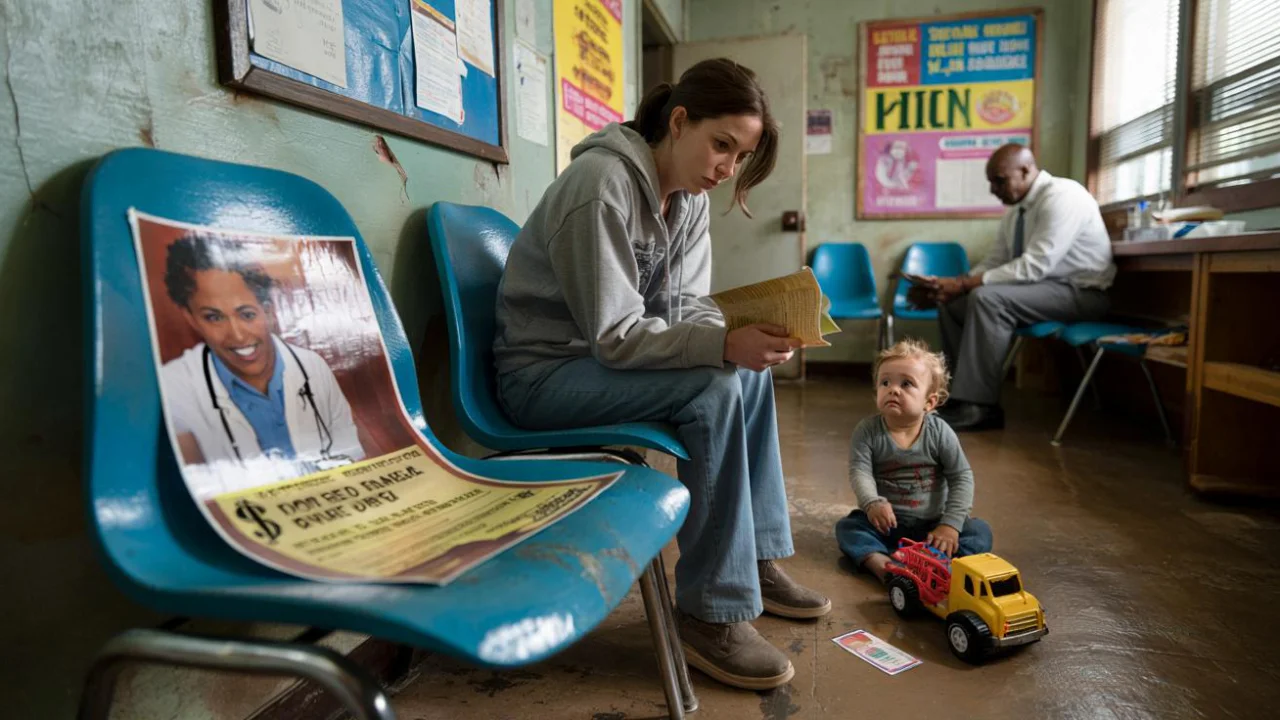
Maria stared at the crumpled flyer in her hand, the bold “$300 CASH” promise gleaming under the harsh fluorescent lights of the community health clinic. Her three-year-old daughter tugged at her worn jeans while her baby son slept fitfully in his stroller. The rent was due in five days, and her part-time job at the gas station barely covered groceries. The flyer made it sound so simple: “One procedure. Financial freedom. No more worries about unexpected pregnancies.”
What the glossy paper didn’t mention was that the “procedure” was permanent sterilization. Or that similar programs across the country were specifically targeting women like her—poor, overwhelmed, and desperate for any way out of the financial hole that seemed to grow deeper every month.
Maria’s story isn’t unique. Across America, sterilization for cash programs are quietly operating in low-income communities, promising immediate financial relief in exchange for permanent reproductive choices. But behind these seemingly helpful offers lies a disturbing question: when does helping people become controlling them?
The Dark History of Paying People Not to Reproduce
Sterilization for cash isn’t a new concept. It’s the modern face of policies that have targeted poor communities for decades, wrapped in friendlier packaging but carrying the same troubling assumptions about who deserves to have children.
Project Prevention, founded in 1997, has paid over 7,000 people to undergo sterilization or long-term birth control. The organization specifically targets people struggling with addiction, offering $300 for “permanent” procedures and smaller amounts for temporary birth control. While founder Barbara Harris claims she’s preventing children from being born into difficult situations, critics argue the program exploits vulnerable people during their most desperate moments.
“When someone is going through withdrawal or hasn’t eaten in days, $300 isn’t a choice—it’s survival,” explains Dr. Sarah Chen, a reproductive rights advocate who has studied coercive sterilization programs. “These programs prey on desperation while claiming to offer help.”
The demographics tell a stark story. Studies show that cash-for-sterilization programs disproportionately target women of color, women with disabilities, and women living in poverty. The same communities that faced forced sterilization throughout much of the 20th century are now being offered money to make the same “choice.”
How These Programs Actually Work
Modern sterilization incentive programs operate through a network of clinics, social service offices, and even prisons. Here’s how they typically function:
| Program Type | Target Population | Payment Amount | Requirements |
|---|---|---|---|
| Addiction-focused programs | People with substance abuse issues | $200-$300 | Proof of addiction, completion of procedure |
| Welfare-linked incentives | Benefit recipients | Varies by state | Current welfare enrollment |
| Prison-based programs | Incarcerated women | Reduced sentence or privileges | Completion before release |
| General poverty programs | Low-income individuals | $100-$500 | Income verification |
The recruitment tactics vary, but they share common elements:
- Advertisements in free clinics, food banks, and social service offices
- Referrals from case workers and healthcare providers
- Presentations at addiction treatment centers
- Outreach through homeless shelters and low-income housing
- Social media campaigns targeting specific demographics
“The messaging is always about empowerment and choice,” notes Professor James Rodriguez, who studies population control policies. “But when you look at where these flyers show up and who gets approached, the targeting becomes obvious.”
The Human Cost of Financial Desperation
Behind every statistic is a person facing an impossible decision. Take Jennifer, a 28-year-old mother of two from Alabama who considered sterilization for cash when her husband lost his job. “They made it sound like I was being responsible,” she recalls. “Like I was doing the right thing for my family by making sure we didn’t have more kids we couldn’t afford.”
Jennifer ultimately decided against the procedure, but many others don’t have that luxury. Research shows that women who participate in cash-for-sterilization programs often experience regret later, especially if their financial situations improve or they enter new relationships.
The psychological impact extends beyond individual choices. These programs send a clear message about whose reproduction society values and whose it doesn’t. Children growing up in targeted communities internalize the idea that their existence is seen as a problem to be solved rather than a life to be celebrated.
“When you pay people in certain neighborhoods not to have kids, you’re essentially putting a price tag on their genetic material and deciding it’s not worth much,” explains Dr. Lisa Washington, a bioethicist who has worked with affected communities.
Why This Approach Won’t End Poverty
Proponents of sterilization for cash argue that reducing births in low-income families will eventually reduce poverty rates. The math seems simple: fewer mouths to feed equals more resources for existing family members. But this logic ignores the complex realities of how poverty actually works.
Poverty isn’t caused by poor people having too many children. It’s created and maintained by:
- Minimum wages that haven’t kept pace with living costs
- Lack of affordable healthcare and childcare
- Educational systems that fail to provide equal opportunities
- Discrimination in hiring and housing
- Geographic isolation from economic opportunities
- Intergenerational wealth gaps that compound over time
Countries with strong social safety nets and living wages have low poverty rates regardless of birth rates. Meanwhile, areas with aggressive population control measures often see poverty persist or worsen as underlying economic issues remain unaddressed.
“You could sterilize every poor woman in America tomorrow, and ten years from now you’d still have the same percentage of people struggling to make ends meet,” argues economist Dr. Michael Torres. “Because poverty is about power structures, not procreation.”
The Rights That Get Lost in the Transaction
Beyond the practical failures, cash-for-sterilization programs raise fundamental questions about human rights and dignity. The right to reproductive autonomy—including both the right to have children and the right not to have them—is considered a basic human right under international law.
But rights become meaningless when circumstances make only one choice viable. When a single mother with hungry children is offered more money than she makes in a month to undergo sterilization, the element of free choice disappears. What remains is economic coercion dressed up as personal empowerment.
The programs also violate principles of equal treatment and non-discrimination. No one is offering middle-class families cash to limit their reproduction, even though wealthy families consume far more resources per child than poor ones. The targeting reveals the classist and often racist assumptions underlying these policies.
Legal challenges have emerged in several states, but they face an uphill battle. Courts have generally held that as long as the procedures are technically voluntary and participants sign consent forms, the programs don’t violate constitutional rights. This narrow legal interpretation ignores the broader context of economic desperation that makes these “choices” anything but free.
What Real Solutions Look Like
If the goal is truly to reduce poverty and improve outcomes for children, evidence-based alternatives exist. Countries that have successfully reduced both poverty and birth rates have done so through comprehensive approaches:
- Universal healthcare that includes free contraception and family planning
- Living wages that allow families to support themselves
- Quality education and job training programs
- Affordable childcare that enables parents to work
- Housing assistance that provides stable homes
- Food security programs that ensure no child goes hungry
These solutions cost more upfront than paying people for sterilization, but they address root causes rather than symptoms. They also respect human dignity by expanding choices rather than limiting them.
“When people have real options—good jobs, healthcare, education—they make their own reproductive choices based on what’s right for their families, not what pays the bills this month,” notes community organizer Rosa Martinez, who has fought against sterilization programs in her city.
FAQs
Are cash-for-sterilization programs legal?
Yes, these programs currently operate legally in most states as long as participants sign consent forms and procedures are technically voluntary.
How much money do these programs typically offer?
Payments range from $100 to $500, with most programs offering around $300 for permanent sterilization procedures.
Who runs these programs?
Some are operated by nonprofit organizations, while others are funded by private donors or linked to government benefit programs.
Do participants ever regret their decision?
Studies show that many people who undergo sterilization for financial reasons later experience regret, especially if their economic situation improves.
Are there alternatives to permanent sterilization?
Yes, many programs also offer smaller payments for long-term but reversible birth control methods like IUDs or implants.
What can people do if they oppose these programs?
Citizens can contact local representatives, support organizations that provide comprehensive reproductive healthcare, and advocate for policies that address poverty’s root causes.


