
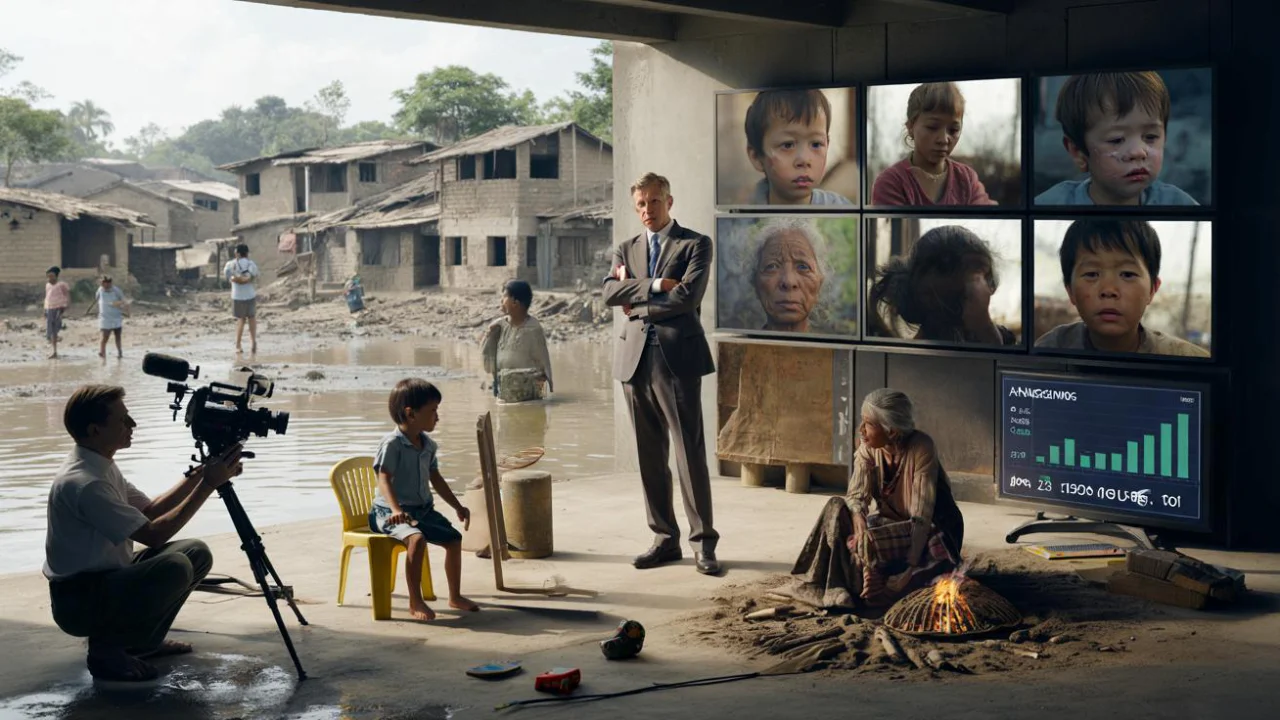
Sarah scrolled through her Instagram feed during her lunch break, stopping at a video that made her stomach drop. A young girl, maybe eight years old, sat in what looked like a makeshift shelter. Her eyes were huge, unblinking, staring directly into the camera as text overlay counted up the donations in real time. “This is Emma,” the caption read. “She hasn’t eaten in two days.”
Sarah’s thumb hovered over the “Donate Now” button. The production quality was flawless – perfect lighting, crystal-clear audio, even the girl’s tear seemed to catch the light just right. Something felt off, but those numbers climbing on screen were undeniably real. Real money. Real help.
She donated $50 anyway, then immediately felt guilty for questioning it.
The rise of emotion-driven philanthropy
This tension captures exactly what’s happening in modern charity work. A new breed of philanthropist has emerged, building what they call “impact-first charity” empires that turn human suffering into highly shareable, data-driven content. They argue it’s the most honest way to show donors where their money goes. Critics say it’s exploitation dressed up as transparency.
These organizations don’t just help people – they document every moment, measure every outcome, and package it for maximum emotional impact. The result? Donation rates that traditional charities can only dream of, but ethical questions that keep growing louder.
“We’re not hiding behind feel-good stories anymore,” says Dr. Michael Chen, who studies digital philanthropy at Stanford. “These groups show you exactly what poverty looks like, in real time, with real consequences. It works because people finally believe their money matters.”
The approach has fundamentally changed how we think about charitable giving. Instead of writing checks to faceless organizations, donors watch their contributions transform individual lives through carefully crafted videos, live updates, and detailed progress reports.
How the impact-first model actually works
The mechanics behind these charity empires reveal both their power and their problems. Everything revolves around what industry insiders call “emotional ROI” – the measurable impact of making donors feel connected to specific outcomes.
Here’s how a typical impact-first charity operates:
- Professional film crews document every intervention
- Real-time dashboards track donations and spending
- Individual stories get paired with specific dollar amounts
- Social media algorithms amplify the most engaging content
- Follow-up videos show “transformation” results
- Detailed financial breakdowns justify every expense
The numbers speak for themselves. Traditional charities average donation conversion rates around 2-3%. Impact-first organizations regularly hit 15-20%. Some viral campaigns have reached 40%.
| Metric | Traditional Charity | Impact-First Charity |
|---|---|---|
| Donation Conversion Rate | 2-3% | 15-20% |
| Average Donation Amount | $45 | $127 |
| Repeat Donor Rate | 23% | 67% |
| Social Media Engagement | 1-2% | 8-12% |
“The data doesn’t lie,” explains Rachel Torres, a former marketing executive who now runs a major impact-first foundation. “People give more when they see exactly where their money goes and how it helps. We’re just being honest about what motivates human behavior.”
But that honesty comes with a cost that’s harder to measure.
The human cost of viral compassion
Behind every compelling video lies a more complicated story. Community workers report feeling pressure to present their most photogenic cases first. Families sometimes receive help only if they agree to be filmed. Children learn to perform their trauma for cameras operated by strangers.
Maria Santos, a social worker in Guatemala, describes the change she’s witnessed: “These organizations do help people, absolutely. But now families ask me which stories will get them the most donations. Children practice looking sad for the camera. It breaks my heart.”
The psychological impact extends beyond individual families. Entire communities begin to view their poverty through the lens of what might appeal to foreign donors. Traditional solutions – community organizing, local leadership development, sustainable economic programs – often get pushed aside in favor of more visually dramatic interventions.
Some researchers worry about what they call “trauma commodification” – the process by which human suffering becomes a product optimized for engagement metrics. The most successful videos aren’t necessarily helping the people who need it most; they’re helping the people whose pain translates best to social media.
“We’re creating a global marketplace for empathy,” warns Dr. Jennifer Walsh, an anthropologist studying digital philanthropy. “The question is whether we’re actually solving problems or just making ourselves feel better about them.”
What this means for the future of giving
Despite the controversy, impact-first charity continues to grow rapidly. Young donors, especially those under 35, overwhelmingly prefer organizations that provide detailed impact tracking and regular updates. They want to see their money work, not just trust that it does.
This generational shift is forcing traditional charities to adapt or risk becoming irrelevant. Many are hiring social media teams, investing in professional video equipment, and learning to tell more compelling stories about their work.
The most successful organizations are finding middle ground – maintaining transparency and emotional connection while establishing ethical guidelines for how they document and share people’s stories. Some have created advisory boards that include community members from the areas they serve. Others limit filming to certain situations or require longer-term relationships before sharing personal stories.
But fundamental questions remain unanswered. Who owns these stories? How do we balance donor engagement with human dignity? Can we maintain empathy without exploitation?
The answers will likely shape charitable giving for decades to come. As one former impact-first charity director put it: “We’ve proven people will give generously when they feel connected to the cause. Now we need to figure out how to build those connections ethically.”
FAQs
What exactly is impact-first charity?
Impact-first charity focuses on measurable outcomes and emotional connection, using professional storytelling and real-time tracking to show donors exactly how their money helps specific individuals.
Do these charities actually help people more than traditional ones?
They often raise significantly more money and can demonstrate clear, trackable outcomes, but critics argue they may not address root causes of poverty as effectively as traditional development approaches.
Is it ethical to film people in vulnerable situations for fundraising?
This remains heavily debated, with supporters arguing it increases donations and critics saying it exploits people’s suffering for engagement metrics.
How can donors support ethical charitable giving?
Research organizations’ policies on storytelling and consent, look for community input in their programs, and consider supporting both emergency relief and long-term development work.
Why are traditional charities losing donors to impact-first organizations?
Younger donors especially want transparency, real-time updates, and emotional connection to their giving, which impact-first charities provide more effectively than many traditional organizations.
Can impact-first charity and traditional development work coexist?
Many experts believe the best approach combines immediate, transparent impact with longer-term community development programs that address systemic causes of poverty.


