
Maria checks her phone at 6 AM, scrolling through another flood warning for her hometown in Honduras. The coffee plantation where her family has worked for three generations sits underwater again. This is the fourth time in two years.
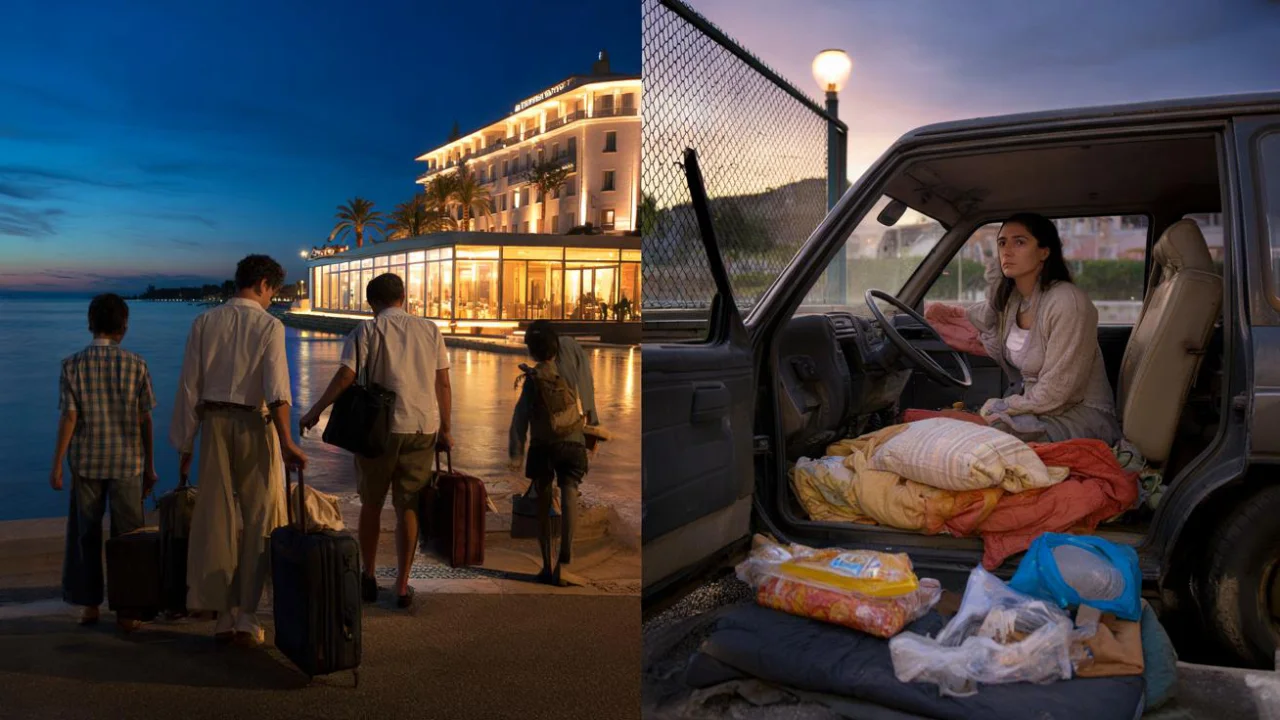
Meanwhile, 2,000 miles north, James pulls his construction jacket tighter as he walks past a hotel in Phoenix. Through the glass doors, he spots families with suitcases checking in. They’re climate migrants, he’s heard. The same storm system that’s destroying Central American crops has been pushing people north for months.
James has been sleeping in his truck for six weeks, ever since rent jumped 40% in his neighborhood. Same climate crisis, different consequences. Same human need for shelter, vastly different solutions.
The Two-Speed Response to Climate Displacement
Climate migrants are reshaping communities across the globe, but the response isn’t happening at the same speed for everyone. While international aid organizations rush to provide emergency housing for families fleeing rising seas and devastating droughts, local populations facing their own climate-driven hardships often find themselves competing for the same resources.
“We’re seeing a system that responds to dramatic, visible displacement while ignoring the slow-burn climate impacts on existing communities,” explains Dr. Sarah Chen, a migration researcher at the International Climate Institute. “It’s creating parallel tracks of support that don’t always align with actual need.”
The numbers tell a stark story. Over 21 million people become climate migrants each year due to sudden weather events. But for every person who crosses a border, three more are displaced within their own countries, often with far less support.
This creates what experts call “displacement inequality” – where your access to help depends more on which category of climate victim you fall into than how desperate your situation actually is.
Who Gets Help and Who Doesn’t
The current system for supporting climate migrants operates on several different tracks, each with its own rules, funding, and speed of response:
- International Climate Migrants: Families crossing borders due to sea level rise, extreme storms, or prolonged droughts often receive coordinated international aid, including temporary housing in hotels or dedicated facilities
- Internal Climate Migrants: People displaced within their own countries typically rely on national emergency systems, which vary widely in capacity and resources
- Slow-Onset Displacement: Communities gradually forced to move due to desertification or changing rainfall patterns often fall through the cracks entirely
- Climate-Adjacent Displacement: Local workers priced out by climate adaptation spending or tourism shifts receive little targeted support
| Type of Climate Impact | Average Response Time | Housing Support | Duration of Aid |
|---|---|---|---|
| Sudden International Displacement | 24-72 hours | Hotels/Temporary facilities | 6-18 months |
| Domestic Climate Emergency | 1-7 days | Shelters/Family networks | 1-6 months |
| Gradual Environmental Change | No coordinated response | Self-funded relocation | No organized support |
| Economic Climate Displacement | No targeted response | Market-rate housing only | No climate-specific aid |
The disparity becomes most visible in coastal and border communities, where international climate migrants might receive hotel accommodations while local families affected by the same storms are directed to general homeless services.
“I’ve seen refugee families get placed in resorts while our own wildfire evacuees are sleeping in high school gymnasiums,” says Tom Rodriguez, an emergency coordinator in Southern California. “It’s not about who deserves what – it’s about which funding streams kick in based on how you got displaced.”
The Ripple Effect on Local Communities
The influx of climate migrants creates complex dynamics in receiving communities. Local housing markets tighten, wages for certain jobs may drop, and public services stretch thin. But the impact varies dramatically depending on how well communities are prepared.
Some cities have found ways to make climate migration work for everyone. Portland, Oregon created a “Climate Newcomer Integration Program” that pairs arriving families with local housing cooperatives, creating affordable units for both groups. Denver started offering climate migrants job training in green industries that also employ local workers displaced by fossil fuel transitions.
But in many places, the integration happens haphazardly. Climate migrants end up in the same precarious housing markets that were already failing local families. Competition increases, resentment builds, and both groups end up worse off.
“The real problem isn’t climate migrants – it’s that we never built systems robust enough to handle displacement at this scale,” notes Professor Elena Martinez, who studies climate justice at Columbia University. “We’re trying to solve a 21st-century crisis with 20th-century emergency response tools.”
The psychological impact matters too. Local families watching climate migrants receive coordinated support while they navigate bureaucratic mazes alone often feel forgotten by the same systems claiming to address climate impacts.
What Actually Works on the Ground
Communities that successfully integrate climate migrants without displacing local populations share several key strategies:
- Rapid housing expansion: Building new units faster than demand increases, rather than competing for existing stock
- Integrated services: Combining climate migrant support with expanded services for existing residents
- Economic opportunity creation: Developing industries that can employ both newcomers and locals in growing sectors
- Community-led planning: Involving both climate migrants and long-time residents in designing integration programs
The most successful programs treat climate migration as a community development opportunity rather than just an emergency to manage. They invest in infrastructure, education, and economic development that benefits everyone, using the urgent need to help newcomers as a catalyst for broader improvements.
Some regions are already seeing this play out. The Great Lakes states, anticipating large-scale climate migration from the South and Southwest, are proactively expanding housing, healthcare, and transportation systems. Early arrivals find more support, and existing residents benefit from the improved infrastructure.
“When we plan for climate migration properly, everybody wins,” says Martinez. “The problem is that most places are still reacting instead of preparing.”
The Road Ahead
Climate migration will only accelerate in coming decades. Current projections suggest that 200 million to 1 billion people could be displaced by climate impacts by 2050. The communities that thrive will be those that figure out how to turn this challenge into an opportunity for everyone.
That means rethinking how we fund and organize climate response. Instead of separate systems for different types of climate victims, we need integrated approaches that address the full spectrum of climate impacts on human mobility.
It also means being honest about what climate migration really looks like. Most of the time, it’s not dramatic boat rescues or convoy evacuations. It’s families like Maria’s making impossible decisions about whether to stay or go, and workers like James finding themselves squeezed out by the same climate forces displacing others.
The question isn’t whether climate migrants deserve support – of course they do. The question is whether we can build systems generous and smart enough to help everyone who needs it, regardless of which side of the chain-link fence they end up on.
FAQs
What exactly are climate migrants?
Climate migrants are people forced to move due to environmental changes like rising seas, droughts, floods, or extreme weather events that make their homes uninhabitable or economically unviable.
How many climate migrants are there globally?
Approximately 21 million people become climate migrants each year due to sudden weather events, with millions more displaced gradually by slower environmental changes.
Do climate migrants have legal protection?
Currently, most international law doesn’t recognize climate migrants as refugees, leaving them with limited legal protections compared to those fleeing persecution or war.
Why do some climate migrants get better support than others?
Support depends on factors like whether someone crosses international borders, the type of climate event that displaced them, and which funding programs and organizations respond to their situation.
How can communities prepare for climate migration?
Successful preparation involves expanding housing and infrastructure, creating economic opportunities for both newcomers and existing residents, and developing integrated support systems rather than separate emergency responses.
Will climate migration get worse in the future?
Yes, scientists project that climate migration will increase significantly as extreme weather events become more frequent and severe, with estimates of 200 million to 1 billion climate migrants by 2050.


