
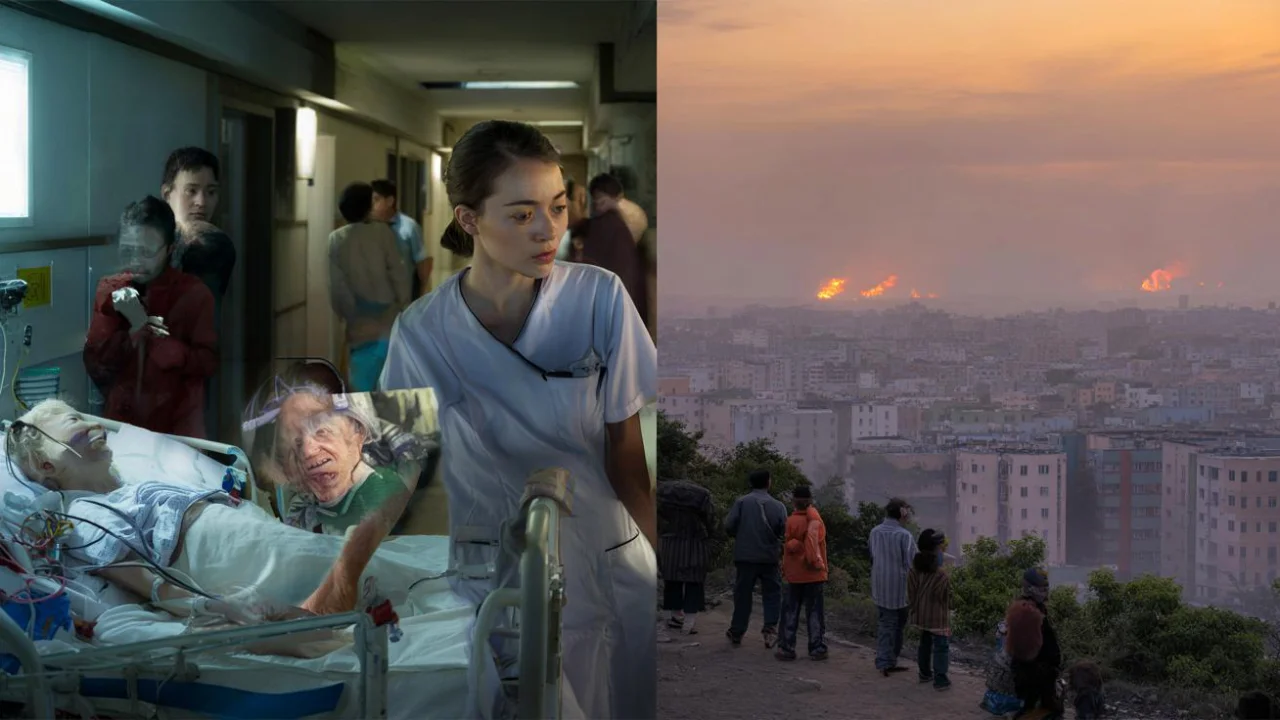
Sarah held her grandmother’s frail hand in the sterile hospital room, watching the rhythm of machines that had become a soundtrack to their family’s life. For three months, they’d been here—through countless procedures, consultations, and hope-filled conversations with specialists. The bill had already crossed six figures. Outside the window, news alerts flashed on her phone: another endangered species declared extinct, another climate milestone passed, another warning about healthcare systems buckling under unsustainable costs.
Her grandmother squeezed her hand weakly and whispered, “Maybe it’s time, sweetheart.”
But the medical team wasn’t ready to let go. There was another treatment to try, another machine to connect. Sarah found herself wondering: in our desperate fight to save every individual life, are we somehow losing sight of life itself?
The paradox hiding in our kindness
This is compassion’s cruel mirror—the uncomfortable reflection showing us how our most noble instincts might be working against our collective survival. Every day, we pour resources into keeping individual lives going while the systems that sustain all life slowly collapse around us.
Walk through any major hospital and you’ll see it. Millions spent on keeping one person alive for a few more weeks, while the same institution struggles to fund preventive care that could save thousands. We’ve created a culture where letting go feels like giving up, where death is always the enemy to defeat, regardless of the cost.
“We’ve medicalized death to the point where it’s become an industrial process,” explains Dr. Maria Santos, a palliative care specialist who’s worked in three different countries. “We’re so focused on the technical possibility of extending life that we’ve lost sight of what makes life meaningful—or sustainable.”
The numbers tell a stark story. In the United States, the last year of life accounts for nearly 25% of all healthcare spending. Meanwhile, climate change mitigation receives a fraction of that investment globally. We’ll spend $500,000 to keep one terminally ill patient alive for three months, but struggle to fund renewable energy projects that could save millions of future lives.
Where our resources really go
The scale of this misalignment becomes clearer when you look at where money and energy actually flow in our compassion-driven society:
| Healthcare Focus | Annual Spending (US) | Lives Directly Affected |
|---|---|---|
| End-of-life intensive care | $700 billion | 2.8 million |
| Preventive healthcare | $90 billion | 280 million |
| Climate change mitigation | $15 billion | Future billions |
This isn’t just about money. It’s about the carbon footprint of our medical interventions, the rare earth minerals mined for life-support equipment, the energy consumed by machines that run 24/7 in ICUs across the world. Every MRI scan uses enough electricity to power an average home for a day. Every dialysis session requires thousands of gallons of water.
The environmental cost of our medical system rarely enters the conversation about compassionate care. Yet hospitals are among the largest consumers of energy and producers of waste in most cities.
- Healthcare accounts for 10% of total carbon emissions in developed countries
- A single heart surgery generates the same carbon footprint as driving 1,600 miles
- Disposable medical equipment creates 7,000 tons of waste daily in US hospitals alone
- Life support systems can consume 20 times more energy than regular hospital beds
“The irony is profound,” notes environmental health researcher Dr. James Chen. “We’re literally burning the planet to keep individuals alive, potentially dooming the species we’re trying so hard to preserve.”
The ripple effects nobody wants to discuss
This pattern extends far beyond hospitals. Our rescue-at-all-costs mentality shapes everything from how we respond to natural disasters to how we design social safety nets. We’ll mobilize massive resources to save a single trapped miner while underfunding the geological surveys that could prevent mine collapses.
Look at how we handle endangered species conservation. Millions go toward breeding programs for charismatic animals like pandas, while entire ecosystems collapse from lack of basic protection funding. We’ll spend $2 million to save one whale trapped in fishing nets, but struggle to fund the research that could eliminate deadly fishing practices altogether.
The psychological impact runs deeper than resource allocation. We’ve trained ourselves to see every death as a failure, every end as a tragedy to be prevented. This creates healthcare workers who are afraid to recommend comfort care, families who feel guilty about accepting natural endings, and societies that can’t have honest conversations about limits.
“When you make death the ultimate evil, you make life unsustainable,” reflects bioethicist Dr. Rachel Kim. “We’ve forgotten that sometimes the most compassionate thing is knowing when to stop fighting.”
The generational divide is striking. Older patients often express readiness to let go, while younger family members push for every possible intervention. It’s as if we’ve lost the wisdom that previous generations had about natural cycles and appropriate endings.
What the mirror shows us about ourselves
Perhaps the most unsettling aspect of compassion’s cruel mirror is what it reveals about our motivations. Are we really trying to save lives, or are we trying to save ourselves from the discomfort of loss? Are we extending life, or are we simply avoiding the reality of death?
The evidence suggests we’re often choosing the interventions that make us feel better rather than those that actually improve outcomes. We’ll put an 85-year-old through chemotherapy that might extend life by six weeks, even when those weeks will be spent in pain and confusion. We’ll resuscitate patients with no realistic chance of recovery because “doing something” feels better than accepting limits.
This isn’t sustainable—economically, environmentally, or emotionally. Healthcare workers report increasing levels of burnout and moral distress. Families bankrupt themselves trying to buy more time. Meanwhile, basic healthcare needs go unmet for millions of people who could benefit from simple, low-cost interventions.
Some hospitals are beginning to change course. Palliative care programs that focus on quality of life rather than quantity are showing better outcomes for both patients and families. Countries like the Netherlands and Canada have developed frameworks for medical assistance in dying that honor patient autonomy while ensuring appropriate safeguards.
But these changes face enormous resistance. Insurance systems that profit from prolonged treatment, legal frameworks that penalize “premature” death, and cultural narratives that equate fighting with virtue all work against more balanced approaches to end-of-life care.
FAQs
Isn’t every life worth saving regardless of cost?
While every life has value, unlimited resources spent on impossible cases means fewer resources for treatments that could save many more lives with better outcomes.
How can families make better decisions about end-of-life care?
Focus on quality of life rather than just quantity, have honest conversations about what the patient would want, and work with palliative care specialists who can guide these difficult decisions.
Are doctors required to provide futile care?
Medical ethics actually supports withholding treatments that offer no meaningful benefit, but legal and cultural pressures often push doctors toward aggressive intervention regardless of likelihood of success.
What would more sustainable healthcare look like?
It would emphasize prevention over intervention, quality of life over quantity, and would account for environmental and resource costs when making treatment decisions.
How do other countries handle end-of-life care differently?
Many European countries invest more heavily in palliative care, have clearer guidelines for withdrawing futile treatment, and generally accept natural death as part of life rather than as medical failure.
Can technology help solve this problem?
Technology could help by making treatments more efficient and less resource-intensive, but the fundamental question of when to stop trying remains a human decision that requires wisdom, not just innovation.


