
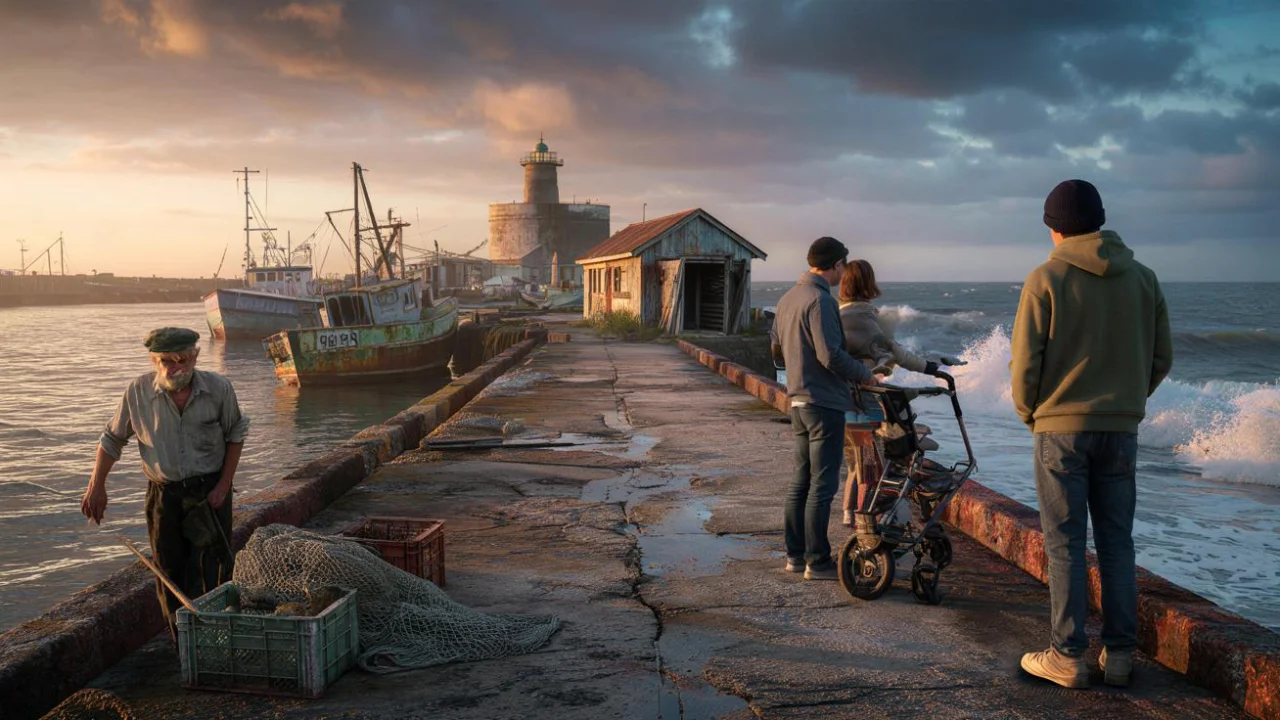
Margaret Torres has lived in the same weathered house for sixty-seven years, watching the tide line creep closer to her front door with each passing storm. Last Tuesday, she stood in the town hall listening to council members debate selling the seawall that has protected her neighborhood since she was a child. “It felt like watching them auction off my grandmother’s wedding ring,” she says, clutching a coffee mug that reads “Saltwater in My Veins.”
The vote passed 4-3. Now the seawall, the fishing rights, and even the historic lighthouse belong to a corporate climate fund based three thousand miles away in glass towers that have never felt salt spray.
Margaret’s story is playing out in coastal communities across the country, where climate change meets crushing debt in a perfect storm of impossible choices. This is coastal town climate adaptation in the 21st century – sometimes it looks like salvation, sometimes like surrender.
When Survival Comes with a Price Tag
The math is brutal and simple. This small coastal town owes $2.8 million in infrastructure debt while facing $4.1 million in urgent seawall repairs. Winter storms keep getting stronger, insurance costs have tripled in five years, and the tax base shrinks as young families move inland.
Enter Coastal Resilience Partners, a “climate adaptation fund” that swooped in with a deal that sounds too good to be true. They’ll buy the crumbling seawall, take over fishing concessions for 40 years, and transform the beloved lighthouse into a “heritage experience center” complete with a glass café and gift shop.
“We’re not just buying assets,” explains fund representative David Chen. “We’re investing in a community’s future while creating measurable climate benefits that offset carbon emissions globally.”
The town gets immediate debt relief, a modernized flood protection system, and funds to repair the elementary school roof that’s been leaking for three winters. The catch? They’re essentially mortgaging their identity to a corporation that sees coastal town climate adaptation as an investment opportunity.
The Fine Print of Climate Capitalism
Here’s what the corporate climate fund actually gets from this deal:
- 40-year exclusive fishing rights worth an estimated $8-12 million
- Carbon credit revenue from restored salt marshes and seaweed farms
- Tourism income from the lighthouse “experience center”
- Tax benefits for climate resilience investments
- First rights to expand operations along the entire coastline
The financial breakdown reveals the true scope of this coastal town climate adaptation experiment:
| Town Receives | Amount |
| Immediate debt relief | $2.8 million |
| New flood infrastructure | $1.5 million |
| School and civic repairs | $800,000 |
| Total Town Benefit | $5.1 million |
| Corporate Fund Gets | Estimated Value |
| 40-year fishing rights | $8-12 million |
| Carbon credit revenue | $3-5 million |
| Tourism/lighthouse income | $2-4 million |
| Tax benefits | $1-2 million |
| Total Corporate Value | $14-23 million |
“The numbers don’t lie,” says local accountant Rita Washburn, who opposed the deal. “They’re getting four times what we’re getting, and they’ll own the things that make us who we are.”
Divided Waters, Divided Hearts
The town has split into two camps, both convinced they’re saving their community’s future.
Mayor Patricia Henley, who championed the deal, argues this coastal town climate adaptation strategy represents pragmatic survival. “We can’t maintain a seawall on property taxes from 800 residents,” she explains. “Climate change isn’t waiting for us to figure out municipal financing.”
The opposition, led by fourth-generation fisherman Tom Russo, sees it differently. “My grandfather built that seawall with his own hands during the Depression. Now it belongs to some fund that’ll count our fish against pollution they’re creating somewhere else.”
The generational divide runs deep. Younger residents, especially those with children, tend to support the deal as necessary climate adaptation. Older locals view it as the final sellout of everything that made their town unique.
“My kids need a school with a roof that doesn’t leak,” says 34-year-old teacher Sarah Martinez. “They need flood gates that actually work. If that means the lighthouse has a café in it, so be it.”
The Ripple Effect Beyond the Harbor
This coastal town climate adaptation experiment is being watched closely by dozens of similar communities facing identical pressures. Environmental lawyers warn about precedent, while urban planners see potential solutions.
The immediate changes are already visible. Construction crews arrived last week to begin seawall repairs. The lighthouse now has scaffolding and permits for “adaptive heritage renovation.” New tide gauges and weather monitoring equipment dot the shoreline, feeding data back to corporate headquarters.
But the human cost is harder to measure. Three local fishing families have already announced plans to leave, unable to secure new licenses now controlled by the corporate fund. The town’s annual Blessing of the Fleet ceremony – held at the lighthouse for 78 years – needs permission from new management.
“We saved the town by selling its soul,” mutters Joe Santos, whose family has run the harbor’s only bait shop for four generations. “I just hope my grandkids forgive us.”
The corporate fund promises local hiring and community input on all major decisions. Early signs suggest they’re keeping these commitments, but critics wonder how long corporate goodwill lasts when profit margins get tight.
FAQs
Why did the town need to sell its infrastructure to a corporate fund?
The town faced $2.8 million in debt and needed $4.1 million for urgent seawall repairs, but only had 800 taxpaying residents and shrinking revenue.
What exactly did the corporate climate fund buy?
They purchased the seawall, 40-year exclusive fishing rights, and the historic lighthouse, which they’re converting into a tourist attraction.
How does this help with climate change?
The fund will restore salt marshes and build modern flood defenses, then sell the environmental benefits as carbon credits to other companies.
Can other coastal towns expect similar deals?
Yes, dozens of small coastal communities are exploring similar arrangements as climate adaptation costs exceed local budgets.
What happens if the corporate fund goes bankrupt?
The legal agreements include provisions for asset transfer, but critics worry about long-term protection if the company fails.
Will local fishermen lose their livelihoods?
The fund promises to honor existing licenses short-term, but long-term fishing access depends on corporate management decisions.


