
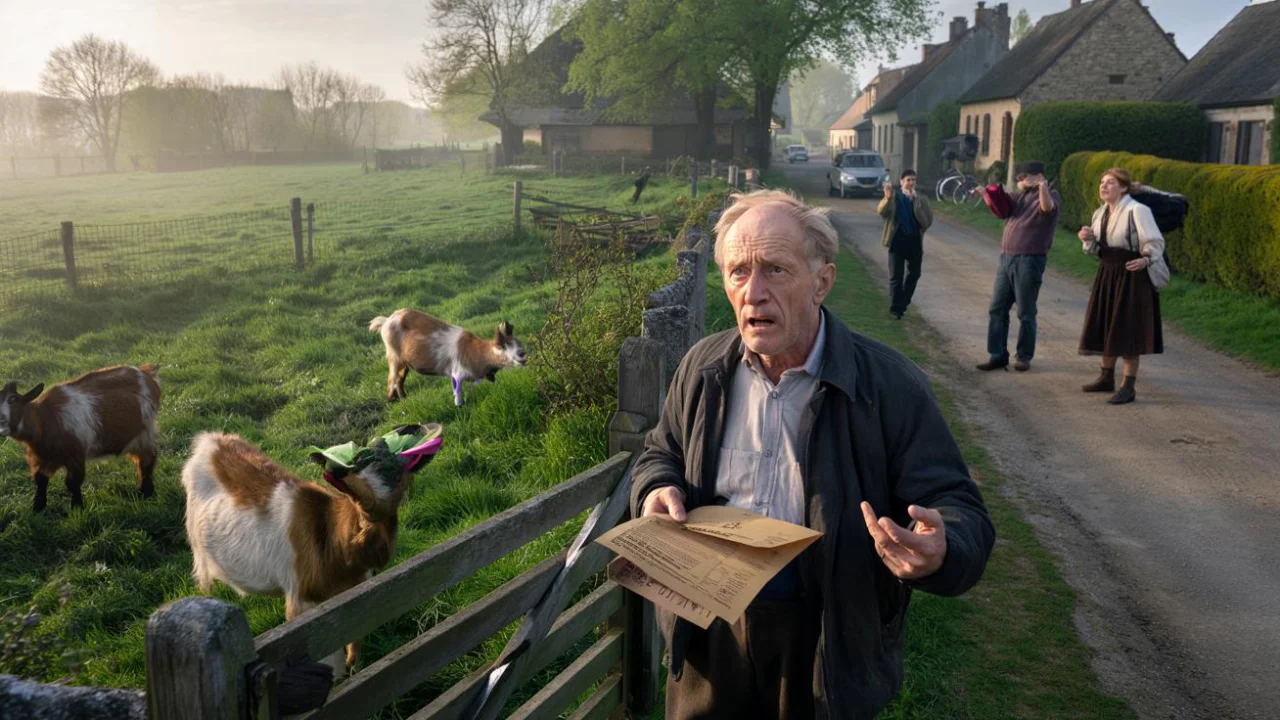
Picture this: You’re 72 years old, enjoying retirement in a quiet village, when your neighbor asks if his two goats can graze in your unused meadow. It’s the kind of neighborly favor that happens every day across the countryside – no money changes hands, just a simple “yes” to help a friend.
Six months later, a tax notice arrives that changes everything. Suddenly, you’re not just a retiree anymore. According to the government, you’re now a commercial farmer running an agricultural business. Welcome to the bizarre world of tax classification, where good intentions can lead to unexpected consequences.
This isn’t fiction. It’s exactly what happened to Alan Price, a 72-year-old retired engineer whose simple act of kindness has now divided his entire village and landed him with a tax shock that could affect retirees everywhere.
How Two Goats Turned a Pensioner Into a “Farmer”
Alan’s story began on an ordinary Sunday when his neighbor Martin knocked on his door. Martin needed somewhere for his two goats to graze for a few weeks. Alan had a meadow he wasn’t using, so he said yes. No contracts, no payments – just neighbors helping neighbors.
The goats settled in nicely. Village children loved watching them from the road, and Alan enjoyed their company. Everything seemed perfect until a routine tax inspection changed his life forever.
When the assessor spotted “livestock grazing on maintained pasture,” alarm bells rang in the tax system. The magic phrase triggered an automatic reclassification. Alan wasn’t just a retiree with unused land anymore – he was operating agricultural property for commercial purposes.
“I was only doing a neighborly favor,” Alan explained to anyone who would listen. “I never charged a penny, never made any profit. But apparently, that doesn’t matter to the tax office.”
The Rules That Caught Everyone Off Guard
Here’s what most people don’t realize about agricultural tax classification:
- Regular use of your land by livestock can trigger commercial farming status
- You don’t need to make money for the activity to be considered “commercial”
- Third-party animals grazing your property can change your tax category
- Fencing or maintaining pasture for animals counts as agricultural activity
- Even temporary arrangements can have permanent tax consequences
Tax experts say the confusion stems from outdated regulations that don’t account for modern neighborly arrangements. “The law was written for traditional farming operations,” explains rural tax specialist Sarah Mitchell. “It doesn’t distinguish between someone running a business and someone just helping a friend.”
| Activity | Tax Status Risk | Common Triggers |
|---|---|---|
| Letting neighbor’s animals graze | High | Regular use, fencing, maintenance |
| Storing hay bales for others | Medium | Commercial quantities, regular activity |
| Occasional animal boarding | Low | Payment received, business-like operation |
| One-time favor | Low | Very brief duration, no maintenance |
A Village Divided Over Fairness
Alan’s situation has split his village right down the middle. At the local pub, heated discussions break out nightly over whether the tax office is being ridiculous or just following the rules.
“It’s bureaucracy gone mad,” argues longtime resident Tom Fletcher. “The man didn’t make a penny, didn’t advertise grazing services, didn’t run a business. How can they call him a commercial farmer?”
But others see it differently. Village council member Janet Morrison points out that rules exist for good reasons. “If we start making exceptions for friends and neighbors, where does it end? The tax system has to be consistent.”
The controversy has revealed similar cases throughout the area. Local farmer’s wife Emma Thompson discovered she might face the same issue after letting a friend keep chickens on her property. “We’re all walking on eggshells now, afraid to help each other out,” she says.
The Real Cost of Being Helpful
For retirees like Alan, the tax shock goes far beyond paperwork. Commercial farming classification can trigger:
- Higher property tax assessments
- Requirements for business tax returns
- Potential liability for commercial insurance
- Loss of residential property exemptions
- Complicated accounting requirements
Financial advisor Robert Chen warns that many retirees are unprepared for these sudden changes. “People on fixed incomes can’t absorb unexpected tax increases. A simple favor shouldn’t destroy someone’s retirement budget.”
The emotional toll is equally significant. Alan reports feeling betrayed by a system that punishes kindness. “I’ve paid taxes my whole life, been a good citizen, helped my neighbors. Now I’m being treated like some sort of tax cheat.”
What This Means for Property Owners
Alan’s case has created ripple effects across rural communities. Property owners are now second-guessing simple favors that were once routine. The fear of unexpected tax consequences is changing how neighbors interact.
Local authorities suggest several protective measures:
- Document any animal arrangements as temporary and non-commercial
- Set clear time limits on grazing agreements
- Avoid making improvements to accommodate animals
- Keep written records showing no payment was received
- Consult tax professionals before agreeing to animal care
Legal expert David Park advises caution: “While these cases seem unfair, the law is clear about what triggers commercial classification. Property owners need to understand the risks before making seemingly innocent agreements.”
The broader question remains whether tax laws should evolve to better reflect modern rural life. As communities become more connected and neighbors more willing to help each other, rigid classifications based on old farming models may need updating.
FAQs
Can I let my neighbor’s animals graze without tax consequences?
It depends on duration, frequency, and whether you maintain the land for the animals. Even unpaid arrangements can trigger commercial classification.
What should I do if I receive a similar tax reclassification notice?
Contact a tax professional immediately and gather documentation showing the arrangement was temporary and non-commercial.
Are there ways to help neighbors without risking tax problems?
Keep arrangements very short-term, avoid improving land for animals, and document that no payment or benefit was received.
Can I appeal a commercial farming classification?
Yes, you can appeal with evidence showing the activity wasn’t truly commercial, but success rates vary by jurisdiction.
Do all rural tax authorities interpret these rules the same way?
No, interpretation can vary significantly between different tax offices and regions, creating inconsistent enforcement.
Will this affect my property’s value or future sales?
Commercial classification can impact property assessments and may complicate future sales, especially if buyers aren’t expecting agricultural zoning.


