
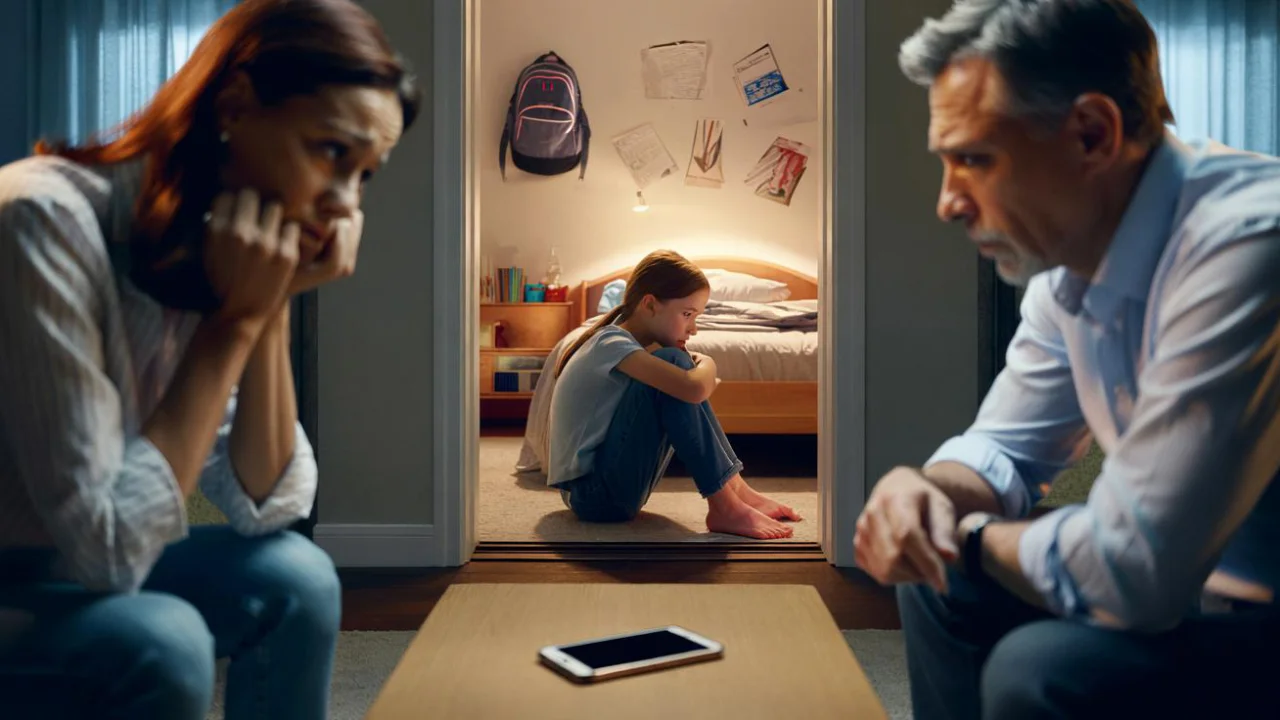
The argument started over a math homework assignment, but that wasn’t really what anyone was fighting about. Twelve-year-old Emma slammed her bedroom door so hard the family photos rattled on the hallway wall. Her father stood in the kitchen holding her confiscated iPhone, his jaw clenched tight. Her mother busied herself loading the dishwasher, trying not to think about how this felt like losing a war she never wanted to fight.
“I’m literally the only kid in seventh grade without a phone now,” Emma had screamed before disappearing upstairs. Her father muttered something about protecting her future, but his voice wavered. Deep down, they all wondered the same thing: What if they were saving her brain but destroying their family in the process?
The phone sat on the counter like a tiny bomb, still buzzing with notifications from friends Emma could no longer reach.
The Science Behind Why Banning Smartphones Kids Actually Works
Walk through any middle school and you’ll witness something that would have been science fiction twenty years ago. Kids stand in clusters, heads down, thumbs flying across screens, barely acknowledging the humans right next to them. Their social lives happen in apps now, curated and commodified, with dopamine hits delivered every few seconds.
When you take that phone away, you’re not being dramatic or old-fashioned. You’re severing a direct line to your child’s developing brain that tech companies spent billions designing to be irresistible.
Dr. Anna Martinez, a child psychologist who’s spent the last decade studying teen mental health trends, puts it bluntly: “We’re seeing anxiety and depression rates in kids that mirror what we used to see only in trauma survivors. The timeline matches smartphone adoption almost perfectly.”
The data isn’t subtle anymore. Teen suicide rates jumped 56% between 2007 and 2017. Sleep disorders in adolescents have tripled. Attention spans that once lasted 12 minutes now average closer to 8 seconds for many kids.
What Actually Happens When You Take the Phone Away
The transformation doesn’t happen overnight, and it definitely doesn’t happen quietly. Parents who’ve gone through smartphone bans describe the first weeks as “digital detox hell.” But the changes that follow often surprise everyone, including the kids themselves.
| Timeline | What Parents Notice | What Kids Experience |
|---|---|---|
| Week 1-2 | Anger, arguments, claims of social isolation | Genuine anxiety, FOMO, boredom |
| Week 3-4 | Less fighting, more eye contact during meals | Rediscovering old hobbies, longer sleep |
| Month 2-3 | Better grades, deeper conversations | Improved focus, face-to-face friendships |
| Month 6+ | Kid rarely mentions wanting phone back | Higher self-esteem, creative pursuits |
Take fifteen-year-old Marcus, whose parents pulled his phone after his grades dropped from A’s to C’s in one semester. The first month involved daily battles and accusations that his parents were “ruining his life.” But by month three, something shifted.
“He started building these intricate model airplanes again,” his mother Sarah recalls. “I hadn’t seen him do anything creative like that in two years. His teachers started commenting on how much more engaged he seemed in class.”
Research from the University of California supports these anecdotal reports. Students who went phone-free for just two weeks showed measurable improvements in:
- Sustained attention spans during academic tasks
- Quality of sleep (average increase of 1.2 hours per night)
- Face-to-face social interaction skills
- Creative problem-solving abilities
- Overall mood and anxiety levels
The Family Warfare Nobody Warns You About
Here’s what the research doesn’t capture: the absolute chaos that banning smartphones kids creates in your home. It’s one thing to know you’re doing the right thing for your child’s developing brain. It’s another thing entirely to live through the daily battles that follow.
Jennifer, a mother of two teenagers in Seattle, describes the first month after implementing a phone ban as “psychological warfare.” Her 14-year-old daughter refused to speak to her for weeks. Family dinners became silent affairs punctuated by accusations and slammed doors.
“She told me I was destroying her social life and that she’d never forgive me,” Jennifer remembers. “There were nights I lay awake wondering if I was traumatizing her more by taking the phone away than I would be by giving it back.”
Dr. Michael Chen, a family therapist who specializes in technology conflicts, sees these scenarios weekly in his practice. “Parents come in feeling like they’re choosing between their child’s long-term wellbeing and their immediate relationship. That’s a genuinely difficult position.”
The social pressure makes everything worse. When your child is genuinely the only one in their class without a smartphone, their claims of isolation aren’t entirely manufactured. They miss group chats about weekend plans. They don’t see the memes everyone’s laughing about. They feel genuinely left out, and that pain is real.
Why Some Families Crack Under the Pressure
Not every family makes it through the smartphone ban successfully. The divorce rate among couples fighting over screen time rules has jumped 23% in the last five years, according to the American Association of Marriage Therapists.
The stress points are predictable:
- One parent enforces rules while the other gives in
- Constant negotiations and rule-testing from kids
- Social isolation when child can’t participate in digital social life
- Academic challenges when schools assume smartphone access
- Safety concerns about emergency communication
Tom and Lisa divorced last year, partly over their son’s phone privileges. “I felt like I was fighting a war on two fronts,” Lisa explains. “My son hated me for taking his phone, and my husband undermined me by giving it back whenever I wasn’t home. The stress was eating our marriage alive.”
Finding the Middle Ground That Actually Works
Some families have found success with compromise approaches that protect kids’ development without creating World War Three at home. The key seems to be clear boundaries with built-in flexibility.
Popular middle-ground strategies include:
- Phone-free weekdays, limited weekend use
- Family phone lockbox during meals and homework time
- Graduated privileges based on age and demonstrated responsibility
- Alternative devices for safety (smart watches, basic phones)
- Regular family meetings to discuss and adjust rules
Dr. Elena Rodriguez, who runs a program helping families navigate technology conflicts, emphasizes that successful phone restrictions require family buy-in, not just parental authority.
“The families who succeed are the ones who explain the why behind their decisions and involve kids in creating alternatives to phone-based socializing,” she notes. “It’s not about punishment—it’s about creating better options.”
What Happens When the Whole Community Gets On Board
The most successful smartphone restrictions happen when entire communities coordinate their efforts. Schools in districts like Marin County, California, have implemented phone-free campuses, making it easier for individual families to maintain consistent rules at home.
“When everyone’s in the same boat, kids stop feeling singled out,” explains principal Janet Mills. “The social pressure that makes phone bans so difficult at home disappears when it becomes the norm everywhere.”
Some parent groups have created informal agreements where multiple families commit to smartphone-free policies simultaneously, giving their kids a peer group that isn’t constantly connected.
The results in these coordinated communities have been striking. Academic performance improves across the board. Bullying incidents drop significantly. Kids report feeling less anxious and more connected to their immediate environment.
FAQs
At what age should kids get smartphones?
Most child development experts now recommend waiting until at least 14, though some suggest holding off until high school graduation.
How do I handle safety concerns without a phone?
Smart watches, basic flip phones, or GPS trackers can address emergency communication needs without the addictive apps.
What if my child is genuinely being left out socially?
Help them organize in-person activities and consider connecting with other families who share similar phone policies to build alternative social networks.
Will my teenager hate me forever if I take their phone away?
Initial anger is normal and usually fades within 2-3 months as kids adjust and rediscover non-digital activities they enjoy.
How do I handle schoolwork that requires phone access?
Most schools can provide alternative access methods, and many “phone required” assignments can be completed on computers or tablets with better parental controls.
Should both parents be on board before implementing a phone ban?
Yes, consistency between parents is crucial for success. Mixed messages will undermine the policy and create additional family conflict.


