
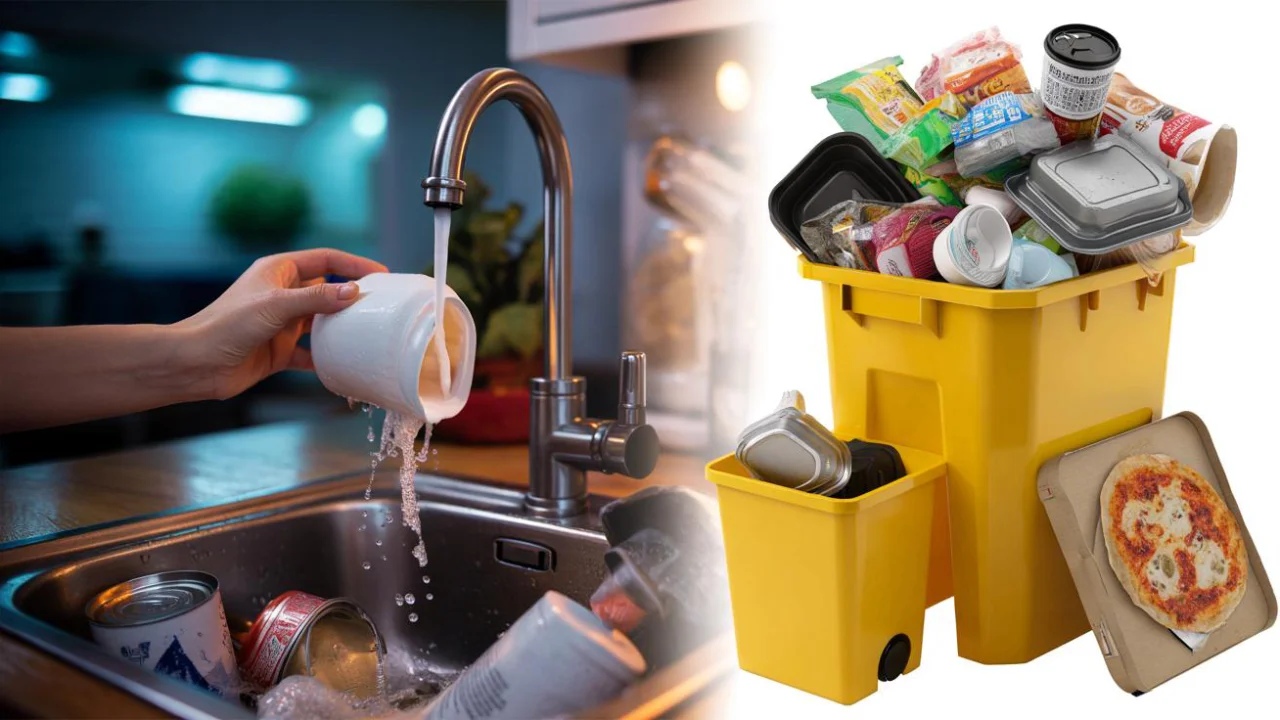
Sarah stands at her kitchen sink every Tuesday morning, methodically scrubbing yogurt containers under hot running water. The steam fogs her glasses as she works, carefully removing every trace of strawberry residue. Her recycling bin overflows with clean plastic pots, aluminum cans, and neatly folded cardboard boxes. She feels good about herself – responsible, environmentally conscious, doing her part.
What Sarah doesn’t know is that her weekly ritual might be making climate change worse, not better. That pristine yogurt pot she just spent three minutes cleaning? There’s a good chance it will end up in a landfill anyway, but now with the added carbon footprint of heated water, dish soap, and her time.
This is the uncomfortable truth about recycling inefficiency that most of us never see: the gap between our good intentions and what actually happens to our carefully sorted waste.
The recycling system is broken, and we’re all pretending it works
Every week, millions of people perform the same ritual Sarah does. We rinse containers, peel off labels, and sort materials into different bins, believing we’re part of the solution. But recycling facilities tell a different story.
“About 40% of what comes through our doors can’t actually be recycled,” says Marcus Thompson, a facility manager at a major sorting center in Ohio. “People think they’re helping, but contaminated items can ruin entire batches of otherwise recyclable material.”
The problem starts with something experts call “wishcycling” – throwing items in recycling bins and hoping for the best. That greasy pizza box? It contaminates paper recycling. Those black plastic takeout containers? Most facilities can’t sort them because their optical scanners can’t see black plastic. That yogurt pot you spent five minutes cleaning? If even a tiny bit of food residue remains, it can spoil hundreds of pounds of otherwise clean plastic.
Modern packaging makes the situation worse. Unlike the simple glass bottles and aluminum cans recycling systems were designed for decades ago, today’s products use complex multi-layer materials that are nearly impossible to separate and reprocess.
The hidden environmental costs of recycling theater
Here’s where recycling inefficiency becomes truly damaging: the environmental cost of the entire process often exceeds the benefits. Consider what happens when you rinse that yogurt container:
- Hot water heated by your home’s energy system (often fossil fuels)
- Soap or detergent with its own manufacturing footprint
- Additional wastewater that needs treatment
- Diesel trucks collecting and transporting materials
- Energy-intensive sorting processes at facilities
- Frequent contamination leading to entire loads being trashed
“When you factor in the water heating, transportation, and processing energy, plus contamination rates, some recyclable materials actually have a higher carbon footprint than virgin materials,” explains Dr. Jennifer Walsh, an environmental engineering professor who studies waste systems.
The numbers are stark. Research shows that contaminated recycling loads – which account for up to 25% of all collections in some areas – often require more energy to process than manufacturing new products would use.
| Material Type | Actual Recycling Rate | Energy Cost vs. Virgin Materials |
|---|---|---|
| Plastic containers | 12-15% | Often higher due to contamination |
| Mixed paper | 35-40% | Break-even when clean |
| Glass bottles | 25-30% | Lower (genuine benefit) |
| Aluminum cans | 65-70% | Much lower (best option) |
Meanwhile, that satisfying feeling of putting items in the recycling bin creates what psychologists call “moral licensing” – we feel so good about recycling that we consume more, thinking our sorting habits offset the environmental impact.
What really happens to your carefully sorted waste
The recycling journey most people imagine – where sorted materials magically transform into new products – bears little resemblance to reality. Here’s what actually happens to much of our “recycled” waste:
First stop: the sorting facility. Workers and machines try to separate materials, but contamination rates are so high that significant portions get diverted to landfills immediately. “We see people who’ve clearly spent time cleaning containers, but they’ve used the wrong type of plastic or missed a small food particle that ruins everything,” says facility supervisor Maria Rodriguez.
Next, surviving materials face the markets. Unlike aluminum and glass, which have strong recycling markets, most plastics have limited demand. When oil prices drop, virgin plastic becomes cheaper than recycled plastic, killing the economic incentive to reprocess materials.
The final reality check: even successfully recycled materials often become lower-grade products that can’t be recycled again. Your water bottle might become carpet fiber or fleece clothing – products that will eventually end up in landfills anyway.
“We’ve created a system that makes people feel good while solving very little,” admits waste management consultant Robert Chen. “The real environmental wins come from using less stuff, not sorting it better.”
Some municipalities have quietly acknowledged this reality. Several cities in Oregon and California have reduced their recycling programs, focusing only on materials that actually get reprocessed locally. The results? Lower contamination rates, reduced transportation emissions, and more honest accounting of environmental impact.
This doesn’t mean abandoning recycling entirely. Aluminum cans and glass bottles still offer genuine environmental benefits. But it does mean questioning the comforting narrative that sorting waste absolves us of consumption choices.
The most effective change isn’t better sorting – it’s buying less stuff that needs sorting in the first place. Skip the single-use containers entirely. Choose reusable options. Support companies that use minimal, simple packaging.
Because the uncomfortable truth is that the yogurt pot you’re carefully rinsing might have a smaller environmental footprint if you just threw it in the trash and skipped the ritual entirely.
FAQs
Does this mean I should stop recycling completely?
Not entirely. Focus on materials that actually work: aluminum cans, glass bottles, and clean cardboard. Skip the complicated stuff.
Why don’t recycling facilities tell us which items they can’t actually process?
Many facilities rely on government contracts and consumer participation rates to stay funded, creating incentives to accept materials they can’t actually recycle.
Is rinsing containers always wasteful?
A quick rinse with cold water can help, but extensive scrubbing with hot water and soap often uses more resources than the recycling saves.
Which recycling actually makes a difference?
Aluminum cans are the clear winner – they save 95% of the energy needed for new aluminum. Glass bottles and clean cardboard also provide genuine benefits.
What’s the best alternative to recycling?
Reduce consumption first, then reuse containers when possible. Most environmental benefits come from buying less, not sorting waste better.
How can I tell if my local recycling program actually works?
Ask your waste management company for contamination rates and where materials actually go. Many will provide surprisingly honest answers if pressed.


