
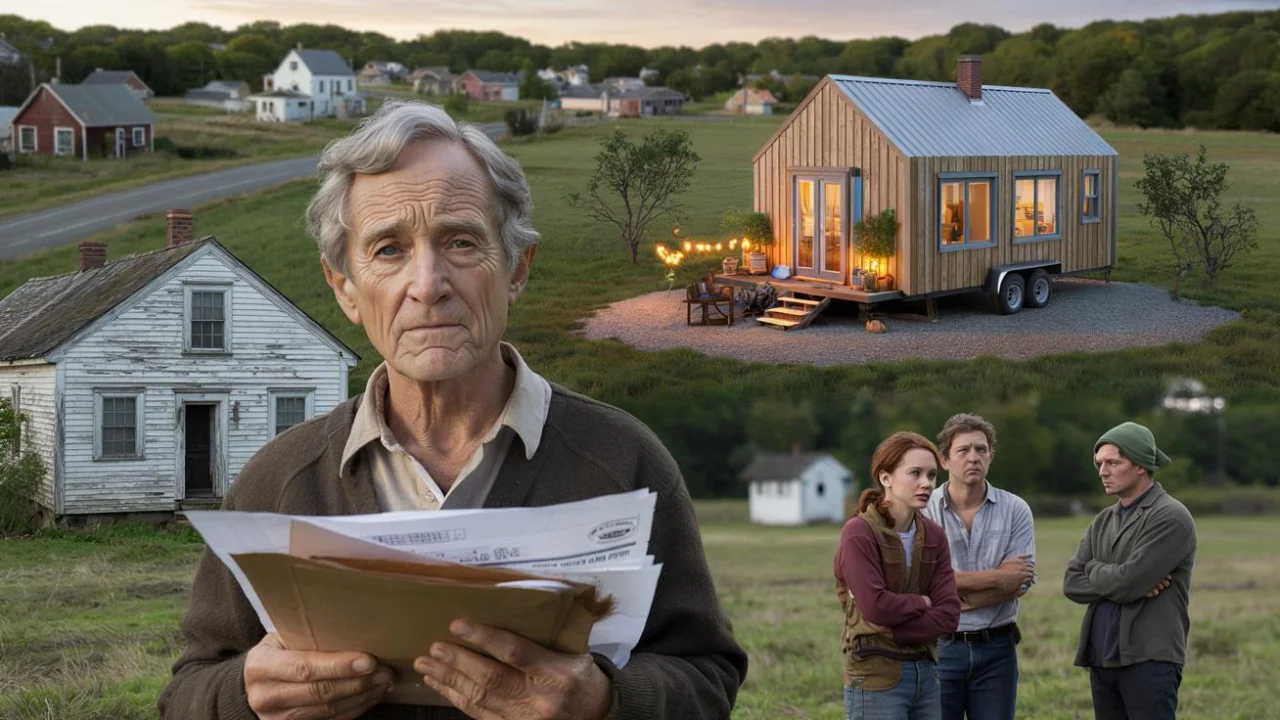
When 72-year-old Alan Reed saw the young couple at the farmer’s market last October, something about their story stuck with him. Lily and Chris had been living in their car for three weeks, searching for any affordable place to park their newly-purchased tiny home. Every RV park was full, every campground had a 14-day limit, and traditional rentals were priced beyond their reach.
Alan had thirty acres of unused pasture behind his modest ranch house. The next day, he called them with an offer that seemed simple: park your tiny home in my field, no rent, stay as long as you need to get on your feet.
Three months later, that act of kindness cost him nearly $3,000 in additional property taxes. Now his quiet New England town is asking a question that’s spreading across America: should helping your neighbors come with a financial penalty?
How a tiny home property tax nightmare unfolds
The mechanics of Alan’s tax shock reveal how quickly good intentions can collide with local tax codes. When the town assessor conducted his annual review, he spotted the 200-square-foot structure in Alan’s field during a routine drive-by inspection.
“Any habitable dwelling adds value to a property,” explains Marcus Chen, a property tax consultant who’s seen similar cases nationwide. “It doesn’t matter if it’s on wheels, temporary, or rent-free. If someone can live there, it affects the assessment.”
Alan’s property jumped from “vacant agricultural land” to “mixed-use residential,” triggering a valuation increase from $28,000 to $47,000. His annual tiny home property tax burden nearly doubled, from $1,680 to $2,820.
The timing couldn’t have been worse. Alan lives on a fixed Social Security income and was already struggling with rising costs. The extra $1,140 per year represents almost three months of his grocery budget.
The real cost of tiny home generosity
Alan’s situation reflects a growing dilemma as tiny homes gain popularity across the country. Property owners who offer space to these compact dwellings often discover that their good deeds trigger unexpected tax consequences.
| Scenario | Tax Impact | Additional Annual Cost |
|---|---|---|
| Tiny home on agricultural land | Reclassification to residential | $800-$2,000 |
| Tiny home as “accessory dwelling” | Increased property value | $500-$1,500 |
| Multiple tiny homes (tiny home park) | Commercial classification | $2,000-$8,000 |
| Temporary tiny home placement | Varies by local interpretation | $200-$1,000 |
The tax implications vary dramatically by location, but the pattern remains consistent: adding any livable structure to your property typically increases your tax burden, regardless of your intentions or rental income.
“We’re seeing this scenario play out in rural communities nationwide,” says Jennifer Walsh, a land use attorney specializing in alternative housing. “Property owners want to help, but they’re often blindsided by the financial consequences.”
Community reactions expose deeper divisions
The controversy has revealed fault lines that run deeper than taxes. At heated town meetings, residents have split into distinct camps, each viewing Alan’s situation through different lenses.
Some neighbors see Alan as a victim of an inflexible system. They argue that temporary, charitable housing arrangements shouldn’t trigger the same tax treatment as permanent rental properties.
Others worry about precedent and property values. They point to online listings advertising “tiny home ready” lots at premium prices and fear that flexible tax policies could encourage commercial ventures disguised as neighborly help.
The generational divide is stark. Younger residents tend to support Alan and view tiny homes as creative solutions to housing affordability. Older homeowners often express concerns about property values and community character.
- Supporters argue for temporary tax exemptions for charitable housing arrangements
- Critics worry about potential loopholes and commercial exploitation
- Town officials feel caught between compassion and consistent policy application
- Legal experts warn that selective enforcement could create discrimination issues
What this means for tiny home owners and hosts
Alan’s story offers important lessons for anyone considering similar arrangements. The tiny home property tax issue extends far beyond one small town, affecting thousands of property owners nationwide who’ve opened their land to alternative housing.
“Most people don’t realize that being generous can be expensive,” notes David Rodriguez, a financial planner who works with retirees. “You need to factor in potential tax increases, liability concerns, and local zoning requirements before saying yes.”
For tiny home owners like Lily and Chris, the situation highlights the precarious nature of their housing choice. When their host faces financial pressure, their security disappears.
Legal experts recommend several protective steps for both parties. Written agreements should specify duration, responsibilities, and exit strategies. Property owners should consult with tax professionals before making verbal commitments. Tiny home owners should maintain backup housing plans and contribute to property tax increases when possible.
The broader implications reach into housing policy and community values. As housing costs continue rising, more people are seeking alternative living arrangements. Towns and cities must decide whether their tax codes should accommodate these new realities or maintain traditional approaches that may inadvertently discourage charitable behavior.
“This isn’t just about one man’s tax bill,” Walsh explains. “It’s about whether our communities will adapt to help people find affordable housing, or whether bureaucratic inertia will continue punishing those who try to help.”
Alan hasn’t decided whether to ask Lily and Chris to move on. He wants to help, but the financial strain is real. The couple has started a small fundraising campaign to help with his increased taxes, but they’re also quietly looking for alternative arrangements.
FAQs
Does having a tiny home on your property always increase property taxes?
In most jurisdictions, yes. Any habitable structure typically increases property value and tax assessment, regardless of rental income or charitable intent.
Can property owners get tax exemptions for charitable housing arrangements?
Few areas offer specific exemptions for charitable tiny home hosting. Some states provide limited relief for certain affordable housing programs, but these rarely cover informal arrangements.
Are tiny homes considered vehicles or structures for tax purposes?
This varies by location, but if someone lives in a tiny home on your property, most assessors treat it as a structure that affects property value, regardless of whether it has wheels.
What should property owners do before agreeing to host a tiny home?
Consult with tax professionals, check local zoning laws, verify insurance coverage, and create written agreements specifying duration and responsibilities.
Can tiny home owners help offset their host’s increased property taxes?
Yes, and many do. While this might not eliminate the tax increase entirely, it can help make these arrangements more financially sustainable for property owners.
How common are situations like Alan’s?
Property tax consultants report seeing increasing numbers of similar cases as tiny homes grow in popularity, particularly in rural areas where agricultural land gets reclassified as residential.


