
Maria Torres had always loved the sound of waves from her coastal café. But last September, when Hurricane Elena sent water rushing through her dining room, she watched twenty years of dreams float away with the salt water. The storm surge climbed three feet up her walls, ruined every piece of equipment, and left her questioning whether rebuilding was worth the risk.
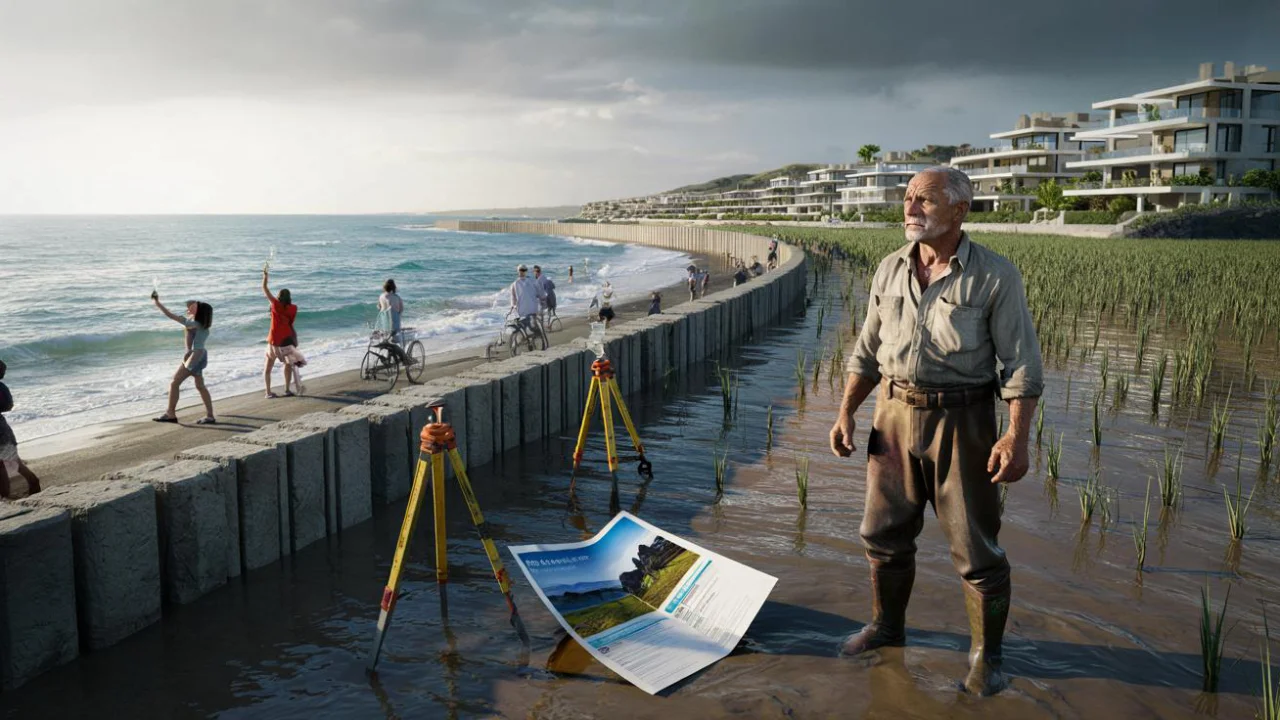
Today, Maria stands behind a gleaming new seawall, watching waves crash harmlessly against concrete and glass. She’s one of millions celebrating as coastal defenses rise along vulnerable shorelines. But twenty miles inland, farmer Daniel Reyes stares at orange stakes marking where his cornfields will become a deliberate flood zone.
The same coastal defenses plan that saved Maria’s café has sentenced Daniel’s farm to drown.
When Coastal Defenses Create Winners and Losers
The new floodwall stretches for miles along the coast, a concrete ribbon topped with transparent panels that offer both protection and ocean views. Local officials call it an engineering marvel that will safeguard billions in property value and protect thousands of residents from rising seas.
But every coastal defenses plan needs somewhere for excess water to go. Engineers can’t make floodwater disappear – they can only redirect it. The solution? Designated inland areas that will flood on purpose during major storms, sparing coastal communities at the expense of rural farmland.
“We’re essentially creating sacrificial zones,” explains Dr. Sarah Chen, a flood management specialist at the Regional Planning Institute. “The water has to go somewhere, and unfortunately, that somewhere is often agricultural land that can theoretically recover from flooding.”
The contrast couldn’t be starker. Coastal residents celebrate their newfound security with champagne toasts and waterfront festivals. Meanwhile, farming communities watch surveyors stake out their fields for “managed flooding zones” that will channel storm surge away from expensive beachfront properties.
Breaking Down the Coastal Protection Strategy
The current coastal defenses plan operates on a simple but controversial principle: protect the most valuable assets first. Here’s how the system works and who pays the price:
| Protected Areas | Sacrificed Areas | Economic Impact |
|---|---|---|
| Coastal resorts and hotels | Corn and soybean farms | $2.3 billion in tourism protected |
| Waterfront residential districts | Cattle ranching operations | 15,000 homes secured |
| Commercial fishing ports | Vegetable growing regions | 8,500 jobs preserved |
| Beach access roads | Rural transportation routes | $400 million in infrastructure saved |
The managed flooding strategy includes several key components:
- Diversion channels that redirect water from coastal areas to inland basins
- Controlled spillways that open automatically when water levels rise
- Temporary storage areas on farmland that can hold millions of gallons
- Emergency pumping stations to remove water after storms pass
- Compensation programs for affected farmers (though many say payments are inadequate)
“The engineering is sound, but the social cost is devastating,” says agricultural economist Dr. James Martinez. “We’re asking farming families to sacrifice their livelihoods so coastal property values stay high.”
The Human Cost Behind the Numbers
Daniel Reyes represents thousands of farmers caught in this impossible situation. His family has worked the same 200 acres for three generations, building soil quality and establishing crop rotations that maximize yield. The coastal defenses plan will flood his fields during major storms, potentially destroying years of agricultural investment.
The compensation offered covers only immediate crop losses, not long-term soil damage or the cost of rebuilding after each flood. Salt water intrusion could make some fields unusable for years. Equipment and storage facilities remain at risk despite promises of advance warning systems.
Local farming communities have organized protests and filed lawsuits, but they lack the political influence of coastal tourism industries. Property owners near the beach contribute more in tax revenue and have powerful lobbying groups. Rural farmers often struggle to make their voices heard in state capitals where these decisions get made.
“It’s class warfare disguised as flood management,” argues community organizer Lisa Patel. “Rich people get walls, poor people get water.”
The divide creates ongoing tension between communities that should be working together on climate adaptation. Coastal residents view the floodwall as essential protection for their families and businesses. Inland farmers see it as a system that prioritizes expensive real estate over food production and rural livelihoods.
Looking for Better Solutions
Some experts argue that more equitable coastal defenses plans are possible, though they require bigger budgets and more complex engineering. Alternative approaches could include:
- Building higher, stronger walls that contain more water without inland diversions
- Creating artificial wetlands that absorb storm surge while supporting wildlife
- Relocating the most vulnerable coastal development instead of protecting it
- Sharing costs more fairly between coastal and inland communities
The Netherlands offers one model, with sophisticated flood management systems that protect both coastal cities and agricultural regions. However, such comprehensive solutions require massive public investment that many governments aren’t willing to make.
“We’re making short-term decisions that create long-term problems,” warns climate adaptation researcher Dr. Amanda Foster. “Pushing water around doesn’t solve the fundamental issue – we need to live differently with rising seas.”
For now, the coastal defenses plan moves forward despite rural opposition. Construction continues on new barriers while farmers watch orange stakes multiply across their fields. The next major storm will test whether this approach truly works, or whether protecting some communities while sacrificing others creates more problems than it solves.
FAQs
How do coastal defenses plans decide which areas to protect?
Protection priorities typically focus on population density, economic value, and infrastructure importance. Coastal areas with expensive real estate and tourism industries usually receive priority over rural farmland.
What compensation do farmers receive for flood zone designation?
Compensation varies widely but often covers only immediate crop losses, not long-term soil damage or equipment replacement. Many farmers say payments are insufficient to cover their actual costs.
Can floodwalls completely prevent coastal flooding?
No floodwall can stop all flooding, especially during extreme storms that exceed design specifications. Excess water must go somewhere, which is why inland diversion areas are part of most coastal defense strategies.
Are there alternatives to sacrificing farmland for coastal protection?
Yes, including taller seawalls, artificial wetlands, managed retreat from vulnerable areas, and comprehensive regional flood management. However, these solutions often cost significantly more than current approaches.
How do other countries handle coastal flood management?
Countries like the Netherlands use sophisticated systems that protect both coastal and inland areas, but these require massive public investment and decades of planning that many nations haven’t committed to making.
What happens to farming communities after repeated flooding?
Repeated saltwater flooding can permanently damage soil, making land unsuitable for agriculture. Some farming families eventually sell their land or abandon agriculture entirely, contributing to rural economic decline.


