
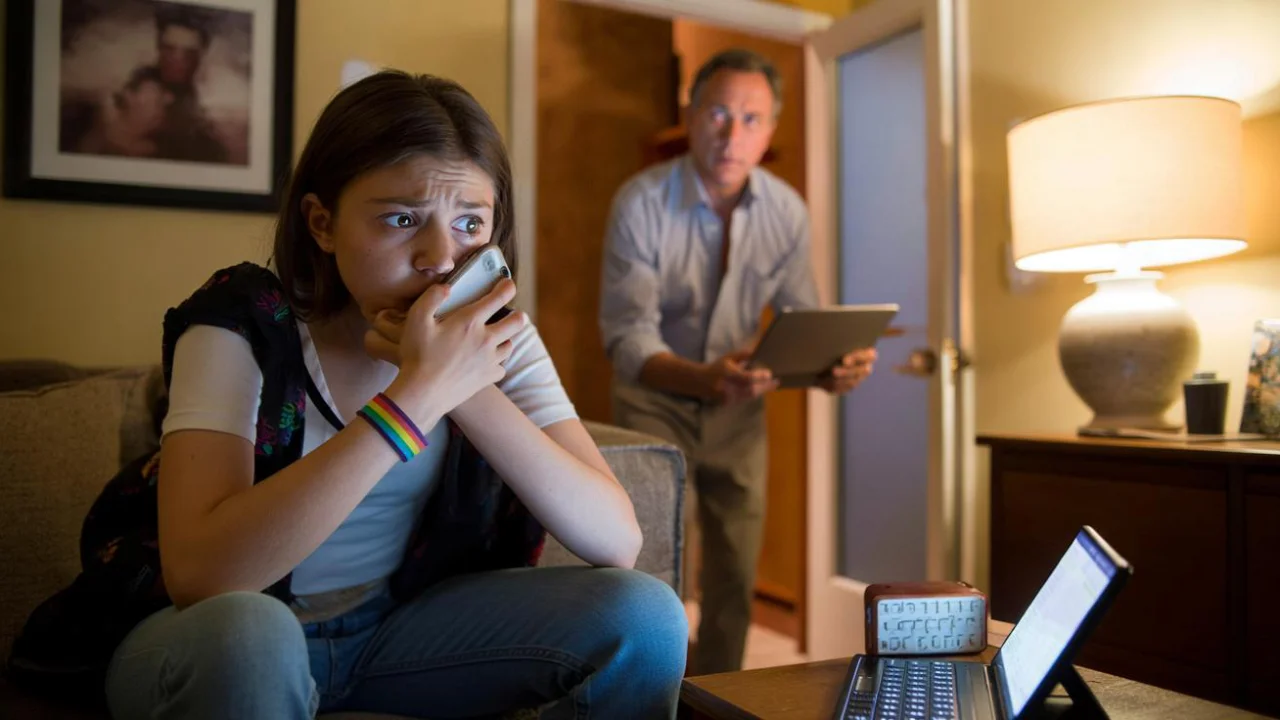
Sarah’s dad installed the monitoring app on a Tuesday night, telling himself it was just temporary. Just until she turned eighteen. Just until the world felt a little safer.
For weeks, the software sent him mundane updates: homework complaints, friend drama, TikTok videos. Normal teenage stuff. Then came the message thread that changed everything. His fifteen-year-old wasn’t just texting a friend named Alex. She was planning their first real date, sharing inside jokes, sending heart emojis.
Alex wasn’t the boy predator he’d been watching for. Alex was a girl from her English class. And his daughter had been hiding her relationship for months, not from some online stranger, but from him.
The fine line between protection and invasion
Parental phone monitoring has become a booming industry worth over $2.5 billion annually. Apps like mSpy, FlexiSpy, and Bark promise to keep kids safe from cyberbullying, predators, and dangerous content. The pitch is compelling: why wouldn’t you want to know who your child is talking to?
But stories like Sarah’s reveal the complex reality behind these tools. When parents install spyware to protect their teens, they often discover information their children never intended to share. Sexual orientation, mental health struggles, relationship problems, and personal conflicts that teens are still figuring out themselves.
“The road to helicopter parenting is paved with good intentions,” explains Dr. Jennifer Martinez, a family therapist who specializes in digital boundaries. “Parents see real dangers online and think surveillance equals safety. But what they often create instead is a breakdown of trust that can last for years.”
The statistics on teen internet safety are genuinely concerning. One in seven teens receives unwanted sexual solicitations online. Cyberbullying affects nearly 40% of young people. But the same technology that exposes teens to these risks also gives them spaces to explore their identity, connect with supportive communities, and develop independence.
What parents discover when they start watching
Parental phone monitoring reveals far more than most parents expect. Here’s what surveillance typically uncovers:
- Normal teenage behavior that looks suspicious to adults
- Private conversations about sexuality, identity, and personal struggles
- Complaints about parents and family rules
- Academic stress and mental health concerns teens haven’t shared
- Relationships with friends parents don’t know well
- Experimentation with language, ideas, and self-expression
| What Parents Expect to Find | What They Actually Discover |
|---|---|
| Evidence of online predators | Normal peer relationships and age-appropriate friendships |
| Dangerous behavior or illegal activity | Typical teenage experimentation and boundary-testing |
| Clear signs their child needs help | Private thoughts and feelings teens aren’t ready to discuss |
| Confirmation their parenting approach is working | Evidence their child doesn’t feel comfortable being honest with them |
“Most parents who use monitoring software find exactly what they don’t want to find,” notes Dr. Robert Chen, a digital privacy researcher. “Not danger from strangers, but evidence that their teenager is becoming an independent person with their own inner life.”
The aftermath: when surveillance backfires
Sarah’s story didn’t end when her father discovered her relationship. It began there. Faced with information he’d obtained secretly, he had to choose between pretending ignorance or revealing his surveillance.
He chose honesty, sitting her down for what he thought would be a conversation about online safety. Instead, it became a confrontation about privacy, trust, and acceptance. Sarah wasn’t upset about having her relationship discovered. She was devastated that her father had been reading her private messages for months.
The conversation that was supposed to be about her sexuality became about his betrayal. The app that was meant to keep her safe had damaged their relationship in ways that would take years to repair.
Research shows that teens who discover parental monitoring often respond by:
- Finding ways to communicate privately that parents can’t track
- Sharing less information with parents about their daily lives
- Feeling increased anxiety and depression about privacy
- Developing more secretive behavior overall
“The irony is that surveillance often creates the very behavior parents are trying to prevent,” explains Dr. Martinez. “Teens who feel watched become more secretive, not more open. They find ways around the monitoring, which can actually put them in more dangerous situations.”
Finding balance in a digital world
The challenge for modern parents isn’t whether to care about their teen’s online safety. It’s how to stay involved without crossing the line into surveillance. Mental health professionals increasingly recommend transparency over secrecy.
Dr. Lisa Park, who runs digital wellness workshops for families, suggests that parents focus on building trust rather than installing tracking software. “The teens who are most vulnerable online are the ones who don’t feel they can talk to their parents about problems. Monitoring doesn’t solve that fundamental issue.”
Effective alternatives to secret monitoring include:
- Regular, non-judgmental conversations about online experiences
- Teaching teens to recognize and respond to dangerous situations
- Creating family agreements about phone and internet use
- Using parental controls openly, with the teen’s knowledge
- Building relationships with their friends’ parents
The most important factor isn’t the technology parents choose, but whether teens feel safe coming to them when something goes wrong. Secret monitoring often undermines that safety, replacing trust with suspicion.
FAQs
Is it legal for parents to monitor their minor child’s phone?
Yes, parents have the legal right to monitor devices they pay for when their child is under 18, but the ethical implications are more complex.
What’s the difference between parental controls and spyware?
Parental controls block access to certain content or apps with the child’s knowledge, while spyware secretly records and reports on all activity.
How do teens typically react when they discover monitoring software?
Most teens report feeling betrayed and become less likely to share personal information with their parents, often finding ways to communicate privately.
Are there safer alternatives to secret phone monitoring?
Open communication, teaching digital literacy, transparent parental controls, and building trust are more effective long-term strategies for online safety.
What should parents do if monitoring reveals concerning behavior?
Address the behavior directly through honest conversation, and consider whether the monitoring itself may have contributed to secrecy or trust issues.
Can parental monitoring actually make teens less safe?
Yes, when teens discover secret monitoring, they often find ways to hide their activity completely, which can prevent parents from helping with real problems.


