
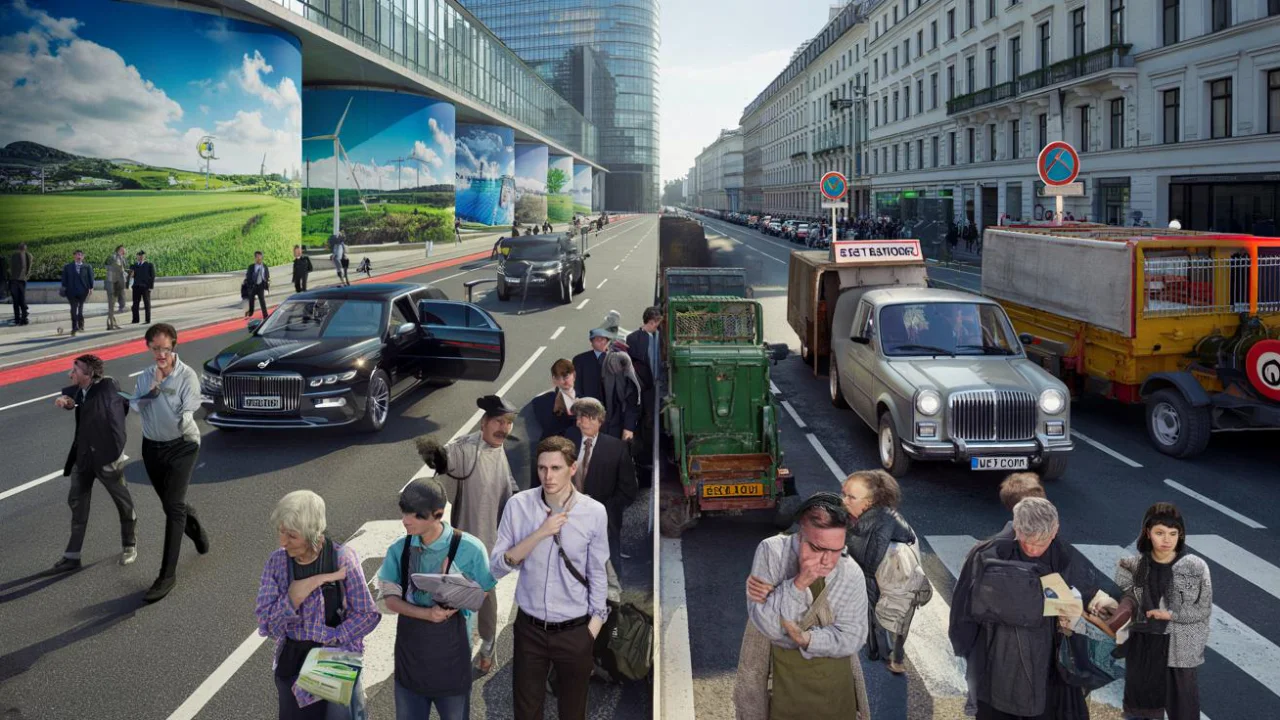
Maria stares at her heating bill, the numbers blurring through tired eyes. Three months ago, she supported the city’s new green energy initiative. Tonight, she’s choosing between warmth and groceries. Down the street, her neighbor’s electric car gleams under a streetlight—a $80,000 Tesla with a “Save the Planet” bumper sticker. Meanwhile, Maria’s twenty-year-old Honda sits in her driveway, reliable but suddenly branded an environmental villain.
She’s not against saving the Earth. She just wishes someone had asked her how.
This tension captures the heart of today’s climate debate. What started as environmental concern has evolved into something far more complex—a movement that critics call climate alarmism, where urgent action sometimes tramples over everyday lives and democratic input.
The Great Climate Divide: Science Meets Street Reality
Climate alarmism has become one of the most contentious phrases in modern environmental discourse. To supporters, it represents necessary urgency about an existential threat. To critics, it describes a movement that uses fear to push through policies that ordinary people never voted for.
The numbers tell a stark story. Global temperatures continue rising, extreme weather events multiply, and ice sheets shrink measurably each year. Scientists agree that human activity drives these changes. But somewhere between the laboratory and the living room, the message transforms into mandates that feel more like punishment than progress.
“We’ve created a climate emergency narrative that leaves no room for nuance,” observes Dr. Sarah Chen, an environmental policy researcher. “When everything becomes an emergency, democratic deliberation becomes a luxury we apparently can’t afford.”
Consider the recent wave of climate policies across Western nations. Carbon taxes, emission zones, fossil fuel bans, and green building codes arrive with little public debate. Politicians present them as scientific necessities rather than policy choices. The underlying message: this isn’t up for discussion.
The Billionaire Paradox: Private Jets and Public Sacrifice
Perhaps nothing illustrates the climate alarmism controversy better than the role of wealthy environmentalists. Tech moguls and celebrities fly to climate conferences in private jets, then lecture middle-class families about their carbon footprints. Investment funds worth trillions push “ESG” policies that can reshape entire industries overnight.
The contradiction creates obvious resentment. Here’s how it breaks down:
| Elite Climate Advocates | Average Citizens |
|---|---|
| Multiple homes, private transport | Face heating/cooling restrictions |
| Invest in green technology stocks | Pay higher energy prices |
| Attend international conferences | Limited travel due to costs/taxes |
| Influence policy from boardrooms | Little input on local implementation |
“The climate movement has an authenticity problem,” notes economist Michael Torres. “When sacrifice is preached by people who don’t practice it, the message loses moral authority.”
This isn’t about denying climate science. It’s about questioning who gets to decide how society responds—and who bears the cost.
The billionaire eco-warrior phenomenon spans from Silicon Valley to European capitals. They fund environmental groups, lobby for green regulations, and often profit from the very policies they promote. Meanwhile, working families discover that “going green” means going without—heat, reliable transportation, or affordable electricity.
Real People, Real Consequences: When Green Policies Hit Home
Climate alarmism’s real-world impact plays out in kitchen tables and small businesses across the globe. The policies designed to save the planet often devastate the people they claim to protect.
In the Netherlands, thousands of farmers face forced buyouts because their livestock operations exceed nitrogen emission limits. These aren’t corporate agribusinesses—they’re family farms passed down through generations. The government offers compensation, but you can’t buy back a way of life.
British homeowners confront similar pressures. New regulations require expensive heat pump installations to replace gas boilers. The technology works well in modern, well-insulated homes. For older properties—which house millions of families—the systems often fail to provide adequate heating while doubling energy costs.
Key impacts include:
- Energy poverty affecting 13.4% of EU households
- Small business closures due to carbon compliance costs
- Rural communities isolated by transport restrictions
- Manufacturing jobs lost to countries with lower environmental standards
- Food prices rising due to agricultural regulations
“We support environmental protection, but not at the expense of our children’s future prosperity,” explains Janet Morrison, a small business owner facing new emissions regulations. “There has to be a balance.”
The irony cuts deep. Policies meant to protect future generations often harm present ones. Children in energy-poor households suffer cold homes. Young adults can’t afford electric vehicles or green-certified apartments. The promise of a better tomorrow demands sacrifices that many simply cannot make.
The Democratic Deficit: Who Really Decides Our Green Future?
Perhaps the most troubling aspect of climate alarmism isn’t its environmental goals but its democratic process—or lack thereof. Major climate policies rarely appear on ballot measures. Instead, they emerge from international agreements, regulatory agencies, and executive orders that bypass traditional legislative debate.
The European Green Deal, affecting 450 million people, was never directly voted on by European citizens. America’s climate policies shift dramatically with each administration, creating whiplash for businesses and communities trying to plan ahead. Meanwhile, global climate conferences make commitments that national parliaments must somehow fund and implement.
“Climate policy has become increasingly technocratic,” observes political scientist Dr. James Richardson. “Experts decide what’s necessary, then politicians figure out how to sell it. That’s backwards from how democracy is supposed to work.”
This democratic deficit fuels backlash across multiple countries. Voters support environmental protection in principle but rebel when policies arrive without consultation or consideration of local circumstances. The result: climate action becomes associated with elite overreach rather than collective responsibility.
The path forward requires bridging this gap. Effective climate policy needs both scientific rigor and democratic legitimacy. That means honest conversations about costs, benefits, and alternatives—not emergency declarations that shut down debate.
FAQs
What exactly is climate alarmism?
Climate alarmism refers to using fear-based messaging about climate change to justify immediate, dramatic policy changes without adequate public debate or consideration of economic impacts.
Does criticizing climate alarmism mean denying climate change?
Not necessarily. Many critics accept climate science but question the speed, scope, and democratic legitimacy of proposed solutions.
Why do billionaires promote climate policies?
Motives vary, but many wealthy individuals and corporations profit from green technology investments while their lifestyle insulates them from policy costs.
Are there alternatives to current climate approaches?
Yes, including market-based solutions, technological innovation, adaptation strategies, and gradual transitions that consider economic and social impacts.
How can climate policy become more democratic?
Through transparent cost-benefit analysis, public referendums on major policies, local implementation flexibility, and honest discussion of trade-offs rather than emergency declarations.
What happens if climate alarmism continues?
Continued top-down approaches risk further polarizing society, undermining support for necessary environmental measures, and creating backlash that could reverse climate progress.


