
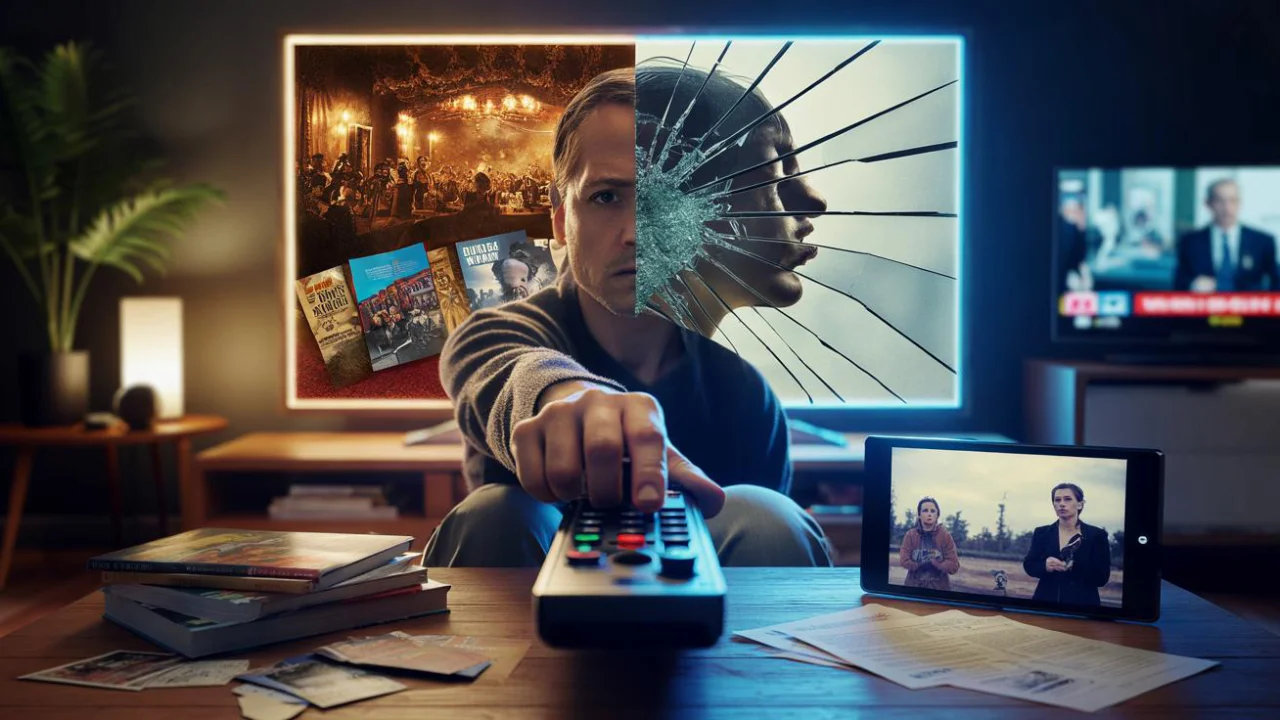
My friend Sara stopped mid-sentence during our movie night when Kevin Spacey appeared on screen. “I can’t,” she said, reaching for the remote. “I know it’s just acting, but I see his face and think about those boys.” We’d been watching “The Usual Suspects” for the tenth time, a film that had shaped our college years and late-night discussions about plot twists and perfect crimes.
The room went quiet. Half of us wanted to keep watching—it was still a masterpiece of filmmaking. The other half felt uncomfortable, like we were somehow endorsing terrible behavior by enjoying his performance. We switched to something else, but the question hung in the air: When does loving art become supporting a monster?
This uncomfortable dance between art and artist has become the defining cultural struggle of our time. Every streaming queue, playlist, and bookshelf forces us to make moral calculations we never expected to navigate.
The New Reality of Consuming Culture
The art versus artist debate isn’t theoretical anymore—it’s playing out in real time across every platform and genre. Social media has made it impossible to separate creators from their work, and audiences are demanding accountability in ways that feel both necessary and exhausting.
“We’re living through a cultural reckoning where the personal behavior of artists can no longer be completely divorced from their creative output,” says Dr. Amanda Chen, a media ethics professor at Northwestern University. “The internet has made the private public, and fans feel a responsibility they didn’t have before.”
Consider how quickly things can change. One day you’re humming along to your favorite song, the next day Twitter is full of screenshots showing the singer’s problematic posts from 2015. Your Spotify playlist suddenly feels like a moral minefield.
The stakes feel higher because we now understand how money flows. Every stream, ticket purchase, and book sale doesn’t just show appreciation—it funds careers, legal teams, and sometimes enables further harmful behavior. The economic power of fandom has become impossible to ignore.
Famous Cases That Changed How We Think
Several high-profile controversies have shaped how society approaches the art versus artist dilemma. Each case reveals different aspects of this complex issue:
| Artist | Medium | Controversy | Public Response |
|---|---|---|---|
| R. Kelly | Music | Sexual abuse charges | Streaming platforms removed music, concerts canceled |
| J.K. Rowling | Literature | Transgender rights statements | Fan communities split, some actors distanced themselves |
| Woody Allen | Film | Abuse allegations | Amazon canceled film deal, actors pledged not to work with him |
| Louis C.K. | Comedy | Sexual misconduct admissions | Netflix removed specials, venues canceled shows |
The Michael Jackson case remains one of the most complex examples. “Thriller” didn’t stop being a groundbreaking album after “Leaving Neverland,” but radio stations faced impossible choices. Play the songs and potentially upset abuse survivors, or ban them and disappoint millions of fans who grew up with that music.
“The Jackson situation shows how personal these decisions become,” explains cultural critic James Rodriguez. “For many people, his music isn’t just entertainment—it’s tied to childhood memories, first dances, and family gatherings. Asking someone to give that up feels like asking them to rewrite their own history.”
The Real-World Impact on Everyone Involved
This cultural shift affects more than just famous artists and their fans. The ripple effects touch entire industries and communities in ways we’re still understanding.
For victims and survivors, seeing their abusers continue to profit from fame can feel like a second trauma. When Kevin Spacey was removed from “All the Money in the World” and replaced with Christopher Plummer, it sent a message that Hollywood would no longer ignore serious allegations just to protect investments.
But the economic consequences are complicated. When a star falls, it’s not just their career that suffers—entire productions, from sound engineers to catering staff, can lose work. The 2019 cancellation of “House of Cards” affected hundreds of jobs in Baltimore’s growing film industry.
Streaming platforms and retailers now face constant pressure to make moral judgments about content. Spotify’s decision to remove R. Kelly from playlists (though not from the platform entirely) created a precedent that other services watch carefully. Where do they draw the line?
- Artists lose streaming revenue and touring opportunities
- Production companies face pressure to cut ties with controversial figures
- Venues must decide whether to host potentially problematic performers
- Fans experience guilt and confusion about their entertainment choices
- Other artists in the same genre face increased scrutiny
The generational divide is stark. Younger consumers, who grew up with social media, often have zero tolerance for problematic behavior. They’ll drop an artist immediately after learning about allegations. Older fans, whose relationships with certain works run deeper, struggle more with these binary choices.
Finding a Path Forward
There’s no universal answer to the art versus artist question, but people are developing personal frameworks for navigation. Some choose complete separation—they’ll watch Roman Polanski films but won’t buy tickets to new ones. Others go full boycott across all platforms.
“I think about whether my money is directly supporting someone who’s caused harm,” says Maria Santos, a 28-year-old teacher from Chicago. “I’ll still read my old Harry Potter books, but I’m not buying new merchandise or seeing the new movies. It’s not perfect, but it feels like a compromise I can live with.”
The concept of “ethical consumption” has moved beyond fair trade coffee into entertainment choices. Some fans now research artists’ charitable giving, political donations, and public statements before supporting their work. Others focus on supporting emerging artists from marginalized communities instead of continuing to elevate problematic established figures.
Legal expert Dr. Sarah Williams points out that this cultural shift might actually strengthen artistic communities: “When we hold creators accountable for their behavior, we make space for voices that have been marginalized or silenced. The focus shifts from protecting established power to nurturing new talent.”
Publishers, labels, and studios are starting to build accountability measures into contracts. Some include “moral clauses” that allow them to drop artists who engage in behavior that damages the brand. Others are investing more in diverse creators, spreading risk across a wider range of voices and perspectives.
The conversation continues to evolve as new cases emerge and society grapples with questions about redemption, growth, and second chances. What we’re witnessing isn’t just about individual artists—it’s a fundamental shift in how we think about fame, power, and responsibility in creative industries.
FAQs
Is it wrong to still enjoy art from problematic creators?
There’s no universal right answer. Many people find personal compromises, like consuming existing work but not supporting new projects financially.
Does separating art from artist mean ignoring victims?
Not necessarily. You can acknowledge harm while still appreciating creative work, though many choose to avoid financially supporting problematic artists.
How do streaming platforms decide what content to remove?
Most platforms consider legal outcomes, public pressure, and brand safety concerns rather than following strict moral guidelines.
Can artists redeem themselves after serious allegations?
Public opinion varies greatly on this. Some believe in second chances after accountability, while others feel certain behaviors are unforgivable.
Should we judge historical artists by modern standards?
This remains highly debated. Some argue context matters, while others believe certain behaviors were always wrong regardless of era.
How can I support art without supporting problematic artists?
Consider buying used copies, borrowing from libraries, or supporting cover versions by other artists instead of original recordings.


