
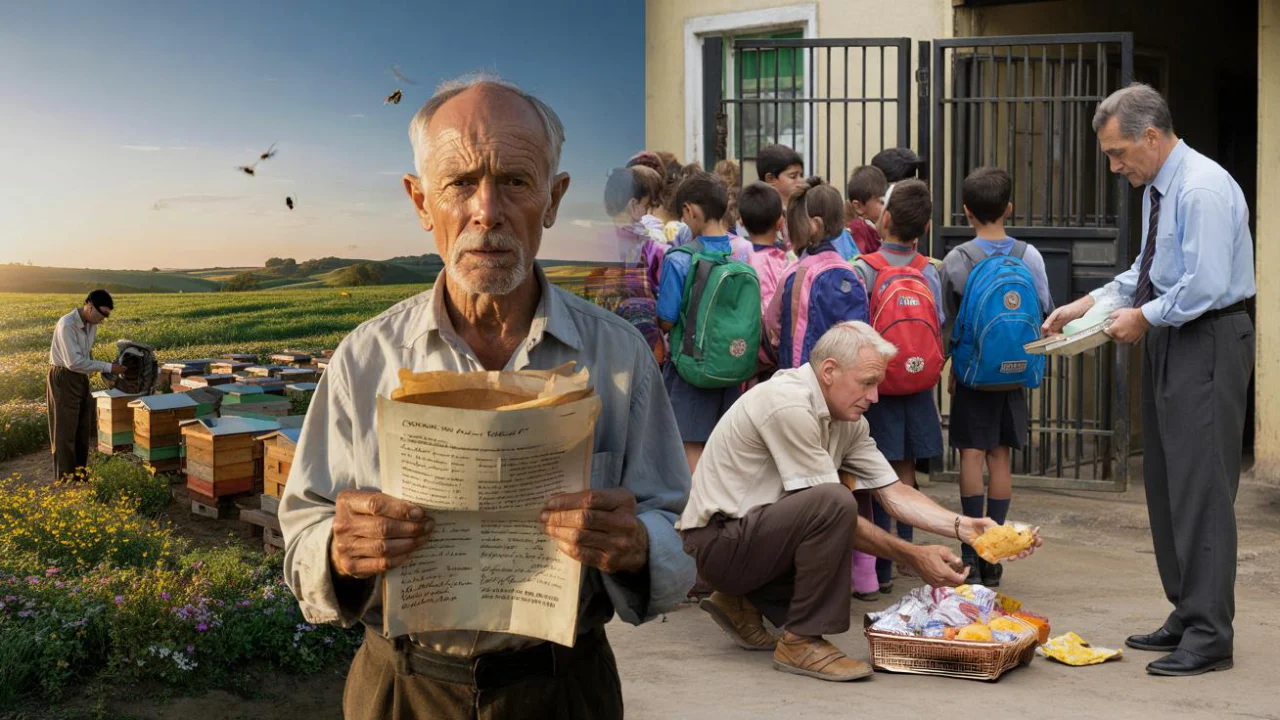
René stared at the letter for the third time, his coffee growing cold beside the morning newspaper. The greyish government paper felt heavier than it should, carrying words that didn’t make sense together: “agricultural tax reassessment” and “undeclared farming activity.” He’d never farmed a day in his life. The only thing growing on his small plot was wildflowers and the occasional dandelion.
Six months earlier, he’d simply nodded when young Pierre asked if he could put a few beehives on the unused corner of René’s land. “No rent needed,” René had said, waving away talk of money. “Just happy to see the land put to good use.” Now, apparently, that handshake had turned him into an unlicensed agricultural businessman in the eyes of the tax office.
Down the street, another act of kindness was being punished. A father named Michel faced fines for bringing sandwiches to hungry schoolchildren whose parents couldn’t pay cafeteria bills. The irony wasn’t lost on anyone: in a world where bureaucracy moves faster than compassion, generosity itself had become a regulatory offense.
How Good Intentions Trigger Tax Penalties
The agricultural tax reassessment system operates on rigid algorithms that scan land use without considering human context. When Pierre’s beehives appeared on satellite imagery and cross-referenced with land registry data, René’s property was automatically flagged for commercial agricultural activity.
“The system doesn’t distinguish between profit-driven farming and neighborly favors,” explains tax consultant Marie Dubois. “If your land shows agricultural use, you’re presumed to be running a business until you prove otherwise.”
René’s situation mirrors hundreds of similar cases across rural France. Retirees lending garden plots to young families, allowing grazing for a neighbor’s horses, or hosting community beehives all face the same bureaucratic trap. The tax office sees economic activity where residents see community support.
The process begins innocuously enough. Automated systems detect changes in land use through aerial photography and satellite data. These images are cross-referenced with property records and business registrations. When agricultural activity appears on land without corresponding business declarations, the agricultural tax reassessment process kicks into gear.
The Real Cost of Bureaucratic Generosity
The financial impact extends far beyond the initial tax bill. Property owners face retroactive penalties, interest charges, and potential reclassification of their land for future tax purposes. Here’s what victims of agricultural tax reassessment typically encounter:
- Retroactive tax bills covering 3-5 years of “undeclared activity”
- Interest penalties ranging from 15-40% of the base tax amount
- Legal fees averaging €2,000-€5,000 to contest assessments
- Permanent reclassification increasing annual property taxes
- Mandatory business registration requirements for future land use
For retirees like René, living on fixed pensions, these unexpected bills can represent months of income. “I wanted to help a young man start his beekeeping business,” René says. “Now I’m being treated like I’m running some kind of tax evasion scheme.”
| Violation Type | Average Fine | Additional Penalties |
|---|---|---|
| Undeclared agricultural use | €1,200-€4,500 | 3 years retroactive taxes |
| Unlicensed food distribution | €300-€1,500 | Cease and desist orders |
| Unauthorized land modification | €800-€3,000 | Restoration requirements |
When Helping Children Becomes a Crime
Michel’s story adds another layer to this bureaucratic maze. The 45-year-old father noticed children lingering outside his daughter’s school, clearly hungry but unable to afford cafeteria meals. His solution was simple: pack extra sandwiches and quietly distribute them.
“These weren’t random kids,” Michel explains. “I knew their families were struggling. Some parents work three jobs just to pay rent. A €4 school meal might as well cost €40 when you’re choosing between lunch money and bus fare.”
The school administration initially thanked Michel for his kindness. Then complaints arrived from the catering company about “unfair competition” and “disruption of official services.” Within weeks, municipal authorities issued warnings about unauthorized food distribution on school property.
“We have regulations for a reason,” states local education official Catherine Lemoine. “While we appreciate his intentions, unsupervised food distribution creates liability issues and undermines official programs designed to help these families.”
Michel’s response was predictable: “So helping hungry children is now illegal, but letting them go hungry is perfectly acceptable policy?”
The Wider Impact on Community Spirit
These cases represent more than individual bureaucratic failures. They signal a fundamental shift in how societies balance regulation with human decency. Community volunteers report increasing reluctance to offer help without first consulting lawyers.
Local charity coordinator Jean-Paul Martin has observed the chilling effect firsthand. “People are afraid to organize food drives, lend equipment, or offer space for community gardens. The regulatory risk feels too high for ordinary citizens.”
The ripple effects extend beyond immediate participants. Young entrepreneurs like Pierre struggle to find affordable land access, while children go without assistance because adults fear legal consequences for helping.
Rural communities particularly suffer as informal support networks that sustained them for generations face bureaucratic dismantling. “We used to help each other without thinking twice,” says village mayor Sophie Renault. “Now every act of kindness needs legal review.”
Fighting Back Against the System
Some communities are pushing back through organized resistance and legal challenges. René has joined a growing network of property owners contesting agricultural tax reassessment cases through collective legal action.
Their lawyer, Philippe Moreau, argues that current tax interpretations exceed legal intent. “The agricultural tax was designed for commercial farming operations, not neighborly cooperation. We’re seeing systematic misapplication of regulations to criminalize normal community behavior.”
Meanwhile, parents in Michel’s district have organized “community lunch” programs that operate within regulatory frameworks while still feeding hungry children. The bureaucratic hurdles are significant, but the alternative—accepting that generosity is illegal—feels unacceptable.
Local politicians face increasing pressure to reform systems that punish kindness while rewarding indifference. “We’ve created a society where it’s safer to ignore your neighbor’s problems than to help solve them,” observes regional councilor Anne Dubois.
FAQs
What triggers an agricultural tax reassessment on private property?
Automated systems detect agricultural activity through satellite imagery, aerial photography, or neighbor reports, leading to tax office investigations of undeclared farming operations.
Can property owners avoid penalties by registering informal agricultural activities?
Yes, but registration requires business licenses, insurance, and ongoing compliance costs that often exceed the value of small-scale charitable activities.
Are there legal ways to help neighbors with land use without tax consequences?
Limited options include formal lease agreements, registered charity operations, or municipal community garden programs, though all involve significant bureaucratic overhead.
What happens if someone contests an agricultural tax reassessment?
Appeals typically take 12-24 months, require legal representation averaging €3,000-€5,000, and succeed in only 30-40% of cases according to tax law specialists.
Can communities create legal frameworks for informal helping?
Some municipalities establish “community cooperation” ordinances that provide regulatory protection for specific types of neighborly assistance, though implementation varies widely.
How do other countries handle similar situations?
Nordic countries generally provide stronger protections for informal community cooperation, while Anglo-Saxon systems rely more heavily on formal charity structures to channel assistance.


