
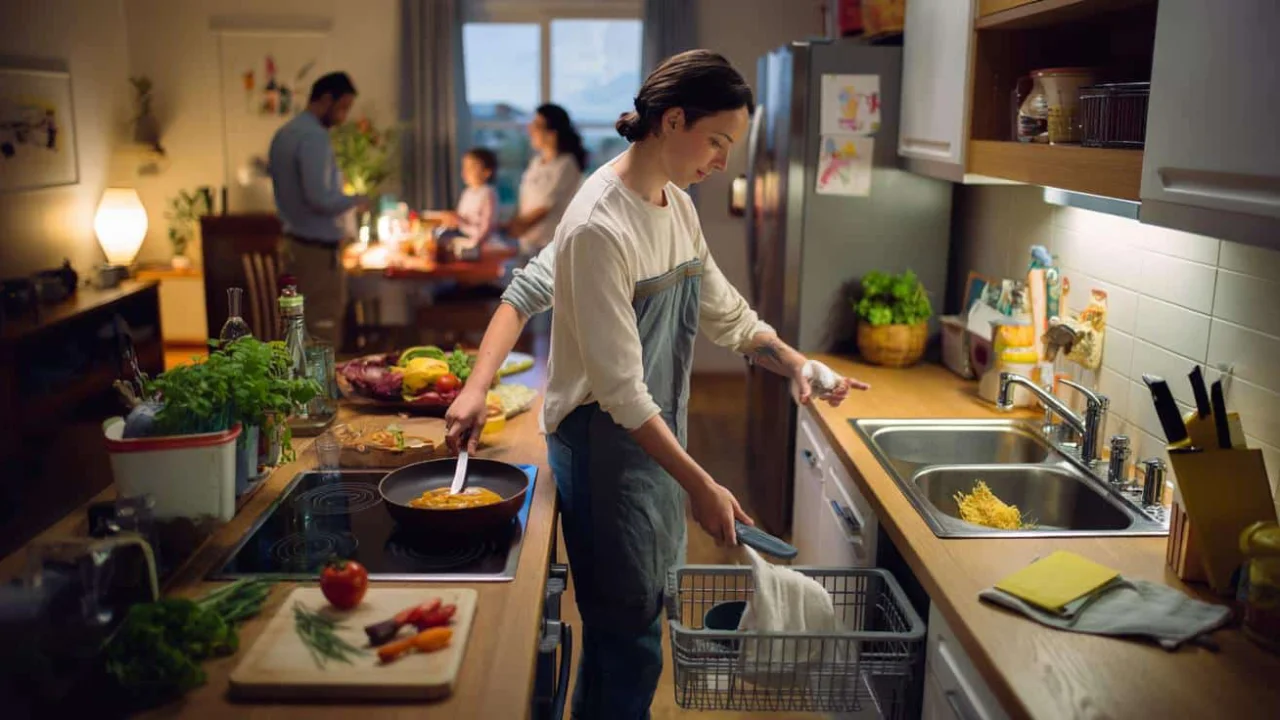
Sarah stared at her kitchen after hosting Sunday dinner for eight people. While her guests laughed in the living room, she faced a mountain of dishes, sticky counters, and food-splattered surfaces that would take an hour to clean. Meanwhile, her friend Emma had cooked the exact same meal for the same number of people, yet her kitchen looked like she’d barely used it.
The difference? Emma had cleaned as she cooked, turning what could have been a overwhelming post-dinner cleanup into just loading the dishwasher and wiping down one counter. It’s a small habit that reveals something fascinating about personality and psychology.
This isn’t just about being neat or organized. People who clean as you cook display distinct psychological traits that influence how they approach challenges, handle stress, and navigate daily life.
The Psychology Behind Clean-as-You-Go Cooking
When you watch someone clean as they cook, you’re witnessing a masterclass in proactive thinking. These individuals have developed what psychologists call “implementation intentions” – automatic behavioral patterns that kick in without conscious decision-making.
Dr. Jennifer Martinez, a behavioral psychologist, explains: “People who clean while cooking have trained their brains to see waiting time as opportunity time. While the onions sauté, they’re already moving to the next micro-task.”
This behavior stems from understanding that small actions compound. A splash cleaned immediately takes five seconds. The same splash, dried and sticky, might take five minutes to scrub off later. These individuals intuitively grasp the mathematics of efficiency.
Eight Distinctive Traits of Clean-as-You-Cook People
Research reveals that people who maintain clean kitchens while cooking share several psychological characteristics that extend far beyond the kitchen:
| Trait | Kitchen Behavior | Life Application |
|---|---|---|
| Proactive Mindset | Cleans spills immediately | Addresses problems early |
| Low Activation Energy | No hesitation to start small tasks | Takes action without overthinking |
| Present-Moment Awareness | Notices mess as it happens | Stays alert to opportunities |
| Systems Thinking | Sees cooking and cleaning as one process | Integrates solutions into workflows |
| Stress Regulation | Uses cleaning for mental breaks | Self-soothes through productive activity |
| Future-Focused | Prevents end-of-meal overwhelm | Plans ahead to avoid problems |
| Efficiency Orientation | Maximizes multitasking opportunities | Optimizes time and energy |
| Self-Discipline | Does boring tasks without motivation | Maintains habits regardless of mood |
They Don’t Wait for Motivation
The most striking trait is their relationship with motivation. While others wait to “feel like” cleaning, these individuals act regardless of their emotional state. They’ve learned that motivation follows action, not the other way around.
“I never feel like doing dishes,” admits Tom Chen, a software engineer who always maintains a spotless kitchen while cooking. “But I do them anyway because I know I’ll feel worse looking at a messy kitchen later.”
This trait extends beyond cooking. They’re the people who:
- Pay bills immediately rather than letting them pile up
- Respond to emails within hours instead of days
- Address relationship conflicts early rather than letting resentment build
- Maintain their cars, homes, and health proactively
They Create Order in Chaos
Clean-as-you-cook people use tidying as a form of active meditation. When life feels overwhelming, they find comfort in small, controllable actions. Wiping a counter or washing a bowl becomes a way to regulate their nervous system.
This micro-organization serves a deeper psychological need. They can’t control traffic, difficult coworkers, or family drama, but they can control whether their workspace stays clean. It’s a form of agency in an often chaotic world.
Dr. Sarah Thompson, who studies household psychology, notes: “These individuals have learned to use environmental control as emotional regulation. A clean workspace literally helps them think more clearly.”
They See the Bigger Picture
Perhaps most importantly, people who clean as they cook understand systems thinking. They don’t see cooking and cleaning as separate activities but as parts of one integrated process. This perspective shift changes everything.
Instead of thinking “I’ll deal with this mess later,” they think “How can I minimize the mess as I create it?” This preventive approach saves enormous amounts of time and mental energy.
The benefits ripple outward. They spend less money on takeout because cooking at home feels manageable. They entertain more often because hosting doesn’t mean hours of cleanup. Their kitchens become spaces of creativity rather than sources of dread.
What This Means for Everyone Else
The good news? This isn’t an innate personality trait you’re born with or without. It’s a learned behavior that anyone can develop with practice.
Start small. Next time you cook, try washing one utensil while something simmers. Put ingredients away immediately after using them. Wipe one spill before it dries. These tiny actions will gradually become automatic.
The key is consistency rather than perfection. Even clean-as-you-cook people sometimes leave messes, but they’ve built strong enough habits that their default behavior serves them well.
Lisa Rodriguez, a busy mother of three who transformed her cooking routine, shares: “I used to dread making dinner because I knew it meant an hour of cleanup afterward. Now cooking actually relaxes me because I know the kitchen will still be functional when we’re done eating.”
FAQs
Does cleaning while cooking make the actual cooking take longer?
Most people find it saves time overall, even if individual cooking sessions take slightly longer, because it eliminates lengthy cleanup sessions.
What if I get distracted and burn food while cleaning?
Start with tasks that don’t require attention away from cooking, like putting ingredients back in the fridge or wiping nearby surfaces during natural waiting periods.
Is this behavior actually related to perfectionism?
Not usually – it’s more about practicality and reducing future stress than achieving perfect cleanliness.
Can this habit work for people who hate cleaning?
Yes, because it breaks cleaning into such small pieces that it hardly feels like cleaning at all.
How long does it take to develop this habit?
Most people notice it becoming more automatic within 2-3 weeks of consistent practice.
What’s the biggest benefit beyond having a clean kitchen?
Many people report feeling less overwhelmed by household tasks in general and more confident in their ability to handle daily challenges.


