
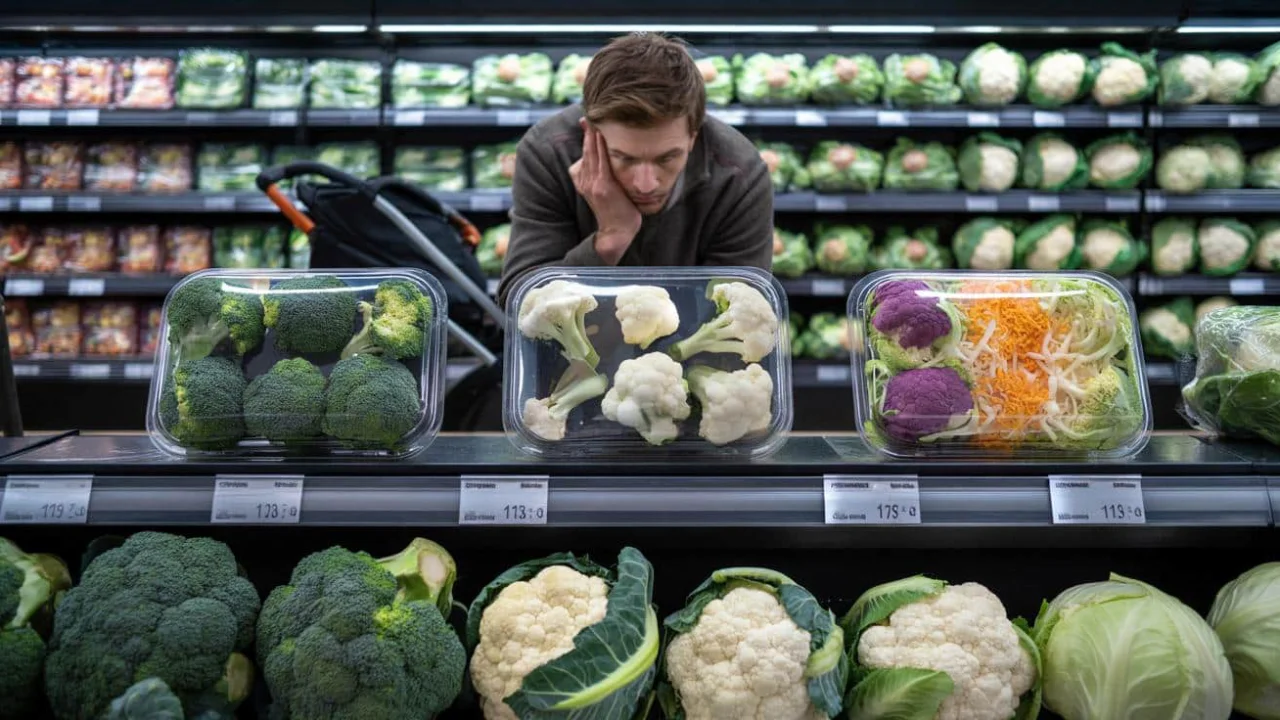
I was rushing through the grocery store last Tuesday when I noticed something that stopped me cold. A woman was standing in the produce section, basket in one hand, phone in the other, clearly stressed about her shopping list. She grabbed expensive organic broccoli for $4.99, then moved three feet over to pick up budget cabbage for $1.29. What she didn’t realize? She was buying two versions of the exact same plant.
That moment hit me because I used to do the same thing. We’ve all been trained to see broccoli as the “healthy” choice and cabbage as the “cheap” option. But here’s the botanical truth that food companies don’t want plastered on their labels: they’re identical species.
This isn’t just about vegetables. It’s about how an entire industry has turned one plant into a profit machine by exploiting what most people don’t know about basic plant science.
The brassica oleracea secret hiding in plain sight
Every single day, millions of shoppers walk past one of nature’s most impressive examples of selective breeding without realizing it. Broccoli, cauliflower, cabbage, kale, Brussels sprouts, and kohlrabi are all the same species: brassica oleracea vegetables.
Think about that for a second. One wild plant that grew along European coastlines thousands of years ago became the foundation for what we now treat as completely separate food categories.
“Most consumers have no idea they’re buying variations of the same plant,” explains Dr. Sarah Mitchell, a plant geneticist at UC Davis. “Food companies capitalize on this knowledge gap to create artificial market segments.”
The process started innocently enough. Ancient farmers noticed some wild brassica plants had bigger leaves, others had thicker stems, some had tighter flower clusters. They saved seeds from the traits they wanted and gradually created distinct varieties.
But somewhere along the way, marketing took over from farming. Companies realized they could sell the same genetic material at vastly different price points by changing the story around each variety.
How the same plant gets sold as different “superfoods”
Walk down any grocery aisle and you’ll see this botanical manipulation in action. Here’s how the same brassica oleracea vegetables get packaged and priced:
| Variety | Marketing Story | Typical Price | Target Market |
|---|---|---|---|
| Broccoli | Fitness superfood | $3-5/lb | Health-conscious shoppers |
| Cauliflower | Low-carb miracle | $4-6/lb | Diet followers |
| Kale | Antioxidant powerhouse | $3-8/lb | Wellness enthusiasts |
| Cabbage | Basic vegetable | $0.50-1.50/lb | Budget shoppers |
| Brussels Sprouts | Gourmet side dish | $3-5/lb | Upscale diners |
The nutritional differences between these varieties are minimal. They’re all packed with vitamin C, fiber, and beneficial compounds. Yet marketing has convinced us that some are “superfoods” while others are just cheap filler.
“The price variations have nothing to do with nutritional value and everything to do with perceived value,” notes food economist Dr. James Rodriguez. “Companies have successfully branded identical plants as premium vs. basic products.”
Look at cauliflower’s recent transformation. Five years ago, it was the boring white vegetable nobody wanted. Then food companies discovered they could market it as:
- Cauliflower rice (keto-friendly carb substitute)
- Cauliflower pizza crust (gluten-free alternative)
- Cauliflower wings (plant-based protein)
- Purple cauliflower (antioxidant superfood)
Same plant. Different packaging. Prices jumped from under $2 per head to $6-8 for processed versions.
The real cost of botanical ignorance
This knowledge gap costs consumers real money. Families spend hundreds more per year buying “diverse” vegetables that are genetically identical. But the impact goes deeper than grocery bills.
When we don’t understand basic plant relationships, we become easy targets for food marketing. Companies can launch “new” products that are just repackaged versions of existing crops. They can create artificial scarcity around common plants. They can charge premium prices for basic genetic variations.
“Food literacy is consumer protection,” argues chef and food educator Maria Santos. “When people understand what they’re actually buying, they make better decisions for their families and their wallets.”
The brassica oleracea vegetables story reveals how divorced most of us have become from basic agricultural knowledge. Our grandparents might have grown several varieties in the same garden plot. Today, we treat them as separate food categories requiring different shopping strategies.
This botanical blindness affects more than just cruciferous vegetables. Sweet potatoes and regular potatoes aren’t related at all, despite the names. Rhubarb is closer to buckwheat than to fruits. Many “ancient grains” are just marketing terms for crops that never went away.
Food companies exploit these knowledge gaps systematically. They know most consumers won’t research the botanical relationships between products. They count on us treating marketing categories as biological facts.
Breaking free from vegetable marketing manipulation
Understanding that broccoli, cauliflower, and cabbage are the same plant changes how you shop. Instead of buying based on marketing stories, you can make decisions based on actual preferences, nutritional needs, and budget constraints.
Here’s what changes when you know the truth about brassica oleracea vegetables:
- You realize expensive “superfood” kale has similar nutrition to cheap cabbage
- You understand why these vegetables taste similar when prepared the same way
- You can substitute one variety for another in most recipes
- You stop paying premium prices for basic genetic variations
- You focus on freshness and quality rather than marketing claims
The next time you’re in the produce section, remember that young dad I watched. He was trying to make the best choice for his family, but he was working with incomplete information. Food companies count on that incomplete information to drive sales.
“Knowledge is the best defense against food marketing,” says consumer advocate Dr. Lisa Chen. “When shoppers understand botanical relationships, they can’t be manipulated by artificial product categories.”
This doesn’t mean all brassica oleracea vegetables are identical in taste or cooking properties. Selective breeding created real differences in texture, flavor intensity, and culinary applications. But these differences don’t justify the massive price variations we see in stores.
The solution isn’t to avoid these nutritious vegetables. It’s to buy them with full knowledge of what you’re actually purchasing. Choose based on what you need, not what the packaging tells you to want.
FAQs
Are broccoli, cauliflower, and cabbage really the same plant?
Yes, they’re all varieties of brassica oleracea vegetables, developed through thousands of years of selective breeding from the same wild ancestor.
Why do these vegetables taste different if they’re the same species?
Selective breeding emphasized different plant parts and characteristics, creating variations in flavor, texture, and appearance while maintaining the same genetic foundation.
Is the nutrition the same across all brassica oleracea varieties?
The nutritional profiles are very similar, with minor variations in specific vitamins and minerals, but nothing that justifies the dramatic price differences in stores.
Can I substitute one brassica vegetable for another in recipes?
In most cases, yes. They respond similarly to cooking methods, though you may need to adjust timing based on the density and size of the pieces.
How can I avoid paying premium prices for basic vegetables?
Focus on seasonal availability, buy whole vegetables instead of pre-processed versions, and choose based on your actual cooking needs rather than marketing claims.
What other vegetables have similar marketing manipulation?
Many “superfood” vegetables are just common crops with new marketing, and some “exotic” varieties are simply different cultivars of familiar plants.


