
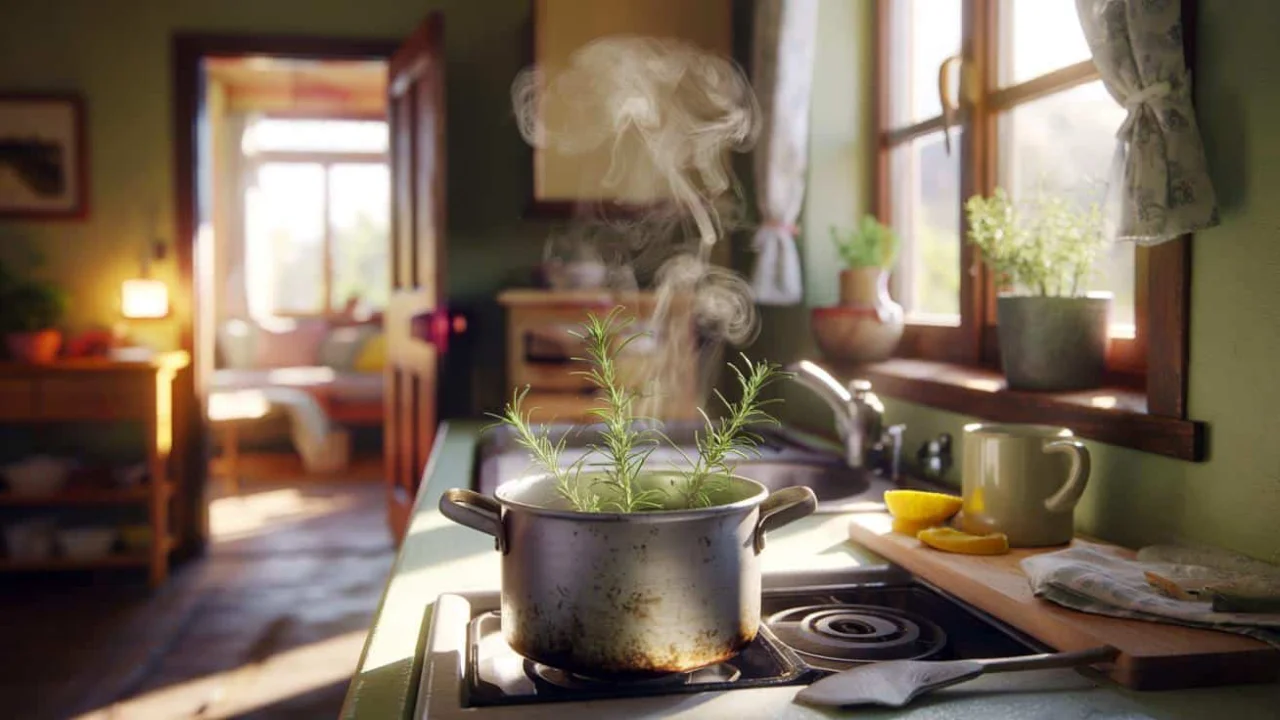
I was seventeen and helping my grandmother prepare for Sunday dinner when she disappeared into her garden and returned with a handful of rosemary sprigs. I expected her to season the roast, but instead she filled a small pot with water, tossed in the herbs, and set it on a back burner. “What’s that for?” I asked, genuinely confused. She just smiled and said, “You’ll see.”
Twenty minutes later, the entire house smelled like I’d stepped into a Mediterranean villa. The air felt different—cleaner, warmer, somehow more alive. Guests started arriving, and every single person commented on how wonderful the house smelled. My grandmother winked at me from across the room.
That simple pot of boiling rosemary became her signature move, and now it’s mine. After years of trying expensive candles and plug-in air fresheners that never quite worked, I finally understand why her method was so much better.
The science behind why boiling rosemary transforms your home
When you simmer fresh rosemary in water, something magical happens at the molecular level. The heat releases volatile organic compounds from the herb—mainly camphor, eucalyptol, and rosmarinic acid. These natural chemicals disperse through your home via the gentle steam, creating an authentic aromatic experience that synthetic fragrances simply can’t match.
Dr. Sarah Chen, an aromatherapy researcher at the University of California, explains it this way: “Your brain recognizes these natural compounds as ‘outdoor’ scents, which triggers a relaxation response. It’s like bringing the calming effect of nature indoors.”
The warm, humid air from boiling rosemary also adds moisture to dry indoor environments. During winter months when heating systems suck the life out of your air, this gentle humidity boost makes spaces feel more comfortable and breathable.
Unlike scented candles or air fresheners that can overwhelm sensitive noses, the gradual release of rosemary’s aroma feels natural and subtle. Your guests won’t wonder what you’re trying to cover up—they’ll just feel more relaxed in your space.
The complete guide to mastering this grandmother-approved technique
The beauty of boiling rosemary lies in its simplicity, but there are a few tricks that make all the difference. Here’s everything you need to know to transform your home’s atmosphere:
| Ingredient | Amount | Notes |
|---|---|---|
| Fresh rosemary sprigs | 4-6 stems | Fresh works best, but dried is acceptable |
| Water | 2-3 cups | Enough to simmer for 30-45 minutes |
| Optional additions | Varies | Lemon peel, lavender, or mint |
- Choose the right pot: A small to medium saucepan works perfectly. You want enough surface area for steam to escape, but not so large that the water evaporates too quickly.
- Prep your rosemary: Gently bruise the stems by rolling them between your palms. This releases more oils and intensifies the fragrance.
- Find the sweet spot: Bring the water to a boil, then reduce to the lowest simmer. You want gentle bubbles, not a rolling boil that might damage the delicate compounds.
- Time it right: Start your rosemary pot about 20-30 minutes before guests arrive, or whenever you want to refresh your space.
- Keep it safe: Never leave boiling water unattended. Set a timer and check water levels regularly.
The fragrance typically lasts 2-3 hours after you turn off the heat, gradually fading to leave your home with a subtle, clean scent. On days when I’m working from home, I’ll often start a pot mid-morning and let it work its magic throughout the day.
What happens when you make this your signature move
Once you start regularly boiling rosemary, you’ll notice changes that go beyond just pleasant smells. Your home begins to feel more welcoming, more intentional. Friends linger longer during visits. You find yourself actually enjoying your living space instead of just existing in it.
“I started doing this before dinner parties, and now people always ask what my secret is,” says Lisa Martinez, a working mother of two from Denver. “It’s become my signature. Guests associate my home with that warm, herbaceous smell.”
The practice also creates a mindful moment in your day. Taking five minutes to prepare the rosemary, watching the steam rise, breathing in that first hint of fragrance—it’s a small ritual that signals your brain to slow down and appreciate your space.
For households dealing with pet odors, cooking smells, or that generic “lived-in” mustiness, boiling rosemary offers a natural solution that doesn’t just mask problems—it genuinely refreshes the air.
The technique works especially well in smaller spaces where traditional air fresheners can feel overwhelming. Studio apartments, home offices, and guest rooms all benefit from the gentle, diffused fragrance that rosemary steam provides.
Creative variations to customize your home’s signature scent
While plain rosemary is perfection on its own, you can experiment with combinations that reflect your personality or the season. During holidays, I add orange peel and a cinnamon stick. In summer, a few sprigs of fresh mint create a cooling effect.
Aromatherapist Jennifer Walsh recommends these winning combinations: “Rosemary with lemon peel for energy and focus, or rosemary with lavender for ultimate relaxation. The key is balance—rosemary should always be the dominant note.”
Some of my favorite variations include:
- Mediterranean blend: Rosemary + lemon peel + bay leaf
- Cozy evening: Rosemary + orange peel + clove
- Fresh morning: Rosemary + mint + lime peel
- Stress relief: Rosemary + lavender buds
The beauty is in the experimentation. Start with basic boiling rosemary, then gradually try additions until you find your perfect signature blend.
My grandmother’s simple wisdom has become one of my most treasured home-keeping secrets. In our world of artificial everything, there’s something deeply satisfying about creating atmosphere with nothing more than herbs, water, and heat. It connects us to generations of women who understood that a home’s soul lives in its scent, and that the simplest solutions are often the most powerful.
FAQs
How long should I boil rosemary to scent my home?
Simmer for 30-45 minutes on low heat, checking water levels every 15 minutes to prevent the pot from going dry.
Can I use dried rosemary instead of fresh?
Yes, but use about half the amount since dried herbs are more concentrated. Fresh rosemary provides a more vibrant, authentic fragrance.
How often can I reuse the same rosemary sprigs?
Fresh sprigs lose their potency after one use, but you can get 2-3 sessions from the same batch if you store them in the refrigerator between uses.
Is it safe to leave rosemary boiling overnight?
Never leave any pot unattended on the stove. Turn off the heat when you’re done enjoying the fragrance—the scent will linger for hours afterward.
Will boiling rosemary help with pet odors?
While it won’t eliminate strong odors, the natural compounds in rosemary do help neutralize mild smells and create a fresher overall atmosphere.
Can I add essential oils to boost the fragrance?
Stick with natural additions like citrus peels or other fresh herbs. Essential oils can be overpowering and may not blend well with the gentle rosemary steam.


