
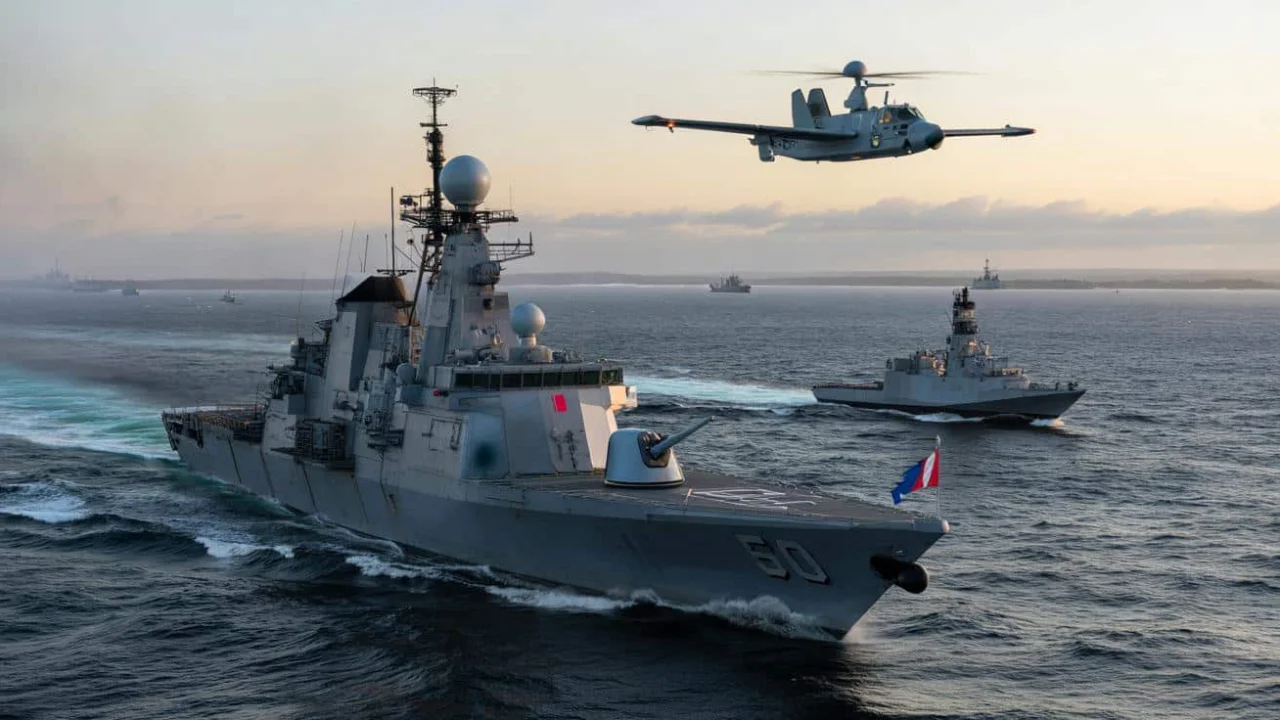
Captain Lars Eriksson still remembers the day Russian warships sailed uncomfortably close to Sweden’s Gotland Island in 2022. Standing on the bridge of his patrol vessel, watching the gray hulls on the horizon, he knew something fundamental had shifted in the Baltic Sea. “We couldn’t just rely on neutrality anymore,” he told his crew that evening. “The old rules were gone.”
That moment of clarity wasn’t unique to one Swedish naval officer. Across Europe, defense officials were realizing that traditional alliances needed reinforcement, and old partnerships required fresh thinking. What emerged from this urgency is now taking shape as one of the most significant naval collaborations in recent European history.
The France Sweden naval partnership announced at the 2025 Paris Air Show represents far more than a typical defense deal. It’s a strategic realignment that could fundamentally alter how Europe protects its northern waters and reduces its dependence on American military capabilities.
Why This Partnership Changes Everything
While aviation enthusiasts crowded around fighter jets at Le Bourget, French and Swedish defense ministers were quietly negotiating something that could reshape Baltic Sea security. Their joint roadmap covers drones, air defense systems, radar aircraft, and potentially front-line warships.
“This isn’t just about selling equipment to each other,” explains Dr. Maria Lindström, a defense analyst at the Stockholm International Peace Research Institute. “It’s about creating a European naval capability that can operate independently when needed.”
The timing couldn’t be more critical. Sweden joined NATO in 2024, bringing with it decades of Baltic Sea expertise and a fiercely independent defense mindset. France, meanwhile, has been pushing for “European strategic autonomy” while maintaining its NATO commitments.
Together, they’re creating what defense experts call a “Baltic-Mediterranean axis” that connects Sweden’s intimate knowledge of northern European waters with France’s advanced naval technology and global reach.
The Building Blocks Are Already in Place
This France Sweden naval partnership didn’t emerge from nowhere. The two countries have been quietly building military ties for years through shared equipment and joint programs.
| System | Role | Current Status |
|---|---|---|
| NH90 Helicopters | Naval and army operations | Used by both militaries |
| AT4 Anti-tank Weapons | Ground combat | Swedish-made, widely exported |
| BvS10 All-terrain Vehicles | Arctic operations | Ideal for Nordic conditions |
| Akeron MP Missiles | Precision strikes | Recently ordered by Sweden |
The most intriguing development involves Sweden’s GlobalEye airborne early warning aircraft. Built by Saab, this platform offers something France desperately needs: a modern replacement for its aging E-3F AWACS fleet.
“GlobalEye gives you eyes and ears across hundreds of miles of ocean,” notes Commander Jean-Baptiste Moreau, a former French naval aviator. “When you combine French naval strike capabilities with Swedish surveillance technology, you create a force multiplier that changes the entire Baltic equation.”
Key capabilities of the France Sweden naval partnership include:
- Integrated air and maritime surveillance from Arctic to Mediterranean
- Shared intelligence and sensor data
- Coordinated patrol and response capabilities
- Joint training and operational procedures
- Reduced dependence on U.S. systems
What This Means for Baltic Sea Security
The real impact of this partnership becomes clear when you look at a map. The Baltic Sea is now surrounded by NATO allies, but it’s also become a potential flashpoint where Russian and Western interests directly collide.
Sweden brings something unique to this equation: decades of experience operating in Baltic waters, knowledge of underwater terrain, and understanding of how to conduct naval operations in a constrained sea environment.
France contributes advanced naval technology, nuclear submarine capabilities, and experience in power projection operations around the world. When combined, these strengths create new possibilities for European defense.
“We’re seeing the birth of a truly European naval capability,” explains Admiral Henrik Steen, former chief of the Danish Navy. “This partnership shows that European nations can develop serious military capabilities without always looking to Washington first.”
The partnership could affect several key areas:
- Submarine warfare: French nuclear attack submarines could operate more effectively in Baltic waters with Swedish intelligence support
- Surface operations: Joint patrol missions using complementary capabilities
- Air surveillance: Coordinated early warning coverage across northern Europe
- Industrial cooperation: Shared development costs for next-generation naval systems
The Broader European Defense Picture
This France Sweden naval partnership fits into a larger pattern of European nations taking more responsibility for their own defense. With questions about long-term American commitment to European security, countries like France and Sweden are building alternative capabilities.
The partnership also addresses a practical problem: defense budgets. By sharing development costs and coordinating purchases, both countries can afford more capable systems than they could develop independently.
“It’s smart economics and smart strategy,” notes Dr. Erik Brattberg from the Center for Strategic and International Studies. “You get better capabilities at lower cost while building European industrial capacity.”
The implications extend beyond the Baltic Sea. If successful, this model could inspire similar partnerships across Europe, gradually reducing the continent’s dependence on American military technology and creating a more multipolar NATO alliance.
For ordinary Europeans, this partnership represents a form of insurance policy. In an uncertain world where traditional security guarantees might not always be available, having strong European defense capabilities provides an additional layer of protection.
The France Sweden naval partnership also demonstrates that middle powers can still influence global security arrangements. Neither country has the military budget of the United States or China, but by working together intelligently, they can create capabilities that matter on the world stage.
FAQs
What exactly is the France Sweden naval partnership?
It’s a comprehensive military cooperation agreement covering naval systems, surveillance aircraft, and joint operations, primarily focused on Baltic Sea security.
Why is this partnership important for European defense?
It creates European military capabilities that can operate independently of U.S. systems while strengthening NATO’s northern flank.
How does this affect NATO operations?
The partnership strengthens NATO by adding capabilities, but also gives European allies more options for independent action when needed.
What role does the Baltic Sea play in this partnership?
The Baltic Sea is a critical area where Russian and Western interests meet, making joint French-Swedish naval capabilities particularly valuable for regional security.
Will this partnership expand to include other countries?
While currently bilateral, the framework could potentially include other European nations interested in naval cooperation and shared defense capabilities.
How does this partnership benefit ordinary citizens?
It provides additional security guarantees and demonstrates that European nations can work together effectively to protect shared interests and values.


