
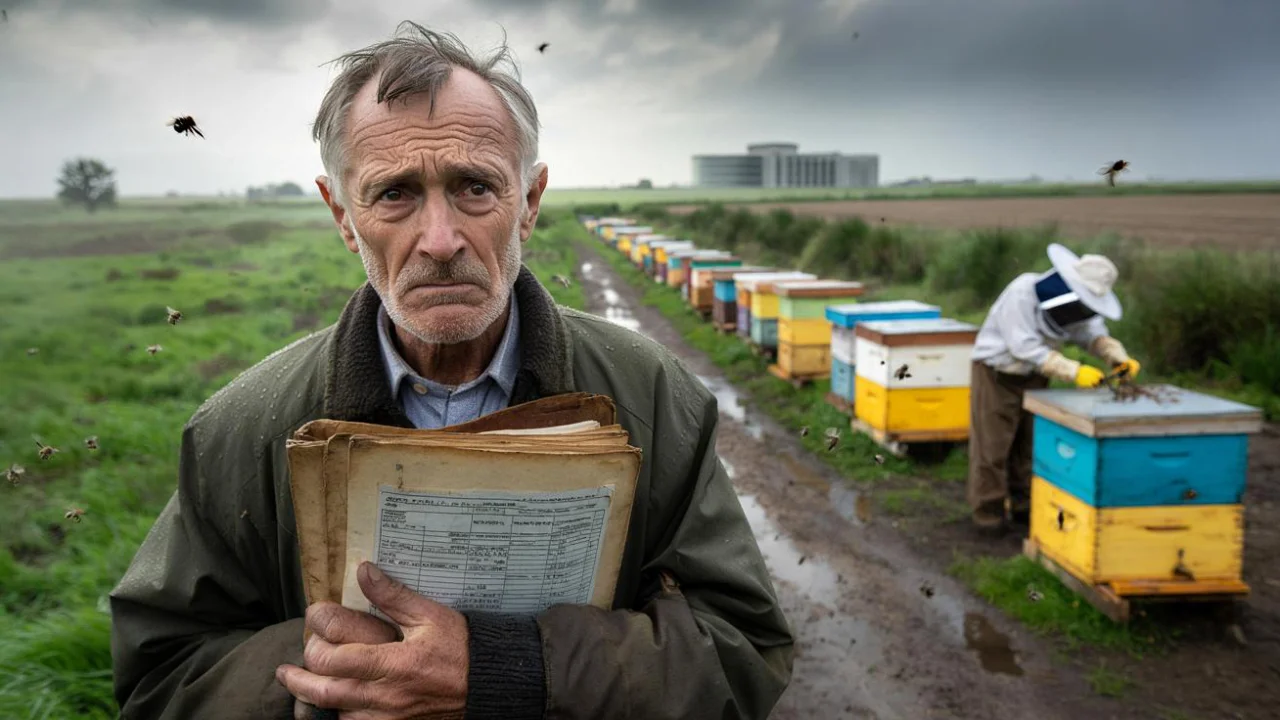
Marie watched the beekeeper pack up his hives for the last time, the wooden boxes that had hummed peacefully on her land for seven years now loaded onto a trailer. She’d inherited these four acres from her father, never thinking much about them until the tax bill arrived. “I just wanted to help the bees survive,” she says, wiping her hands on her gardening apron. “Now I can’t afford to be generous anymore.”
The registered letter had been clear. Her land qualified as agricultural property because it hosted commercial beekeeping operations. She owed agricultural social levies, backdated three years. The amount? Nearly half her annual pension.
Marie’s story isn’t unique. Across the country, retired landowners are discovering that informal arrangements they considered neighborly favors now carry serious tax consequences. The debate has split communities, pitting those who see this as overdue tax enforcement against others who believe genuine goodwill is being criminalized.
When helping bees becomes a tax nightmare
Agricultural social levies represent one of the most misunderstood areas of tax law. Originally designed to ensure that landowners benefiting from agricultural activities contribute to rural social programs, these levies have caught thousands of small property owners off guard.
The rules seem straightforward. If your land is used for agricultural purposes—crop production, livestock, or beekeeping—you’re liable for social contributions. But the reality is messier than the legislation suggests.
“We’re seeing people who never considered themselves farmers suddenly classified as agricultural operators,” explains tax advisor Jean Dubois from the Rural Landowners Association. “A handshake agreement to let someone graze horses or place beehives can trigger thousands in backdated levies.”
The confusion stems from how authorities now interpret “agricultural use.” Modern digital monitoring systems can detect farming activity on any registered plot. Satellite imagery shows crop patterns, livestock movement, and even beehive placement. What used to be invisible informal arrangements now show up in government databases.
For many elderly landowners, the shock goes beyond money. They genuinely believed they were performing community service, helping local food producers access land they couldn’t otherwise afford.
Breaking down the agricultural social levies system
Understanding who pays what requires navigating a complex web of thresholds, exemptions, and classification rules. Here’s how the system actually works:
| Land Use Type | Levy Rate | Minimum Threshold | Exemptions |
|---|---|---|---|
| Crop Production | 3.2% of cadastral value | €500 annually | Personal gardens under 0.5 hectares |
| Livestock Grazing | 2.8% of cadastral value | €300 annually | Hobby farming under 2 animals |
| Commercial Beekeeping | 3.5% of cadastral value | €400 annually | Single recreational hives |
| Forestry Operations | 2.1% of cadastral value | €600 annually | Family woodlands under 4 hectares |
The key factors that trigger agricultural social levies include:
- Commercial-scale agricultural activity on your property
- Formal or informal agreements allowing agricultural use
- Any form of compensation, including in-kind payments like honey or produce
- Land improvements made specifically for agricultural purposes
- Registration in agricultural databases or subsidy programs
Many landowners discover too late that accepting even token payments—a few jars of honey, help with land maintenance, or reduced property taxes through agricultural classification—can establish their liability for these levies.
“The system doesn’t distinguish between someone running a commercial operation and someone letting a neighbor’s goats graze for free,” notes rural law specialist Catherine Lambert. “Once agricultural activity is detected, the tax obligation follows.”
Who’s really getting caught in this net
The enforcement crackdown has revealed stark patterns in who’s being affected. Retired property owners represent nearly 60% of new agricultural levy cases, many discovering decades-old informal arrangements now carry financial consequences.
Rural municipalities report dramatic increases in appeals and hardship applications. Some retirees face levies that exceed their monthly pension income. Others are forced to terminate longstanding agreements with local farmers, disrupting established agricultural relationships.
The impact extends beyond individual landowners. Small-scale beekeepers struggle to find new locations as property owners become wary of tax implications. Community gardens face closure when host landowners receive unexpected levy bills.
“We’re seeing the end of traditional rural cooperation,” says Henri Moreau, president of the National Beekeepers Federation. “Property owners are too frightened of tax consequences to help small producers.”
Young farmers particularly suffer from this trend. Many relied on informal land-sharing arrangements to start their operations without massive capital investment. As landowners withdraw from these agreements, new agricultural entrepreneurs face significant barriers to entry.
The geographic pattern is equally telling. Rural areas with high concentrations of retired residents show the steepest increases in levy enforcement, while commercial agricultural regions remain largely unaffected.
Two sides of a heated national debate
Supporters of stricter enforcement argue the system is finally addressing long-standing inequities. They point out that many “informal” arrangements involved substantial benefits for landowners who avoided their fair share of agricultural social contributions.
“For decades, people used agricultural classifications to reduce their property taxes while avoiding the corresponding social obligations,” argues tax policy researcher Dr. Sylvie Roux. “Now they’re upset about paying what they always owed.”
Government officials emphasize that agricultural social levies fund crucial rural infrastructure, from veterinary services to crop insurance programs. Revenue lost through informal arrangements ultimately means reduced support for legitimate agricultural communities.
Critics paint a different picture. They describe elderly landowners facing financial hardship over arrangements that generated no personal profit. Rural advocacy groups document cases where levy bills exceed the total income landowners ever received from agricultural activities.
Legal challenges are mounting across multiple jurisdictions. Property rights organizations argue that the retroactive application of levies violates principles of fair taxation, particularly for arrangements predating current enforcement methods.
The debate has reached parliament, with rural representatives calling for emergency exemptions for small-scale, non-commercial arrangements. Urban legislators push back, arguing that tax obligations shouldn’t depend on the scale of violation.
Regional variations in enforcement add another layer of controversy. Some tax offices pursue aggressive collection while others focus on education and voluntary compliance, creating geographic inequities that fuel resentment.
FAQs
What triggers agricultural social levy obligations?
Any commercial agricultural activity on your land, including informal arrangements like beekeeping or livestock grazing, can trigger liability for agricultural social levies.
Can I avoid levies if I don’t charge rent for agricultural use?
No, the tax obligation exists regardless of whether you receive direct payment. Even free arrangements can trigger levy requirements if they involve commercial-scale agricultural activity.
Are small landowners exempt from agricultural social levies?
Exemptions exist for minimal agricultural activity, but thresholds are low. Most beekeeping operations and livestock grazing arrangements exceed exemption limits.
Can agricultural social levies be applied retroactively?
Yes, tax authorities can assess levies for previous years if agricultural activity is discovered. Typical lookback periods range from three to seven years depending on jurisdiction.
What should I do if I receive an agricultural levy assessment?
Contact a tax advisor immediately to review your situation. Appeal options exist, but deadlines are strict and documentation requirements are complex.
Will helping local farmers always trigger tax obligations?
Small-scale, truly non-commercial arrangements may qualify for exemptions, but the boundaries are unclear and enforcement varies by region. Professional advice is essential before entering any agricultural arrangement.


