
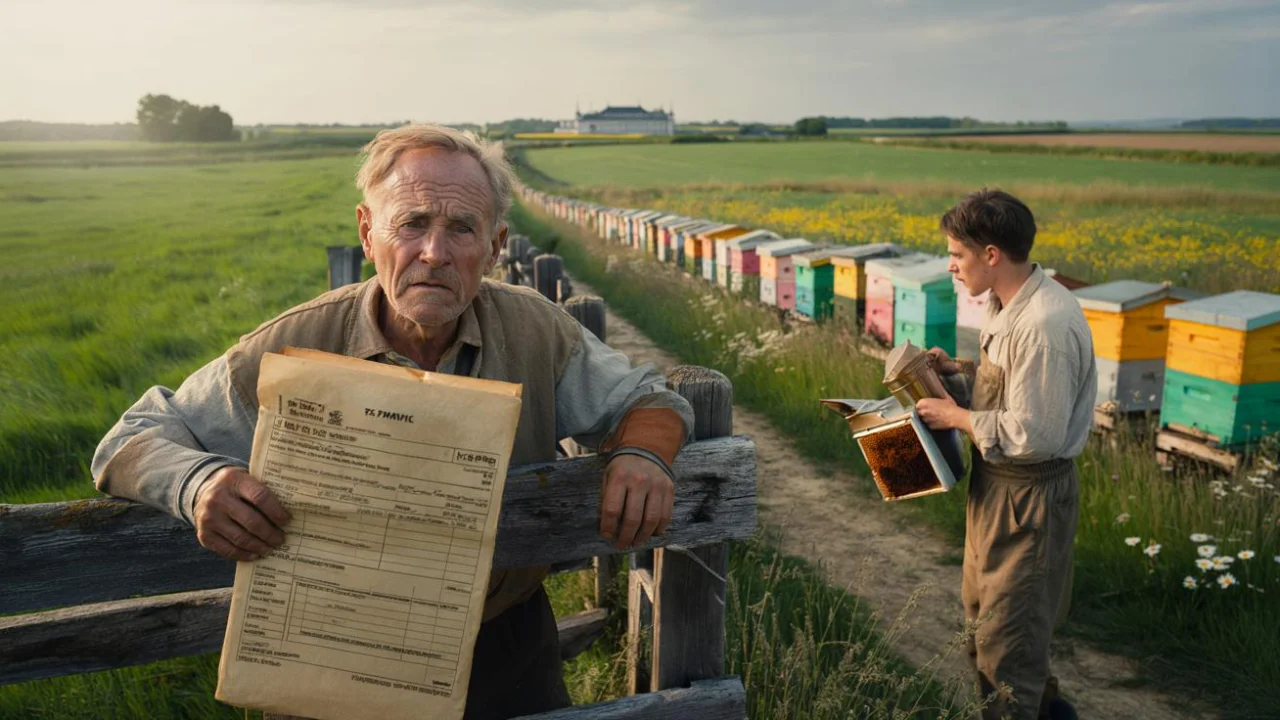
Margaret stared at the envelope in her mailbox, recognizing the government seal immediately. Her hands trembled slightly as she tore it open on her kitchen table, still wearing her gardening gloves. The numbers didn’t make sense at first. €4,200 in agricultural taxes for land she’d never farmed a day in her life.
Six months earlier, a young beekeeper named Tom had knocked on her door. He’d explained how hard it was finding places for his hives, how much the bees would love her unused fields. Margaret had smiled, remembering her late husband’s vegetable garden, and said yes without hesitation. No paperwork, no rent—just neighbors helping neighbors.
Now she was facing an agricultural tax bill that would eat up nearly half her monthly pension. Her act of kindness had somehow transformed her into a commercial farmer in the eyes of the law.
When Good Intentions Meet Government Classifications
Margaret’s story isn’t unique. Across rural communities, property owners are discovering that allowing beehives on their land can trigger unexpected tax consequences. What seems like a simple favor to support local beekeeping often results in land reclassification and substantial financial obligations.
The issue stems from how tax authorities interpret land use. When beehives appear on a property, officials often classify it as “agricultural exploitation” or “commercial farming activity,” regardless of whether money changes hands. This classification shift can multiply property taxes overnight.
“We’re seeing more of these cases every month,” says rural property consultant James Morrison. “People think they’re just helping bees and suddenly they’re getting bills that can devastate a fixed income.”
The problem reveals a fundamental disconnect between environmental policies encouraging pollinator support and tax systems designed around traditional agriculture. While governments promote bee-friendly initiatives, their tax codes often penalize the very cooperation these programs need.
The Real Costs Behind Bee-Friendly Gestures
Understanding the financial implications requires looking at how property classifications actually work. When tax assessors identify beehives, they apply agricultural rates and regulations that can include:
- Higher property tax rates for commercial agricultural land
- Mandatory agricultural insurance requirements
- Business licensing fees for “hosting commercial operations”
- Environmental compliance audits and associated costs
- Potential liability for beekeeper’s activities on the property
The financial impact varies significantly by location and property size, but the pattern remains consistent: generous landowners face unexpected bills.
| Property Size | Average Tax Increase | Additional Annual Costs |
|---|---|---|
| Under 2 acres | 150-300% | €800-2,400 |
| 2-5 acres | 200-400% | €1,500-4,200 |
| Over 5 acres | 300-500% | €3,000-8,000 |
“The system treats a retiree with five beehives the same as a commercial honey operation,” explains agricultural law specialist Dr. Sarah Chen. “There’s no distinction between helping a neighbor and running a business.”
Beyond immediate tax increases, property owners may face retroactive charges. Tax authorities often backdate agricultural classifications to when beehives first appeared, creating surprise bills for multiple years of “commercial activity.”
Who Bears the Burden of Broken Systems
The victims of these tax complications are typically the people rural communities can least afford to lose. Retirees on fixed incomes find themselves choosing between paying unexpected agricultural tax bills or asking beekeepers to leave. Young farmers lose access to land they need for their operations.
Rural property owner David Walsh discovered this firsthand when his agricultural tax bill jumped from €240 to €1,680 annually after hosting beehives for a local honey producer.
“I wanted to support local agriculture,” Walsh explains. “Instead, I became local agriculture whether I wanted to or not.”
The ripple effects extend beyond individual landowners. Beekeepers struggle to find suitable locations as word spreads about tax consequences. This creates a cruel irony: policies meant to support pollinators end up reducing available habitat.
Small-scale beekeepers face their own challenges when landowners discover the tax implications. Many operations can’t afford to compensate property owners for their increased tax burden, leaving both parties worse off than before.
“We’re losing good land every week,” says commercial beekeeper Lisa Rodriguez. “People who were happy to help now see us as a tax liability.”
Finding Solutions That Actually Work
Some regions have begun addressing these problems through targeted policy changes. Several European countries now offer agricultural tax exemptions for small-scale beekeeping operations that don’t generate income for property owners.
Others have implemented threshold systems that distinguish between genuine agricultural operations and conservation efforts. Properties hosting fewer than 50 hives for non-commercial purposes may qualify for standard residential tax rates.
Legal experts recommend several protective measures for property owners considering bee-hosting arrangements:
- Contact local tax authorities before agreeing to host hives
- Request written confirmation of tax implications
- Consider formal lease agreements that transfer tax responsibility to beekeepers
- Explore conservation program registrations that may provide tax protections
“The key is getting ahead of the classification before it happens,” advises property law attorney Michael Torres. “Once you’re labeled as agricultural, fighting it becomes much harder.”
Some successful arrangements involve beekeepers paying property owners’ increased tax costs rather than traditional rent. This approach can satisfy both tax authorities and community relationships while ensuring fair cost distribution.
FAQs
Can I avoid agricultural taxes if I don’t charge rent for beehives?
Unfortunately, most tax authorities don’t distinguish between paid and unpaid arrangements when classifying land use.
How can I find out if hosting beehives will affect my property taxes?
Contact your local tax assessor’s office before agreeing to host hives and request written guidance about potential reclassification.
Are there legal protections for small-scale conservation efforts?
Some regions offer exemptions for conservation-focused beekeeping, but these vary significantly by location and require specific applications.
What happens if I remove the beehives after getting a tax bill?
Removal may prevent future agricultural classification but rarely eliminates existing tax obligations or retroactive charges.
Can beekeepers be held responsible for my increased property taxes?
Legal responsibility depends on your agreement with the beekeeper, which is why written contracts addressing tax implications are essential.
Is there insurance available for unexpected agricultural tax bills?
Some rural property insurance policies offer coverage for tax assessment changes, though this protection is still uncommon and may require specific riders.


