
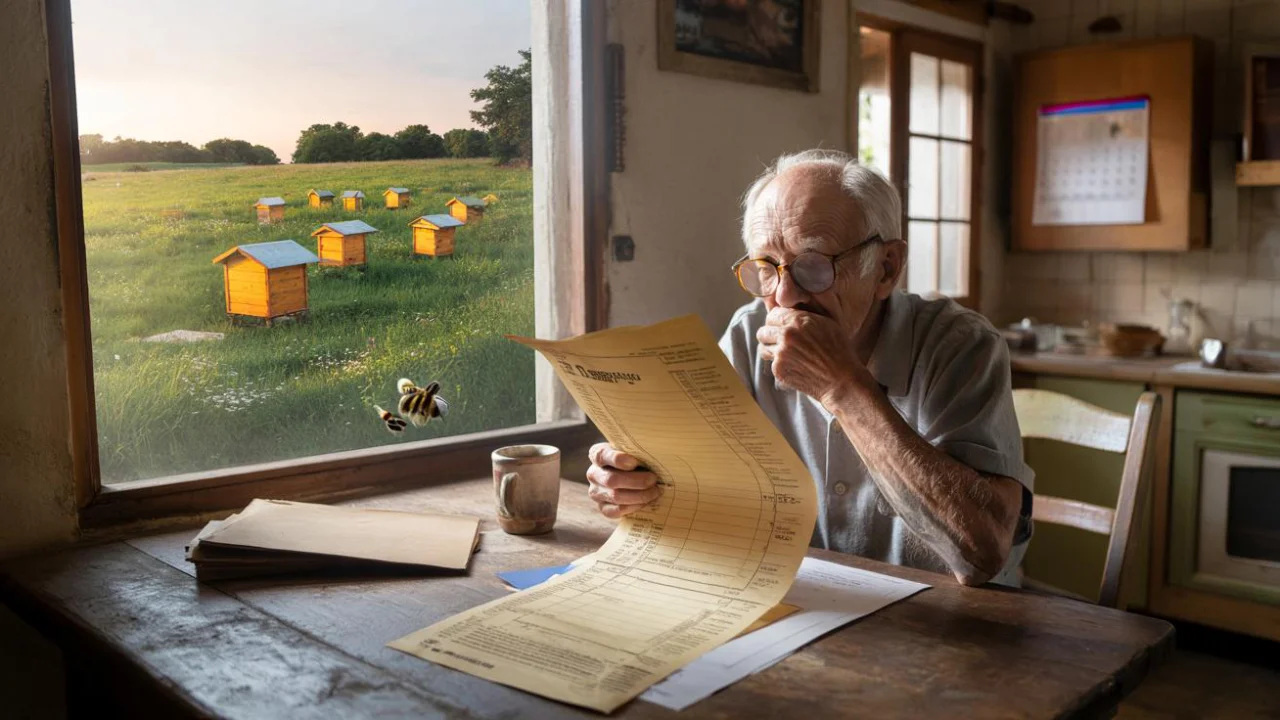
Jacques stared at the brown envelope for a full minute before opening it. At 68, he’d grown accustomed to the steady rhythm of retirement—morning coffee, evening news, weekend visits from his grandchildren. The envelope looked official, maybe something about his pension or property taxes. He slipped on his reading glasses and carefully tore it open.
The number hit him like a physical blow. €4,200 in backdated agricultural taxes, plus penalties. His hands trembled as he read it again. This had to be a mistake. He owned a small plot of countryside land, yes, but he’d never farmed it. Never sold anything. Never made a penny from it.
Then he remembered the bees. Last spring, a young beekeeper from the neighboring village had knocked on his door. Could he place a few hives on the unused corner of Jacques’s property? No rent, just a neighborly favor. Jacques had agreed with a handshake. Now that simple act of kindness had triggered a crushing agricultural tax bill that could wipe out months of his pension.
When Good Deeds Turn Into Tax Nightmares
Jacques’s story represents a growing crisis across rural communities. Thousands of property owners are discovering that informal agreements with farmers, beekeepers, and other agricultural producers can suddenly reclassify their land in the eyes of tax authorities.
The problem stems from increasingly sophisticated government monitoring systems that use satellite imagery to detect agricultural activity. What once flew under the radar—a few beehives, a small vegetable garden, grazing animals—now gets flagged automatically.
“We’re seeing cases every week where well-meaning property owners get slammed with unexpected tax bills,” says Marie Dubois, a rural tax consultant. “The law doesn’t distinguish between commercial agriculture and neighborly favors.”
The agricultural tax bill that Jacques received isn’t an isolated incident. Similar cases have emerged across France, Germany, and other European countries with strict land-use taxation policies. Property owners who thought they were helping local food production suddenly find themselves classified as agricultural businesses.
Breaking Down the Tax Trap
The mechanics of how a simple favor becomes a financial nightmare involve several interconnected issues:
- Satellite surveillance: Tax authorities now use aerial imagery to identify agricultural activity on properties
- Automatic reclassification: Any detected farming activity can trigger land-use category changes
- Retroactive billing: Tax authorities often apply new classifications to previous years
- Owner liability: Property owners bear full tax responsibility, regardless of who benefits from the activity
- Limited appeal options: Challenging reclassifications requires expensive legal proceedings
| Land Use Category | Typical Annual Tax | Agricultural Tax Rate | Penalty Potential |
|---|---|---|---|
| Residential/Unused | €200-500 | €1,200-4,000 | Up to 40% additional |
| Small Plot (under 1 hectare) | €100-300 | €800-2,500 | Up to 40% additional |
| Larger Rural Property | €500-1,200 | €2,000-8,000 | Up to 40% additional |
The tax differential explains why these bills shock property owners so severely. What might have been a €300 annual property tax suddenly becomes €3,000 in agricultural taxes, often applied retroactively for multiple years.
Who Gets Caught in This Web
The victims of aggressive agricultural taxation policies share common characteristics. They’re typically retirees or urban professionals who own rural property as vacation homes or inheritance from family farms.
These property owners rarely understand the tax implications of allowing agricultural use of their land. They see themselves as supporting local food production, environmental conservation, or simply helping neighbors.
“Most people think they’re doing something good for the community,” explains tax attorney Bernard Laurent. “They don’t realize they’re entering a complex regulatory framework designed for commercial agriculture.”
The beekeepers, small farmers, and other agricultural users often remain unaware of the tax consequences for property owners. They benefit from free or low-cost land access while the owners absorb the full tax burden.
A Nation Divided Over Fairness
Jacques’s case has sparked heated debate about the fairness of current tax policies. Supporters argue that all agricultural activity should contribute to local infrastructure and services through proper taxation.
Critics contend that the system punishes environmental stewardship and community cooperation. They point out that small-scale agricultural activities like beekeeping provide public benefits without generating significant income for property owners.
The controversy has reached political circles, with rural representatives calling for reforms to protect property owners who allow non-commercial agricultural use of their land.
“We’re discouraging the very behaviors we should be promoting,” argues rural development advocate Claire Moreau. “Property owners are now afraid to support local food production or environmental projects.”
Urban policymakers defend the current system, emphasizing the need for consistent tax enforcement. They argue that exemptions would create loopholes that large agricultural businesses could exploit.
The Ripple Effects Spread
The agricultural tax bill crisis extends far beyond individual property owners. Rural communities are seeing decreased cooperation between landowners and small-scale food producers.
Beekeepers report difficulty finding sites for their hives. Community garden projects face new obstacles. Small farmers struggle to access affordable land for grazing or crop rotation.
The chilling effect threatens local food security initiatives and environmental conservation efforts that depend on landowner cooperation.
Some regions have seen property values decline as potential buyers avoid rural land that might trigger agricultural taxation. Real estate agents now routinely warn clients about the tax implications of allowing any agricultural use.
FAQs
What triggers an agricultural tax bill?
Any productive agricultural activity on your property, including beehives, grazing animals, or crops, can reclassify your land for tax purposes.
Can you appeal an agricultural tax reclassification?
Yes, but appeals are expensive and time-consuming, often requiring legal representation and detailed documentation.
Are there ways to help farmers without tax consequences?
Some regions offer formal agreements that clarify tax responsibility, but these vary significantly by location and aren’t widely available.
How far back can agricultural taxes be applied?
Tax authorities can typically apply reclassifications retroactively for three to five years, depending on local laws.
Do small-scale activities like a few beehives really trigger these taxes?
Yes, tax authorities generally don’t distinguish between commercial and small-scale agricultural activities when determining land use classifications.
What’s being done to address this problem?
Some regions are considering reforms to create exemptions for small-scale, non-commercial agricultural activities, but progress has been slow.


