
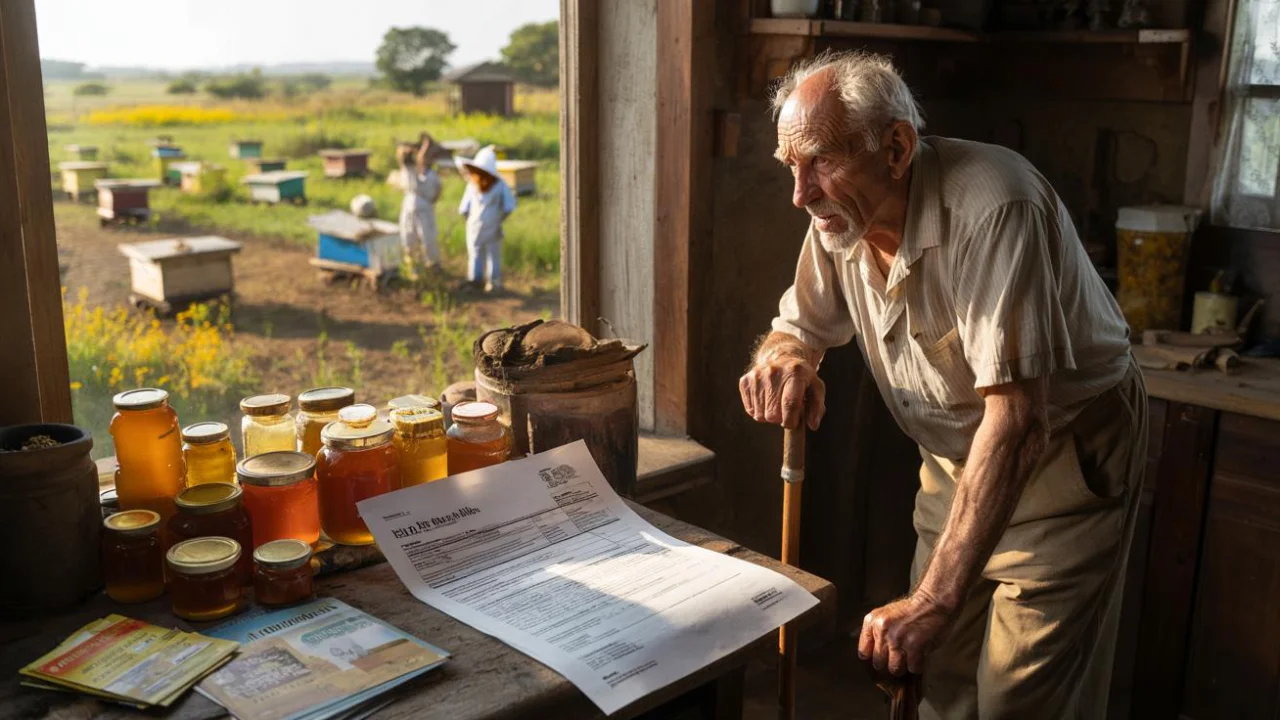
Bernard never thought a simple act of kindness would cost him thousands. At 72, he’d watched his half-hectare field sit empty for years, wild grass slowly taking over where his grandfather once grew vegetables. When the local beekeeping association asked if they could use the land for community hives, it felt like the perfect solution.
The children’s laughter as they learned about pollination, the gentle hum of busy bees, the pride of contributing to environmental conservation – it all seemed so right. Then came the letter that changed everything.
The agricultural tax levy notice arrived on a Tuesday morning, demanding payment that would drain his modest pension savings. His generous gesture had triggered a bureaucratic nightmare that pits good intentions against cold, hard tax law.
When Good Deeds Meet Bad Tax Policy
Bernard’s story isn’t unique. Across the country, well-meaning landowners are discovering that allowing community groups to use their property for environmental projects can trigger unexpected tax consequences. The agricultural tax levy system doesn’t distinguish between profit-driven farming and charitable land use.
“The tax code sees activity, not intention,” explains Maria Rodriguez, a tax attorney specializing in agricultural law. “Once beehives go up and the land is classified as ‘in use,’ the levy kicks in regardless of whether the owner makes a penny.”
For years, Bernard’s field was classified as non-productive, carrying minimal tax burden. The moment the beekeeping association installed hives and planted wildflower strips, everything changed. Tax assessors reclassified the land as active agricultural property, subjecting it to significantly higher levies.
The irony cuts deep. While governments promote environmental initiatives and biodiversity projects, their own tax systems can penalize citizens who participate in these efforts.
Breaking Down the Tax Trap
The agricultural tax levy system creates several pressure points that catch generous landowners off guard:
- Automatic reclassification: Any productive use triggers reassessment, regardless of profit motive
- Retroactive charges: Some jurisdictions apply new rates from the date activity began
- Social security contributions: Deemed agricultural activity can trigger additional charges
- Loss of exemptions: Charitable use doesn’t protect against commercial-rate taxation
| Land Classification | Annual Tax (per hectare) | Additional Charges |
|---|---|---|
| Unused/Fallow | €50-150 | None |
| Active Agricultural | €300-800 | Social charges possible |
| Commercial Agriculture | €500-1,200 | VAT registration required |
“We’re seeing retirees hit with bills that can reach several thousand euros annually,” notes David Chen, an accountant who works with rural property owners. “It’s particularly harsh because these people aren’t generating income from the activity.”
The system creates a perverse incentive structure. Landowners who let their property lie empty face lower taxes than those who contribute to environmental and community causes.
Real People, Real Consequences
The impact extends far beyond Bernard’s kitchen table. Across rural communities, similar stories are unfolding as environmental enthusiasts discover the true cost of generosity.
Sarah Mitchell, 68, allowed a school to create a learning garden on her unused plot. The agricultural tax levy notification arrived six months later, demanding €2,400 annually. “I’m living on a fixed income,” she says. “I can’t afford to be charitable anymore.”
Community organizations are feeling the squeeze too. The Riverside Beekeeping Collective has lost three landowners in the past year, all citing unexpected tax burdens. Projects promoting biodiversity, food education, and sustainable practices are being abandoned.
Environmental lawyers argue the system needs urgent reform. “We’re punishing exactly the behavior we should be encouraging,” says Rodriguez. “Climate action requires community participation, but our tax structure actively discourages it.”
The ripple effects touch multiple stakeholders:
- Retirees: Fixed incomes can’t absorb unexpected tax increases
- Environmental groups: Reduced access to suitable land for projects
- Schools: Fewer opportunities for outdoor education programs
- Local ecosystems: Less habitat creation and biodiversity support
Searching for Solutions
Some regions are beginning to address the disconnect between environmental policy and tax reality. Proposed reforms include exemptions for charitable land use, reduced rates for environmental projects, and clearer guidelines for community partnerships.
“The fix isn’t complicated,” argues Chen. “Create a separate classification for non-commercial environmental use. Tax the intent, not just the activity.”
Meanwhile, Bernard continues paying his agricultural tax levy while the bees buzz contentedly in his field. The children still visit for workshops, and the honey production supports local environmental education. But other potential donors are watching his story unfold, calculating whether they can afford such generosity.
The collision between environmental idealism and tax pragmatism reveals a broader policy challenge. How do we encourage the community action necessary for environmental progress while maintaining fair tax systems? The answer may determine whether more fields transform into thriving habitats or remain empty, waiting for owners who can afford to care.
FAQs
Can I avoid the agricultural tax levy by not signing a formal agreement?
No, tax classification is based on actual land use, not written contracts. If your property shows agricultural activity, it can be reclassified regardless of formal arrangements.
What happens if I stop allowing the environmental use of my land?
You can request reclassification back to non-productive status, but this process can take months or even years, and you remain liable for taxes during that period.
Are there any exemptions for charitable or environmental land use?
Very few jurisdictions offer specific exemptions. Most tax systems don’t distinguish between commercial and charitable agricultural activities.
Can I deduct the tax cost against my income?
Deductibility depends on your jurisdiction and tax situation. Consult a tax professional, as rules vary significantly between regions.
Should I consult anyone before agreeing to environmental land use?
Yes, speak with a tax advisor familiar with agricultural taxation in your area. Understanding potential costs before agreeing can prevent expensive surprises.
Are other countries handling this issue differently?
Some European countries have created specific exemptions for environmental and educational land use, while others maintain strict activity-based taxation regardless of purpose.


