
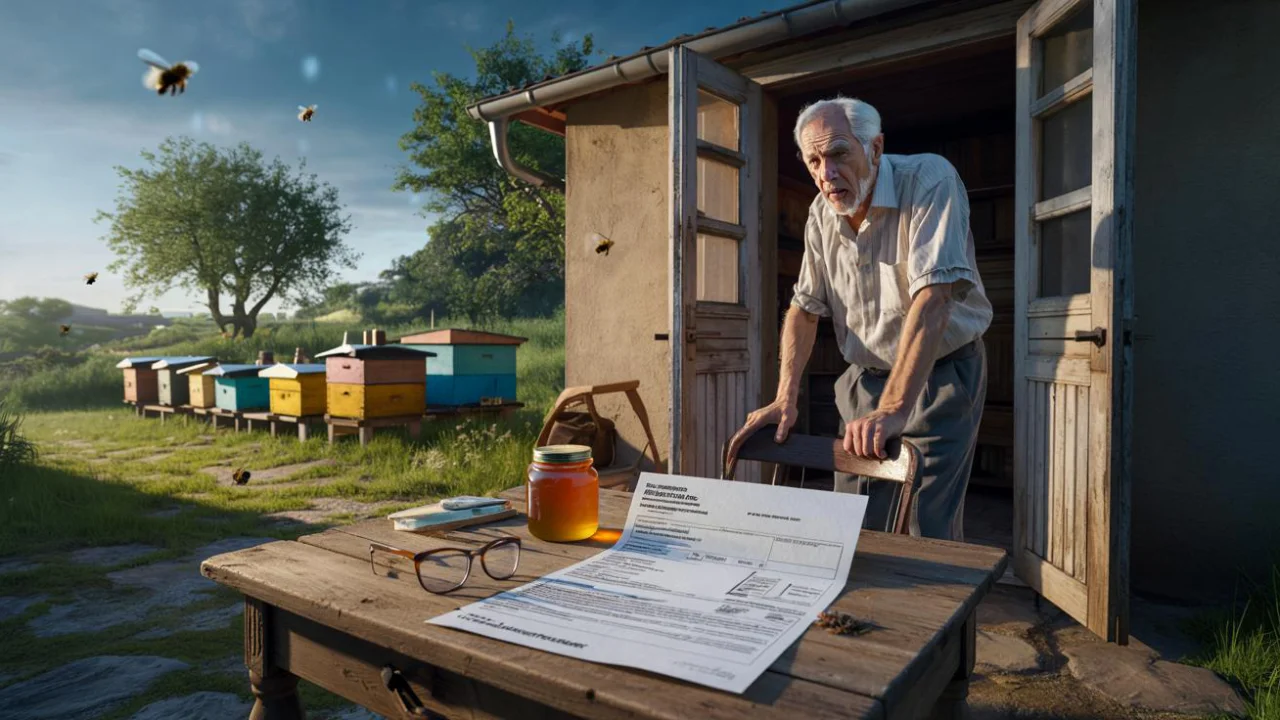
The jar of honey sat on Gérard’s kitchen table like evidence at a crime scene. Sweet, golden, and completely innocent—yet somehow the reason why this 72-year-old retired school bus driver now owed the government more than he makes in a year. He stared at the official letter one more time, hoping the numbers would change. They didn’t.
All he did was say “yes” when a young beekeeper needed help. Now that simple kindness has triggered an agricultural tax nightmare that’s splitting the country down the middle.
Gérard’s story isn’t just about taxes. It’s about what happens when bureaucracy collides with human decency, and why doing the right thing can sometimes feel like the wrong choice.
How a handshake became a tax disaster
The whole mess started with good intentions. Julien, a 28-year-old beekeeper, was losing his rental space and facing the prospect of abandoning his 40 hives. When he knocked on Gérard’s door, desperate for somewhere to place them temporarily, the retired man looked at his unused back garden and made what seemed like an obvious choice.
“He looked so worried,” Gérard told local reporters. “I had the space, he needed help. It felt natural.”
No contracts were signed. No money changed hands. Gérard simply allowed Julien to set up the hives behind his cherry tree on land that had been sitting empty since his last vegetable garden in the 1990s. For a year, everything seemed perfect. The bees thrived, Julien’s small business stayed afloat, and Gérard enjoyed watching the colorful hives from his kitchen window.
Then the tax office discovered what they classified as “commercial agricultural activity” on his property.
Modern tax enforcement relies heavily on satellite imagery and database cross-referencing. When officials spotted the geometric pattern of beehives on Gérard’s land and matched it against registered beekeeping operations, the system automatically flagged his property for agricultural tax assessment.
“The inspector was actually quite polite,” Gérard recalls. “He explained that the law doesn’t distinguish between helping a friend and running a business. If there’s professional agricultural activity on your land, you’re liable for the taxes.”
Breaking down the agricultural tax burden
The numbers in Gérard’s case reveal just how crushing agricultural tax obligations can become for unprepared landowners:
| Tax Component | Annual Amount | Backdated Penalties |
|---|---|---|
| Agricultural Income Tax | €2,400 | €2,400 |
| Social Security Contributions | €1,800 | €1,800 |
| Professional Activity Fees | €600 | €600 |
| Late Payment Penalties | N/A | €1,200 |
| Total Demand | €4,800 | €6,000 |
For a retiree living on a €1,200 monthly pension, the €10,800 total demand represents nearly a year’s entire income. The agricultural tax system treats any commercial use of land as taxable activity, regardless of whether the landowner receives any benefit.
Tax experts explain that agricultural tax laws were designed for clear-cut farming operations, not informal arrangements between neighbors. The system operates on several key principles:
- Land ownership equals tax responsibility
- Commercial activity triggers automatic taxation
- Verbal agreements carry no legal protection
- Penalties accrue from the first day of unregistered activity
“The law doesn’t have a ‘good deed’ exemption,” explains Marie Dubois, a tax attorney specializing in agricultural cases. “From the system’s perspective, professional beekeeping equipment on private land constitutes taxable agricultural use, regardless of the landowner’s intentions.”
Why this case is splitting public opinion
Gérard’s story has become a lightning rod for broader frustrations about tax policy and social solidarity. Online, the reactions split along predictable lines, but the intensity of feeling on both sides suggests deeper issues at play.
Supporters of the tax office point to fairness and consistency. They argue that exempting informal arrangements would create massive loopholes that professional operations could exploit. “If everyone could claim their commercial activities were just ‘helping friends,’ the entire agricultural tax system would collapse,” argues fiscal policy researcher Jean-Claude Moreau.
Others see the case as bureaucracy run amok, punishing exactly the kind of community support that rural areas desperately need. Rural advocacy groups have seized on Gérard’s case as proof that tax policy has become disconnected from real-world relationships.
The practical consequences extend beyond one retiree’s financial troubles. Across the country, similar informal arrangements are now being questioned:
- Farmers sharing equipment with neighbors
- Landowners allowing grazing on unused fields
- Community gardens on private property
- Small-scale renewable energy cooperatives
“This isn’t just about beehives,” notes rural development expert Claire Fontaine. “It’s about whether tax policy recognizes the informal networks that keep rural communities functioning.”
What happens next could change everything
Gérard has appealed the agricultural tax assessment, but his case has already triggered broader policy discussions. Several parliamentary representatives have called for clearer exemptions for non-commercial arrangements, while tax authorities insist that existing appeals processes provide adequate protection for innocent landowners.
The beekeeper, Julien, has offered to take full responsibility for the taxes, but the legal system doesn’t easily allow retroactive liability transfers. Meanwhile, Gérard faces a deadline: pay the assessment or enter formal dispute proceedings that could drag on for years.
For many observers, the case represents a test of whether modern governance can accommodate traditional community relationships. “We’ve created systems so focused on preventing abuse that they punish normal human kindness,” argues sociology professor Anne Bertrand.
The honey jar still sits on Gérard’s table, but now it represents something different. Not the sweetness of helping a neighbor, but the bitter complexity of good intentions in an inflexible world. His decision to appeal will determine not just his own financial future, but whether tax policy will evolve to recognize the difference between commercial exploitation and community support.
As Gérard puts it: “I just wanted to help a young man save his bees. Now I’m fighting for something much bigger—the right to be neighborly without going bankrupt.”
FAQs
What exactly is agricultural tax and when does it apply?
Agricultural tax applies to any land used for commercial farming, livestock, or food production activities, regardless of the scale or profitability of the operation.
Could Gérard have avoided this situation?
Yes, by registering the arrangement with tax authorities beforehand or requiring the beekeeper to lease the land formally, making the beekeeper responsible for agricultural tax obligations.
Is this problem common in rural areas?
Informal agricultural arrangements are extremely common, but most fly under the radar of tax enforcement until satellite monitoring or neighbor complaints trigger investigations.
What are Gérard’s legal options now?
He can appeal the assessment, argue for hardship exemptions, or potentially transfer liability to the actual beekeeper through retroactive agreements, though success isn’t guaranteed.
Could tax laws change because of this case?
Several lawmakers are proposing exemptions for small-scale, non-commercial agricultural arrangements, but any changes would take years to implement and might not help current cases.
What should landowners do to protect themselves?
Always formalize arrangements in writing, consult tax advisors before allowing commercial activities on private land, and consider requiring users to carry their own agricultural tax liability.


