
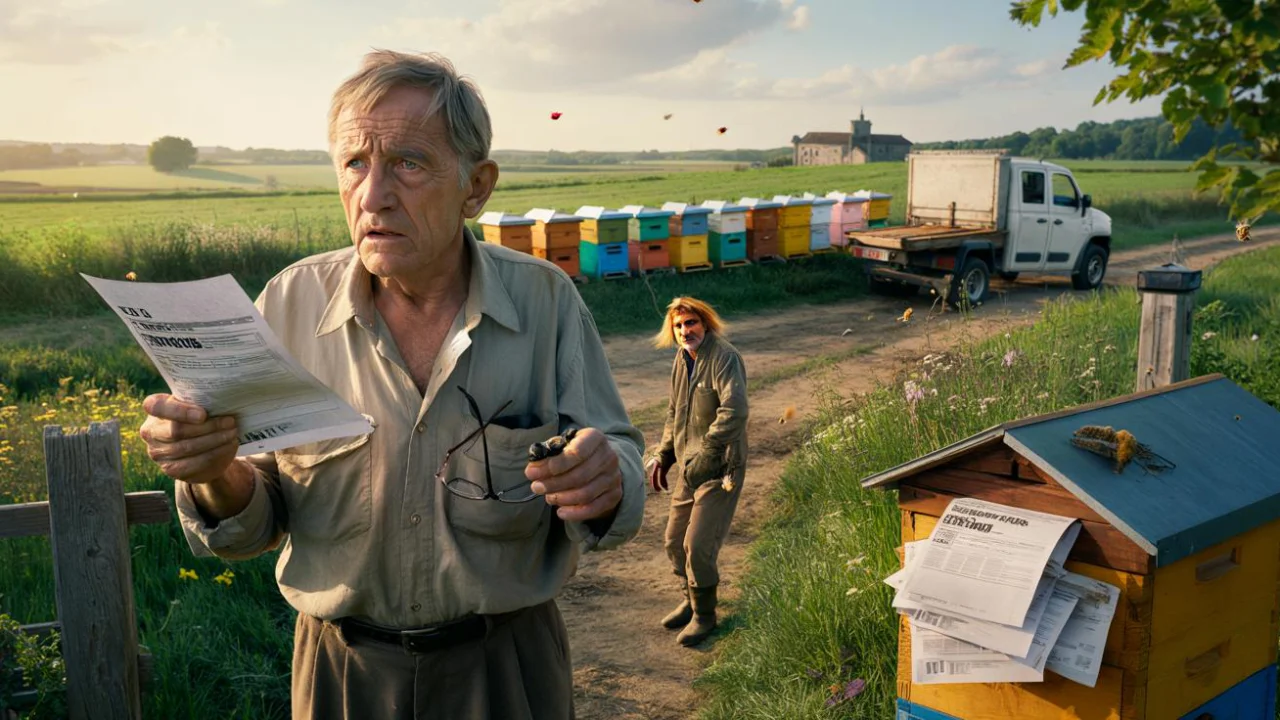
Margaret wiped her hands on her apron and stepped outside to see what the commotion was about. A friendly-looking man in his fifties stood by her gate, pointing to the empty field behind her cottage. “Mind if I put a few beehives back there?” he asked with a warm smile. “Won’t be any trouble, and the bees will love those wildflowers.” It seemed like such a simple request – the kind of neighborly favor that made village life special.
Six months later, Margaret stared at an official envelope in disbelief. Inside was a bill for agricultural tax that made her stomach drop. Her act of kindness had somehow transformed her into a commercial farmer in the eyes of the tax office, complete with fees she never saw coming.
Margaret’s story isn’t unique. Across the country, well-meaning property owners are discovering that generosity can come with an unexpected price tag, turning simple acts of kindness into bureaucratic nightmares that nobody saw coming.
How a handshake became a tax trap
The agricultural tax system operates on a principle that sounds reasonable in theory: if land generates economic activity, it should be taxed accordingly. But this straightforward rule creates a minefield for ordinary people who simply want to help their neighbors.
When Margaret allowed those beehives on her property, she unknowingly triggered a classification change. Her unused field became “agriculturally productive land” in official records, subjecting her to taxes designed for commercial farming operations.
“We’re seeing more cases like this every month,” says tax consultant David Richardson. “People think they’re just being neighborly, but the law doesn’t distinguish between commercial arrangements and friendly favors.”
The problem stems from how agricultural tax is calculated and applied. Tax authorities use various indicators to determine if land is being used for agricultural purposes, including:
- Regular placement of farming equipment or animals
- Evidence of crop cultivation or livestock grazing
- Beehives or other agricultural infrastructure
- Any form of ongoing agricultural activity, regardless of compensation
These indicators don’t require a formal business relationship or payment. A verbal agreement, or even just allowing someone to use your land regularly, can be enough to trigger the tax.
The real cost of being neighborly
The financial impact varies significantly depending on location and land size, but the bills can be substantial. Property owners report receiving agricultural tax assessments ranging from a few hundred to several thousand dollars annually.
| Land Use Type | Typical Annual Tax Range | Common Trigger |
|---|---|---|
| Beekeeping sites | $200-$800 | Permanent hive placement |
| Vegetable gardens | $150-$600 | Regular cultivation |
| Grazing areas | $300-$1,200 | Livestock presence |
| Orchards/tree farming | $400-$2,000 | Commercial fruit production |
Beyond the immediate financial burden, many property owners report feeling betrayed by a system that penalizes generosity. Sarah Collins, who faced a $650 bill after letting her neighbor graze sheep on her unused pasture, describes the experience as “devastating.”
“I was trying to help someone out and keep the grass down naturally,” she explains. “Now I’m afraid to let anyone use my land for anything.”
The psychological impact extends beyond individual cases. Rural communities that once thrived on informal cooperation are becoming more cautious about lending land or equipment. Local farming associations report a noticeable decline in casual land-sharing arrangements.
When good intentions meet rigid rules
Tax attorney Rachel Morrison has handled dozens of these cases and sees a fundamental disconnect between community spirit and administrative reality. “The tax code wasn’t written with neighborly favors in mind,” she notes. “It assumes all land use has commercial intent.”
The enforcement has become more aggressive as tax authorities adopt sophisticated tracking systems. Satellite imagery, cross-referenced with agricultural subsidy databases, can identify unauthorized agricultural use with startling accuracy.
Property owners often discover their situation through routine audits or when neighbors apply for agricultural permits that reference their land. By then, back taxes and penalties can accumulate into significant amounts.
Several legislative proposals aim to address these issues by creating exemptions for non-commercial arrangements. However, defining “truly neighborly” versus “disguised commercial” use presents its own challenges.
“We need clearer guidelines that protect genuine community cooperation,” argues agricultural policy expert Dr. James Fletcher. “The current system treats a grandmother sharing garden space the same as a commercial farming operation.”
Protecting yourself without losing community spirit
Experts recommend several strategies for property owners who want to help neighbors while avoiding tax complications:
- Document the non-commercial nature of any arrangement in writing
- Limit the duration of land use to avoid “permanent” classification
- Consult local tax authorities before agreeing to any agricultural use
- Consider formal lease agreements that clearly define responsibilities
- Maintain detailed records showing no payment or commercial benefit
Some communities have developed cooperative programs that allow shared agricultural tax burdens while maintaining neighborly relationships. These arrangements distribute costs among participants while preserving the community spirit that makes rural life attractive.
The debate continues to evolve as more people encounter these unexpected consequences. While reform efforts gain momentum, property owners must navigate the current system carefully, balancing their desire to help neighbors with the reality of tax obligations.
As for Margaret, she still allows the beehives on her property but now budgets for the agricultural tax as part of her annual expenses. “It’s not the world I grew up in,” she reflects, “but I’d rather pay the tax than lose the bees.”
FAQs
Can I be charged agricultural tax just for letting someone keep bees on my land?
Yes, allowing regular agricultural activity like beekeeping can trigger agricultural tax assessment even without payment or formal agreements.
How can I avoid agricultural tax when helping neighbors?
Document that arrangements are temporary and non-commercial, consult tax authorities beforehand, and maintain clear records of the relationship.
What should I do if I receive an unexpected agricultural tax bill?
Contact a tax attorney immediately, gather documentation about the arrangement, and file any available appeals within required deadlines.
Are there legal ways to share land without triggering taxes?
Some jurisdictions offer exemptions for genuine community cooperation, but requirements vary significantly by location.
How do tax authorities discover informal land use arrangements?
They use satellite imagery, cross-reference agricultural databases, and investigate tips from routine audits or neighboring property assessments.
Can I charge rent to avoid agricultural tax complications?
Formal rental arrangements may actually increase tax obligations but can provide clearer legal standing and shared responsibility for tax burdens.


