
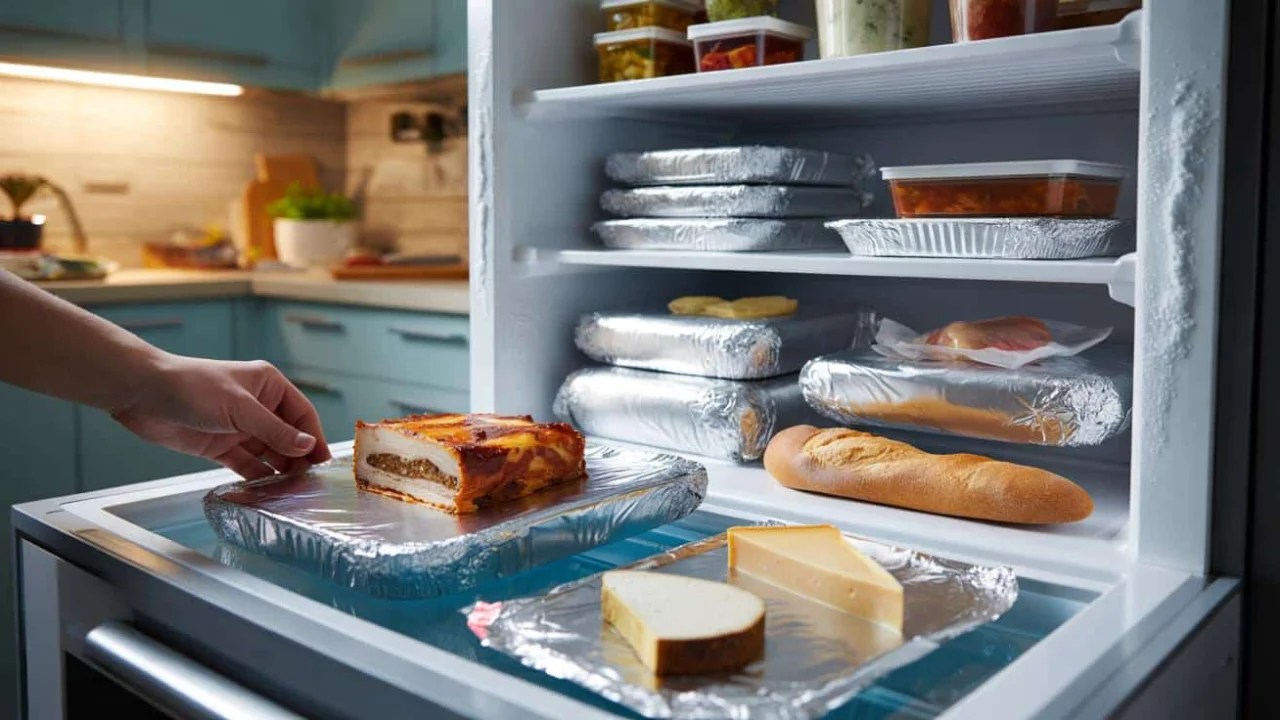
Sarah stared at her overflowing freezer, frustrated by another failed attempt at organized meal prep. Plastic containers were cracked from the cold, freezer bags had torn, and everything looked like it had been through a snowstorm. Her neighbor mentioned something about using aluminum foil, which seemed almost too old-school to work. But that Sunday evening, she grabbed the roll from her kitchen drawer and wrapped her leftover shepherd’s pie in a tight silver package. Three weeks later, when she unwrapped it, the texture was perfect – no ice crystals, no mushy vegetables, just a meal that tasted like she’d made it that day.
This simple switch is quietly revolutionizing how people think about freezer storage. What started as desperate kitchen experimentation is becoming a trusted method that’s spreading from household to household.
Why aluminum foil freezer storage is winning over families
Most of us have accepted freezer chaos as inevitable. We buy expensive storage containers, invest in vacuum sealers, and still end up throwing away freezer-burned food. The aluminum foil freezer method challenges everything we thought we knew about proper food storage.
“I was skeptical at first because foil seemed so basic compared to my fancy vacuum-sealed bags,” says Maria Rodriguez, a busy mother of three from Phoenix. “But after six months of using foil for everything from leftover casseroles to portioned meat, I’m convinced it works better than anything else I’ve tried.”
The science behind why aluminum foil works so well in freezers is surprisingly straightforward. When you wrap food tightly in foil, you create an almost airtight barrier that prevents the moisture loss and air exposure that cause freezer burn. Unlike plastic containers that can crack in extreme cold or bags that develop tiny holes, aluminum foil molds perfectly around irregular shapes.
Food experts are taking notice of this trend. Dr. Jennifer Walsh, a food preservation specialist, explains: “Aluminum foil’s conductivity actually helps food freeze faster, which creates smaller ice crystals and better preserves texture. Plus, you can write directly on it with a permanent marker for easy labeling.”
The complete guide to aluminum foil freezer techniques
Using aluminum foil in your freezer isn’t just about wrapping food randomly. There are specific techniques that maximize preservation and minimize waste.
Here’s how to wrap different types of food for optimal freezer storage:
- Flat items (steaks, chicken breasts, fish fillets): Wrap tightly, press out air, fold edges under
- Irregular shapes (leftover pizza, cake slices): Mold foil around contours, seal edges carefully
- Liquids in containers: Cover container completely, press foil down around edges
- Baked goods: Double-wrap delicate items, leave some space for expansion
- Portioned meals: Wrap individual servings separately for easy defrosting
The key difference between successful aluminum foil freezer storage and disappointment lies in the wrapping technique. Start with a piece of foil about twice the size of your food item. Place the food in the center, then bring opposite corners together and fold down in small increments, pressing out air with each fold.
| Food Type | Storage Time | Best Foil Method |
|---|---|---|
| Cooked meals | 3-4 months | Double wrap, label clearly |
| Raw meat | 6-12 months | Tight single wrap |
| Baked goods | 3-6 months | Loose wrap, avoid crushing |
| Vegetables | 8-12 months | Remove excess air carefully |
Real families sharing their aluminum foil freezer success stories
The shift toward aluminum foil freezer storage isn’t happening in isolation. Families across different backgrounds are discovering that this simple change saves money, reduces food waste, and actually improves their meal planning.
Take the Johnson family from Minnesota, who used to lose about $50 worth of freezer-burned food every month. After switching to aluminum foil for their batch cooking sessions, they’ve cut that waste by nearly 80%. “Everything comes out tasting fresh,” says David Johnson. “My kids actually eat the frozen leftovers now instead of complaining they taste funny.”
Professional chefs are also embracing the aluminum foil freezer approach. Chef Marcus Chen from a popular Seattle restaurant explains: “In my home kitchen, I use foil for everything I freeze. It’s faster than containers, takes up less space, and I never have to worry about finding matching lids.”
The environmental impact is another factor driving adoption. Unlike single-use plastic bags or bulky containers that eventually crack and need replacement, aluminum foil can be reused several times if handled carefully, and it’s fully recyclable when it finally wears out.
Busy professionals particularly appreciate how aluminum foil freezer storage streamlines their meal prep routine. Instead of hunting for the right-sized container or dealing with freezer bag failures, they can grab foil and wrap portions quickly. The flexibility means oddly-shaped leftovers get proper storage instead of being crammed into inappropriate containers.
Common mistakes to avoid with aluminum foil in freezers
While the aluminum foil freezer method is relatively foolproof, there are a few pitfalls that can reduce its effectiveness. The most common mistake is not removing enough air before sealing. Any trapped air pockets will create ice crystals and defeat the purpose of careful wrapping.
Another frequent error involves using pieces of foil that are too small. It’s better to use more foil than necessary rather than struggle with inadequate coverage. Food that pokes through or isn’t completely enclosed will still develop freezer burn.
Temperature also matters. Don’t put hot food directly into foil and then into the freezer. Let cooked meals cool to room temperature first, then wrap and freeze. This prevents condensation from forming inside the foil packet.
Finally, labeling is crucial but often overlooked. Write directly on the foil with a permanent marker, including both the contents and the date. Without labels, even the best-preserved food becomes a mystery package that might get forgotten.
FAQs
Is aluminum foil safe to use in freezers?
Yes, aluminum foil is completely safe for freezer storage and won’t react with frozen foods or affect their safety.
How long can food stay wrapped in aluminum foil in the freezer?
Most foods wrapped properly in aluminum foil stay fresh for 3-12 months, depending on the type of food.
Can I reuse aluminum foil for freezer storage?
You can reuse foil several times if it’s not torn or heavily stained, making it more economical than single-use options.
Does aluminum foil work better than plastic containers for freezing?
Aluminum foil often works better because it creates a tighter seal around food and eliminates air pockets more effectively.
What foods shouldn’t be wrapped in aluminum foil for freezing?
Avoid wrapping acidic foods like tomatoes or citrus directly in foil, as they can react with the aluminum over time.
Do I need special heavy-duty aluminum foil for freezer storage?
Regular aluminum foil works fine, but heavy-duty foil is less likely to tear and provides slightly better protection for long-term storage.


