
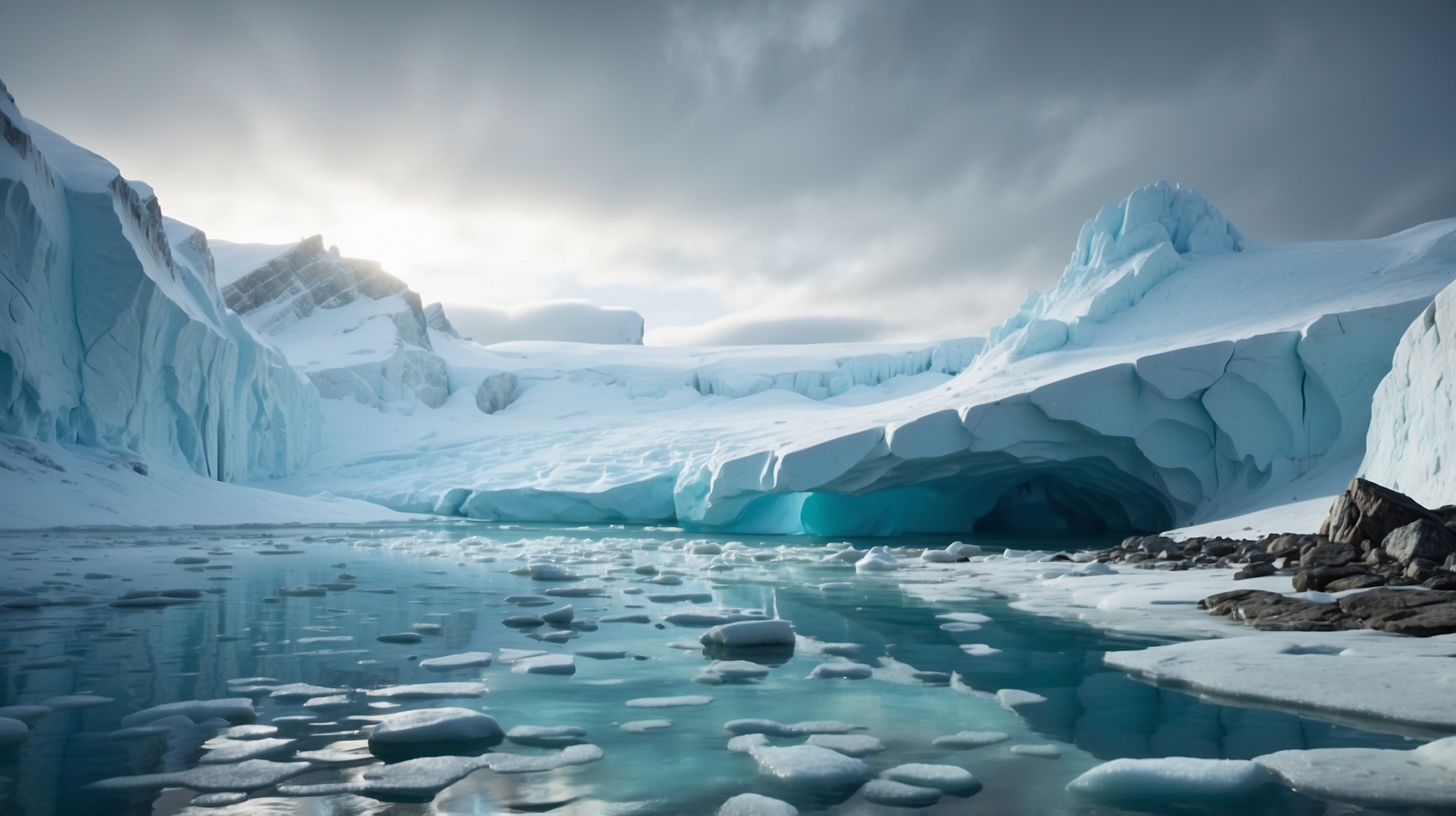
Hidden beneath Antarctica’s expansive ice sheets lies a fascinating and largely unexplored “lost world” — a complex subsurface network of rivers, lakes, and ecosystems that are transforming how scientists understand the frozen continent. What was once thought to be a barren mass of ice is now being revealed as a dynamic environment, brimming with scientific intrigue and environmental significance. This revelation is reshaping global conversations about climate change, sea level rise, and Earth’s ancient biospheres.
Recent advances in satellite imagery, ice-penetrating radar, and subglacial drilling have led to remarkable discoveries in Antarctica. Among them are the identification of massive subglacial lakes, intricate freshwater systems, and even microbial life that has survived in isolation for millions of years. As these secrets emerge from the deep freeze, they force a reevaluation of what Antarctica represents to the planet, both as a crucial climate regulator and as a potential analog for extraterrestrial environments.
Antarctica’s hidden ecosystems: Overview table
| Feature | Details |
|---|---|
| Subglacial Lakes | Over 400 identified; largest include Lake Vostok and Lake Mercer |
| Subglacial Rivers | Extensive networks beneath ice sheets influencing ice flow and nutrient cycles |
| Microbial Life | Microorganisms discovered deep below the ice, surviving without sunlight |
| Scientific Techniques | Ice-penetrating radar, autonomous submersibles, deep-core drilling |
| Climate Change Relevance | Estimates suggest subglacial waters impact ice melt and sea levels globally |
What changed this year in Antarctic exploration
In 2024, a major breakthrough occurred when researchers successfully mapped a newly discovered subglacial river system in West Antarctica, spanning hundreds of kilometers. This intricate labyrinth of flowing water beneath nearly one kilometer of ice is reshaping understanding of how the ice sheet interacts with the bedrock below. More importantly, it reveals how dynamic Antarctica’s ice sheets truly are — not static but constantly shifting, driven by forces long hidden beneath the surface.
This comes as part of ongoing efforts by international research collectives who have ventured deep into the icy wilderness using autonomous robots and advanced radar systems. These tools allow scientists to see through thick layers of ice and digitally reconstruct the hidden geography, making what was once speculation now a growing body of empirical fact.
Why Antarctic subglacial life matters to science
The subglacial communities discovered in isolated lakes such as Lake Whillans and Lake Mercer offer more than just ecological curiosity. These organisms live entirely cut off from sunlight, surviving on chemical energy extracted from rocks and water — a process known as chemosynthesis. This alone has implications far beyond Earth, potentially pointing to how life might exist in similar environments on icy moons like Jupiter’s Europa or Saturn’s Enceladus.
“These discoveries under the Antarctic ice sheet could redefine what we know about life on Earth and beyond.”
— Dr. Lena Morano, Glaciologist and Microbial Ecologist
Moreover, studying these ecosystems gives scientists a time capsule into Earth’s ancient past. The conditions in these lakes, some of which have been sealed for millions of years, likely mirror those of early Earth, making them invaluable in studying evolutionary biology and geochemistry.
Unlocking climate puzzles buried under ice
Subglacial hydrological systems play a vital role in regulating how ice flows from the continent’s interior to its edges — and eventually into the ocean. For decades, ice sheet models assumed the base of the ice was relatively dry and stable. These new discoveries flip that assumption on its head. Subsurface meltwater can lubricate the base of glaciers, accelerating their movement toward the sea.
It’s not just the movement of the ice that’s affected. Subglacial river and lake systems also influence ocean salinity and nutrient distribution when they eventually release freshwater into the marine environment. When accelerated by global warming, these processes could dramatically increase contributions to sea level rise, making the inclusion of subglacial data crucial in predictive climate models.
“To ignore Antarctica’s hidden waters is to ignore a key variable in Earth’s climate equation.”
— Prof. Gareth Lund, Climate Systems Analyst
Technological advances revealing secrets buried for millennia
The unveiling of these vast subglacial features wouldn’t be possible without cutting-edge technology. Ice-penetrating radar systems, often mounted on aircraft and satellites, have enabled scientists to “see” through kilometers of ice and identify features with remarkable precision. Complementing these are deep-coring drills that extract ice and sediment samples from deep beneath the surface, revealing trapped gases, isotopes, and even ancient microorganisms.
Robotic underwater vehicles have also played a pivotal role. In 2023, one such vehicle navigated beneath the Doomsday Glacier, mapping its underbelly and capturing incredible footage of sediment transport and water currents. As this technology becomes more refined, researchers anticipate even more stunning revelations hidden beneath Antarctica’s thick, icy blanket.
Implications for global policy and conservation
The existence of complex biological and geological systems under Antarctic ice raises serious policy considerations. Antarctica is governed by international agreements, particularly the Antarctic Treaty System and the Protocol on Environmental Protection. As new subglacial regions are explored, balancing scientific investigation with conservation becomes essential.
Some scientists warn about the potential contamination of pristine environments if strict protocols aren’t followed. In response, new sterilization standards for drilling equipment and transportation technologies have been instituted. Additionally, a rising chorus of experts calls for recognizing subglacial ecosystems as protected areas under international law.
“We are explorers, yes — but we are also stewards of what we find.”
— Dr. Elena Zhu, Antarctic Environmental Strategist
How the discoveries could help prepare for Earth’s future
At the intersection of glaciology, biology, and climate science, Antarctica’s lost world could hold clues about Earth’s future. As the planet warms and ice sheets destabilize, tracking the behavior of subglacial water systems becomes a major element in sea level predictions. Accurate projections will depend on considering these once-overlooked forces operating from below the ice.
Furthermore, these systems could play an unexpected role in **carbon sequestration** and chemical cycling. Every new subglacial discovery offers data that could inform weather prediction, climate resilience, and even bioengineering innovations. The revelation that Antarctica’s ice is more alive and dynamic than previously imagined is perhaps one of the most powerful reminders that Earth’s climate balance hinges not just on what lies above the surface — but deep below as well.
Winners and losers from the discoveries
| Winners | Losers |
|---|---|
| Climate scientists gaining new insights | Old models of ice sheet behavior |
| Astrobiologists exploring analog ecosystems | Conservation protocols under new pressure |
| Robotic tech and remote sensing industries | Sea level forecasting lacking subglacial data |
Short FAQs on Antarctica’s “lost world”
What is a subglacial lake?
A subglacial lake is a body of water trapped beneath an ice sheet, typically insulated from the surface by thousands of meters of ice. These lakes remain liquid due to geothermal heat and pressure from the overlying ice.
How were these hidden systems discovered?
Scientists used a combination of satellite data, ice-penetrating radar, and automated drilling technology to uncover these hidden systems beneath Antarctica’s ice.
Is there life in these subglacial environments?
Yes, microbes and other forms of life have been found in several subglacial lakes, surviving without sunlight and relying on chemical energy.
Why are these discoveries important for climate studies?
Subglacial rivers and lakes influence ice sheet behavior and can affect global sea level rise, making them critical to accurate climate modeling.
Do these systems affect sea level rise?
Yes. They can accelerate glacier movement by lubricating their base, thus increasing the rate at which ice flows into the ocean.
Could these findings help in the search for life on other planets?
Absolutely. The survival of life under such extreme, isolated conditions in Antarctica offers insight into how life might exist on icy celestial bodies.
Are there any risks in exploring these environments?
Yes, drilling could introduce contaminants, and there are concerns about disturbing ancient ecosystems. Strict international protocols are in place to mitigate such risks.
What countries are leading the research in this field?
International teams from the U.S., UK, New Zealand, and Europe have been at the forefront of this research, supported by polar science initiatives and joint missions.


