
Sarah Chen still remembers the exact moment her water broke at 26 weeks. She was folding laundry in her Philadelphia apartment when the cramping started, followed by that unmistakable gush of fluid. By the time she reached the hospital, doctors were preparing her for the fight of her life.
Her daughter Emma spent the next four months in the NICU, tethered to machines that beeped and hummed around the clock. Ventilators forced air into lungs the size of walnuts. Feeding tubes snaked into a stomach barely bigger than a grape. Sarah watched her baby endure procedure after procedure, knowing each one was necessary but painful.
“I kept thinking there had to be a gentler way,” Sarah says now, two years later. “Something that didn’t require all those invasive tubes and wires.” She might get her wish sooner than expected.
The Promise of Artificial Wombs
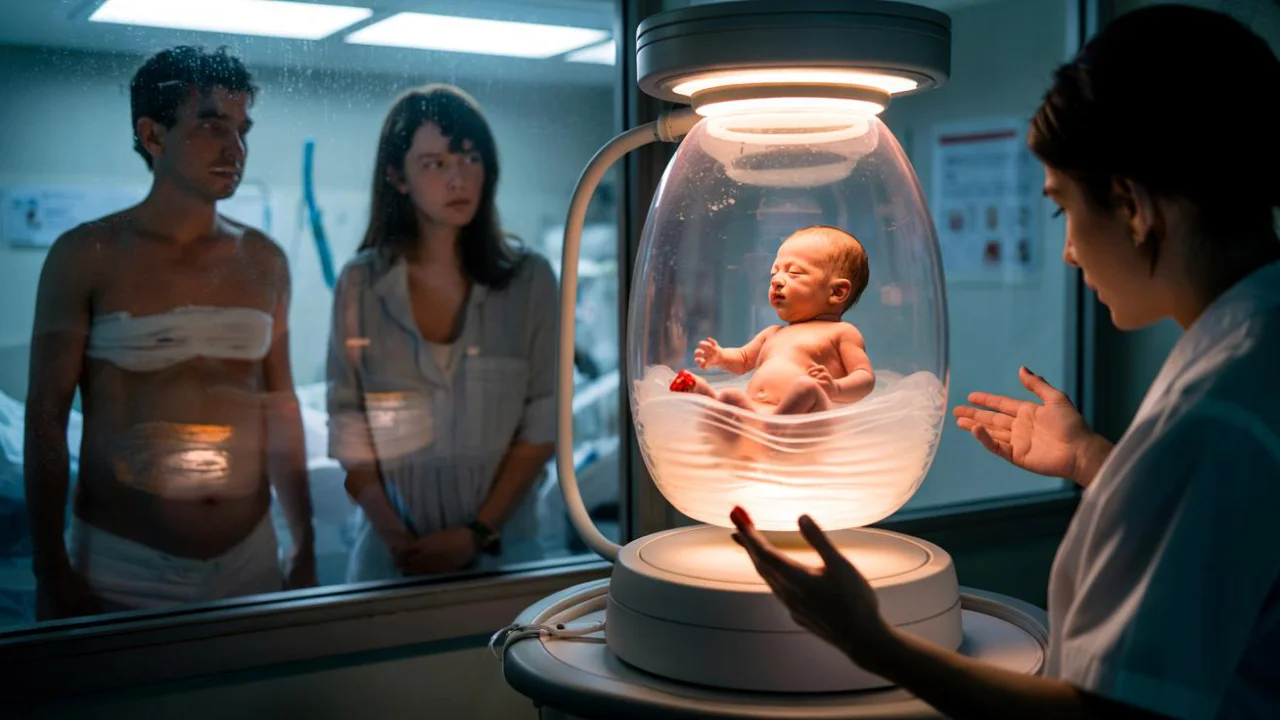
Artificial wombs represent one of the most significant medical breakthroughs on the horizon. These devices, technically called ectogestation systems, could revolutionize how we care for extremely premature babies.
The technology works by mimicking the conditions inside a mother’s womb. Babies float in a warm, sterile fluid while receiving oxygen and nutrients through an artificial umbilical cord. Unlike traditional incubators, artificial wombs protect developing lungs from the harsh environment of air breathing.
Researchers have already achieved remarkable success with animal trials. In 2017, scientists at Children’s Hospital of Philadelphia kept lamb fetuses alive and growing in artificial wombs for four weeks. The lambs developed normally, with their lungs, brains, and other organs maturing as they would inside their mothers.
“We’re not trying to replace the womb,” explains Dr. Emily Rodriguez, a neonatologist who has followed the research closely. “We’re trying to bridge that crucial gap between the safety of the womb and the ability to survive outside it.”
What Artificial Wombs Could Change
The potential impact stretches far beyond individual families. Every year in the United States, about 380,000 babies are born prematurely. Of these, roughly 28,000 arrive before 28 weeks of pregnancy.
Current survival statistics tell a sobering story:
| Gestational Age | Survival Rate | Risk of Complications |
|---|---|---|
| 22-23 weeks | 20-35% | Very High |
| 24-25 weeks | 50-70% | High |
| 26-27 weeks | 85-90% | Moderate |
| 28+ weeks | 95%+ | Lower |
Artificial wombs could dramatically improve these numbers. Key benefits include:
- Reduced lung damage from mechanical ventilation
- Better brain development in controlled conditions
- Lower infection rates in sterile environments
- More natural organ maturation processes
- Decreased need for invasive procedures
The technology might also help babies with severe birth defects that currently have no treatment options. Conditions requiring fetal surgery could be managed more safely outside the mother’s body.
“For families facing the worst-case scenarios, this could mean the difference between bringing a baby home and planning a funeral,” notes Dr. Marcus Thompson, a pediatric surgeon.
The Dark Side of the Debate
But not everyone sees artificial wombs as purely beneficial. Critics worry about a future where pregnancy becomes optional, commercialized, or even socially discouraged.
The phrase “baby factory” appears frequently in online discussions. Some fear that wealthy couples might choose artificial gestation to avoid the inconvenience of pregnancy. Others worry about surrogacy operations using the technology to mass-produce babies for profit.
Religious groups have raised theological questions about interfering with natural pregnancy. Some argue that removing babies from the womb disrupts God’s intended design for human development.
Feminist scholars present conflicting views. Some celebrate the potential freedom from biological constraints. Others worry that artificial wombs could devalue motherhood and the unique experience of pregnancy.
“There’s a risk that society starts viewing natural pregnancy as primitive or unnecessarily risky,” warns bioethicist Dr. Jennifer Walsh. “We could create pressure for women to use artificial wombs even when they don’t want to.”
Insurance and economic concerns add another layer of complexity. Who would pay for artificial womb treatments? Would they become available only to the wealthy? Could insurance companies pressure high-risk mothers to use artificial wombs instead of carrying pregnancies naturally?
Reality Check on the Timeline
Despite the heated debates, human trials remain years away. The first applications will likely focus on the most extreme cases where babies have virtually no chance of survival in traditional NICUs.
Regulatory hurdles are substantial. The FDA will require extensive safety data before approving any artificial womb for human use. Scientists must prove the technology doesn’t harm developing brains, organs, or immune systems.
Technical challenges also persist. Current prototypes can only support development for a few weeks. Extending that timeframe while maintaining perfect sterility and nutrition remains difficult.
Manufacturing costs could initially make the technology prohibitively expensive. Early estimates suggest each artificial womb treatment might cost hundreds of thousands of dollars.
“We’re probably looking at 5-10 years before the first human trials, and another decade before this becomes standard care,” predicts Dr. Rodriguez.
Preparing for an Uncertain Future
As artificial wombs move closer to reality, society needs frameworks for managing their use ethically. Hospitals will need protocols for deciding which babies qualify for the technology. Insurance companies must develop coverage policies. Lawmakers will need to address potential misuse.
Parents like Sarah Chen watch these developments with cautious optimism. She knows artificial wombs might have spared Emma months of painful procedures. But she also treasures the bond they formed during those difficult NICU days.
“Technology should serve families, not replace the human connections that make us who we are,” Sarah reflects. “If artificial wombs can save lives without losing that, then I’m all for them.”
The debate will likely intensify as the technology advances. But for now, in hospitals around the world, tiny babies continue fighting for life in plastic boxes filled with tubes and wires. For them and their families, the promise of a gentler alternative can’t come soon enough.
FAQs
How do artificial wombs actually work?
They use a fluid-filled chamber that mimics the womb environment, providing oxygen and nutrients through an artificial umbilical cord while protecting developing organs.
When will artificial wombs be available for humans?
Experts estimate human trials could begin in 5-10 years, with widespread use potentially another decade away.
Could artificial wombs replace natural pregnancy entirely?
Current research focuses only on extremely premature babies who can’t survive in traditional incubators, not replacing full-term pregnancies.
How much would artificial womb treatment cost?
Early estimates suggest hundreds of thousands of dollars per treatment, though costs would likely decrease as the technology becomes more common.
What are the main safety concerns?
Scientists must ensure the technology doesn’t harm brain development, immune system function, or other critical aspects of fetal growth.
Who would decide which babies get artificial womb treatment?
Medical teams would likely use strict criteria based on gestational age, survival chances, and potential complications, similar to current NICU protocols.


