
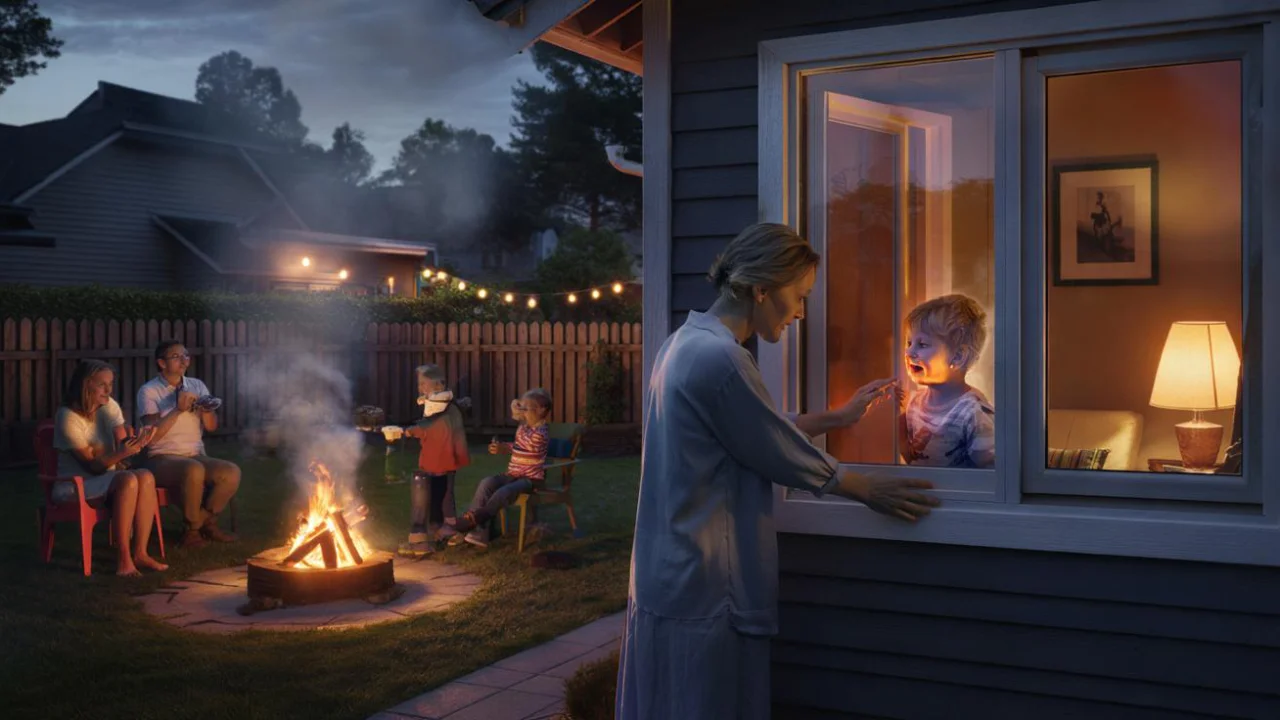
Sarah first noticed it on a Thursday evening in late September. Her neighbor had just installed a sleek new firepit, and the sweet, woodsy smell was drifting through her open bedroom window as she tucked her 6-year-old daughter into bed. “It smells like camping, Mommy,” Emma said with a smile.
By Saturday night, Emma was coughing. By Sunday morning, Sarah had a scratchy throat and her husband was complaining about burning eyes. They blamed it on the changing weather, maybe some seasonal allergies kicking in early.
It took three weeks of the same pattern — cozy evening smoke followed by morning symptoms — before Sarah realized what was happening. That Instagram-worthy backyard scene next door was slowly making her family sick.
The Hidden Truth About Backyard Firepit Poisoning
Walk through any suburban neighborhood on a cool evening and you’ll smell them everywhere. Backyard firepits have exploded in popularity, turning ordinary yards into cozy gathering spots complete with crackling flames and toasted marshmallows.
What most people don’t realize is that backyard firepit poisoning is a real and growing concern among public health experts. That “natural” wood smoke contains the same toxic compounds found in cigarette smoke, just in different concentrations.
“Wood smoke is not the harmless campfire romance people imagine,” explains Dr. Michael Chen, a respiratory health specialist at Portland General Hospital. “It contains over 100 chemical compounds, including formaldehyde, benzene, and acrolein — all known carcinogens.”
The problem isn’t the occasional campfire. It’s the regular, repeated exposure that happens when your neighbor fires up their pit three or four nights a week, and that smoke settles into your yard, your open windows, and ultimately your lungs.
What’s Actually in That “Harmless” Smoke
The science behind backyard firepit poisoning reveals a disturbing reality. Wood smoke contains fine particulate matter (PM2.5) — particles so microscopic they bypass your body’s natural defenses and penetrate deep into your respiratory system.
Here’s what’s really floating into your home when your neighbor lights up:
- PM2.5 particles that lodge in lung tissue and enter the bloodstream
- Carbon monoxide that reduces oxygen levels in your blood
- Volatile organic compounds (VOCs) that irritate eyes and airways
- Polycyclic aromatic hydrocarbons (PAHs) linked to cancer
- Nitrogen oxides that worsen asthma and respiratory conditions
| Toxic Compound | Health Impact | Comparison |
|---|---|---|
| PM2.5 Particles | Lung inflammation, heart disease | Same size as cigarette smoke particles |
| Benzene | Cancer, blood disorders | Also found in gasoline fumes |
| Formaldehyde | Respiratory irritation, cancer risk | Higher levels than many industrial sources |
| Carbon Monoxide | Reduced oxygen, headaches | Can reach dangerous levels in enclosed yards |
“The concentration of toxins in wood smoke can actually exceed what you’d find in cigarette smoke,” notes Dr. Lisa Rodriguez, an environmental health researcher. “The difference is that cigarette smokers choose their exposure. With neighborhood firepits, you’re a passive victim.”
Who Suffers Most From Firepit Smoke Exposure
Backyard firepit poisoning doesn’t affect everyone equally. Certain groups face significantly higher risks from repeated smoke exposure:
Children under 12 are especially vulnerable because their lungs are still developing and they breathe faster than adults, taking in more contaminated air per pound of body weight.
People with asthma or allergies often experience immediate symptoms — coughing, wheezing, and breathing difficulties that can last hours or even days after exposure.
Pregnant women face additional concerns, as some compounds in wood smoke can cross the placental barrier and potentially affect fetal development.
Adults over 65 and anyone with heart conditions are at increased risk because PM2.5 particles can trigger cardiovascular events and worsen existing health problems.
The cruel irony is that the people most affected by backyard firepit poisoning are often the least likely to speak up. Parents don’t want to seem like the “difficult neighbors.” People with health conditions worry about being dismissed as overly sensitive.
Why Nobody Wants to Talk About It
There’s an unspoken social contract around backyard firepits that makes addressing the health risks incredibly awkward. Firepits represent relaxation, family time, and community gathering — all positive things that make any complaint seem petty or antisocial.
“I’ve had patients who suffer real health impacts from neighbor’s firepit smoke, but they’re reluctant to say anything because it feels like complaining about someone’s happiness,” explains Dr. Chen.
The firepit industry hasn’t helped matters. Marketing materials consistently emphasize the “natural” aspect of wood burning while downplaying health risks. Many homeowners genuinely believe that because wood is natural, the smoke must be harmless.
Local regulations are often toothless. While many cities have rules about firepit use, enforcement is rare and complaints are often dismissed as neighbor disputes rather than legitimate health concerns.
Small Changes That Could Make a Big Difference
Addressing backyard firepit poisoning doesn’t require eliminating firepits entirely. Simple modifications could dramatically reduce health impacts:
- Using only seasoned hardwood (never treated lumber or green wood)
- Installing proper wind barriers to direct smoke away from neighboring properties
- Limiting burn times to 2-3 hours maximum
- Checking weather conditions — avoiding use on still nights when smoke settles
- Maintaining proper distance from property lines and neighbor windows
“Most firepit owners aren’t trying to harm anyone,” says Dr. Rodriguez. “They just don’t realize the impact their choices have on surrounding families. Education and consideration could solve most problems.”
The conversation around backyard firepit poisoning is slowly starting to happen. Some communities are updating regulations, requiring permits, or establishing clearer guidelines for residential burning. But real change will likely require more people willing to speak up about the health impacts they’re experiencing.
For families like Sarah’s, the solution was actually simpler than expected. After a honest conversation with her neighbor about Emma’s coughing, they worked out a system — text messages when the firepit was going to be used, so Sarah could close windows and bring laundry inside. Not perfect, but a start toward recognizing that backyard choices affect more than just the people making them.
FAQs
Is wood smoke really as dangerous as cigarette smoke?
Gram for gram, wood smoke contains many of the same toxic compounds as cigarette smoke, including carcinogens and fine particles that penetrate deep into lungs.
How far can firepit smoke travel and still cause health problems?
PM2.5 particles from wood smoke can travel several hundred yards and remain concentrated enough to trigger symptoms in sensitive individuals.
Are gas firepits safer than wood-burning ones?
Yes, gas firepits produce significantly fewer toxic compounds and PM2.5 particles compared to wood-burning firepits, though they’re not completely emission-free.
What should I do if my neighbor’s firepit smoke is affecting my family’s health?
Start with a friendly conversation about the health impacts you’re experiencing. Many people are willing to make adjustments once they understand the problem.
Are there any regulations about backyard firepit use?
Most cities have some regulations about recreational burning, but enforcement varies widely. Check with your local fire department or city hall for specific rules in your area.
Can I measure the air quality impact of my neighbor’s firepit?
Yes, portable air quality monitors can detect PM2.5 levels in real-time, providing concrete evidence of smoke impact on your property.


