
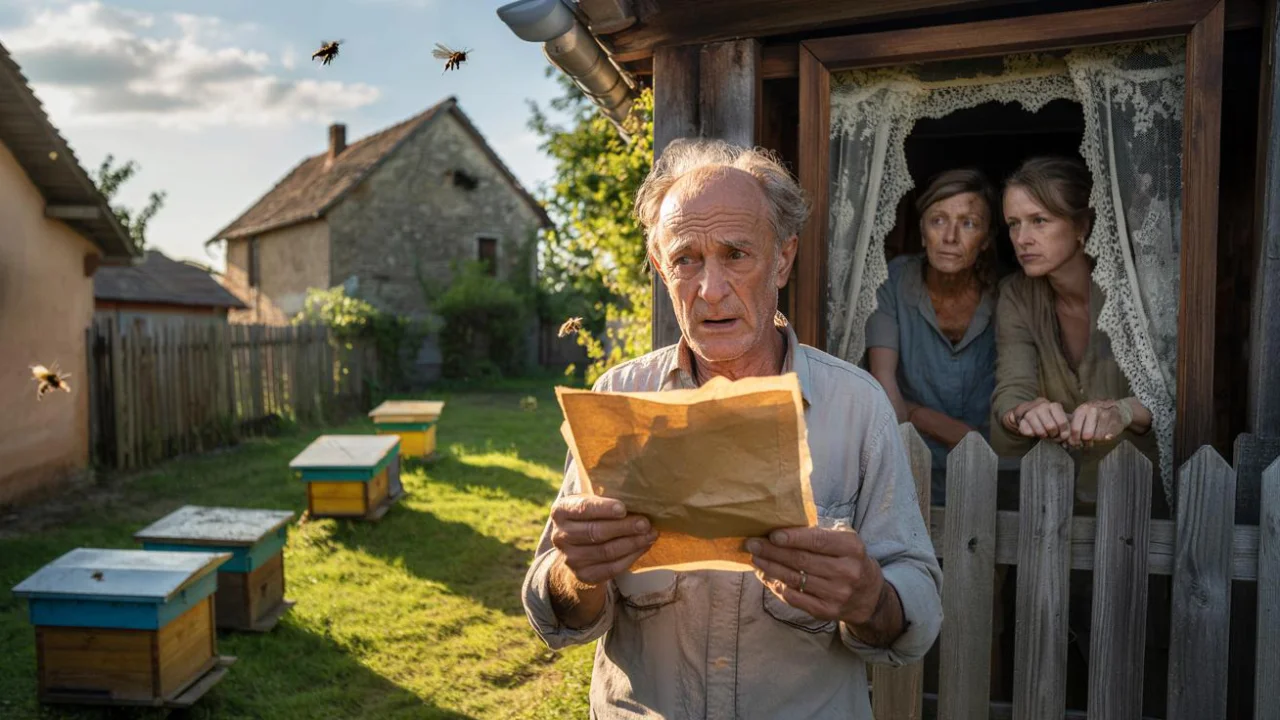
The white envelope looked innocent enough. Jean, 71, picked it up from his kitchen counter Tuesday morning, right next to the jar of golden honey he’d bought from Lucas, the young beekeeper who kept hives in his backyard. Two minutes later, his hands were trembling.
The tax office wanted thousands of euros in back payments and penalties for “undeclared commercial beekeeping activity.” The same ten beehives he’d let a 24-year-old use for free were now the center of a tax investigation that would tear his quiet village apart.
Jean had simply wanted to help a kid starting out. What happened next reveals something ugly about human nature, small-town politics, and how quickly a good deed can become a nightmare.
When Helping Your Neighbor Becomes a Crime
Jean never thought of himself as running a business. The retired mason with a bad knee just loved watching bees work. When Lucas approached him about needing space for his growing colonies, it felt natural to say yes. The hives belonged to Lucas, were registered in Lucas’s name, and all the honey sales went straight to the young man’s struggling beekeeping venture.
Jean provided what any good neighbor would: a patch of land, access to water, and occasional help lifting heavy boxes. He never took a penny.
“I thought I was doing what my father would have done,” Jean told friends after the beehive tax bill arrived. “You help people who are trying to make an honest living.”
But in a village of 900 people, good intentions don’t always stay good for long. The whispers started at the local bread shop. One neighbor complained about the “buzzing.” Another joked loudly about “all that money Jean must be making.” Someone claimed they’d seen crates of honey leaving his property at night.
The truth was simpler and more boring. Lucas loaded his van after work, just like any small business owner picking up inventory. But facts travel slower than gossip in tight-knit communities.
The Real Cost of Village Politics
The beehive tax bill didn’t come from nowhere. Someone filed a formal complaint with the local council, claiming Jean was operating an undeclared commercial enterprise. From there, the report made its way to regional tax authorities.
Here’s what the investigation revealed about Jean’s “business empire”:
| Accusation | Reality |
|---|---|
| Undeclared beekeeping income | Zero income – hives belonged to Lucas |
| Commercial honey sales | All sales handled by registered beekeeper |
| Tax evasion | No taxable activity occurred |
| Business registration required | Simply providing free land use |
The tax demand included:
- €3,200 in alleged back taxes on “bee-related income”
- €1,800 in penalties for late registration
- €900 in administrative fees
- Interest charges dating back two years
Legal experts familiar with rural tax cases say Jean’s situation highlights a growing problem. “Helping neighbors used to be normal,” explains tax attorney Marie Dubois. “Now people worry every favor could trigger an investigation.”
Why This Matters Beyond One Village
Jean’s story isn’t unique. Across Europe, similar cases are emerging as tax authorities crack down on what they perceive as undeclared economic activity. The problem is telling the difference between genuine businesses and people simply being neighborly.
The psychological toll extends far beyond money. Jean’s health deteriorated as stress mounted. Lucas considered shutting down his beekeeping operation entirely. Other villagers began questioning their own informal arrangements – sharing garden space, borrowing tools, helping with harvests.
“The social fabric starts unraveling,” observes rural sociologist Dr. Anne Laurent. “When helping someone might land you in legal trouble, people stop helping.”
The village split into factions. Some supported Jean, organizing fundraisers for his legal defense. Others doubled down, claiming he should have “followed proper procedures” from the start. The local café became a battlefield of whispered accusations and defended loyalties.
Lucas, meanwhile, faced his own dilemma. Should he relocate his hives and abandon the man who’d helped him? Or stay and risk further complications for both of them?
The Deeper Problem With Modern Good Deeds
Jean’s beehive tax bill reveals something troubling about how we treat generosity today. Every informal arrangement now carries potential legal consequences. Every favor could be reframed as unreported income or undeclared business activity.
The case dragged on for eight months. Jean hired a lawyer, spending more on legal fees than the original tax demand. Lucas’s business suffered as uncertainty clouded his future. Village relationships that had been stable for decades cracked under the pressure.
“I just wanted to watch the bees,” Jean said during one particularly difficult week. “I never imagined helping a young person could cause so much pain.”
The resolution, when it finally came, satisfied no one. Tax authorities dropped the commercial activity charges but imposed a smaller fine for “inadequate documentation of land use agreements.” Jean paid €800 to make it go away, even though he’d done nothing wrong.
The precedent worried other villagers. Would sharing a garden plot trigger scrutiny? What about letting someone store equipment in your barn? The informal economy that keeps rural communities functioning suddenly felt dangerous.
FAQs
Can you get taxed for letting someone keep beehives on your property?
Generally no, if you’re not receiving payment or participating in the business. However, tax authorities may investigate if neighbors file complaints.
What should Jean have done differently?
A simple written agreement clarifying the arrangement could have prevented misunderstandings, though it shouldn’t have been legally necessary.
Is this common in rural areas?
Similar cases are increasing as tax enforcement becomes more aggressive and neighbors more willing to report informal arrangements.
What happened to the young beekeeper?
Lucas eventually found new locations for his hives but his business growth slowed significantly due to the uncertainty and stress.
Did the village recover?
The community remains divided, with many residents now hesitant to help neighbors informally for fear of similar tax investigations.
Could this happen anywhere?
Yes, tax authorities across many countries are scrutinizing informal economic arrangements more closely, making even simple neighborly help potentially problematic.


