
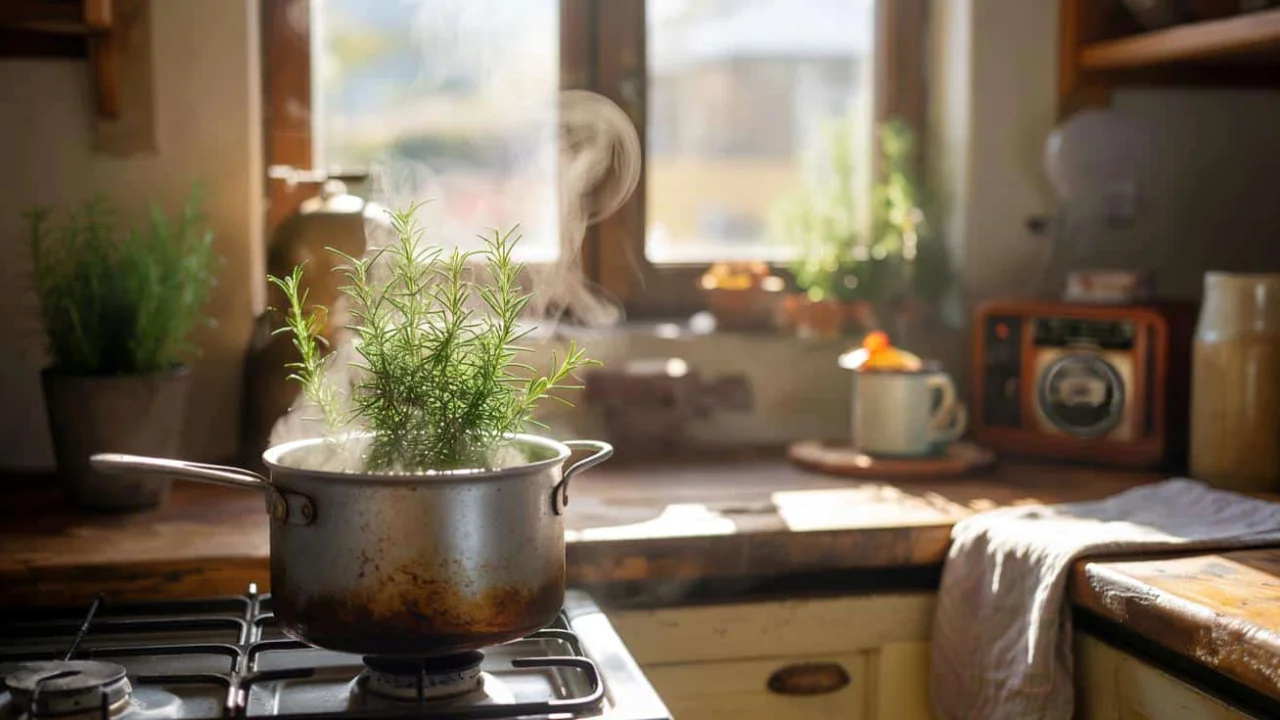
I was nineteen and homesick when I first called my grandmother crying about my cramped studio apartment. The walls felt like they were closing in, the air was stale, and everything smelled like the previous tenant’s cooking disasters. “Honey,” she said in that patient voice, “go buy some rosemary and put it in a pot with water on the stove.” I thought she’d lost her mind, but I was desperate enough to try anything.
Twenty minutes later, my entire world shifted. The heavy, oppressive feeling lifted like morning fog, and suddenly my tiny space felt breathable again. That’s when I understood what my grandmother had been doing all those years in her kitchen—she wasn’t just boiling herbs, she was transforming the very soul of her home.
Boiling rosemary might sound like something your great-aunt would suggest, but this simple practice can revolutionize how your home feels, smells, and even how you feel in it. What started as my grandmother’s weekly ritual has become my go-to solution for everything from stubborn cooking odors to that inexplicable heaviness that sometimes settles in our living spaces.
The science behind why boiling rosemary actually works
When you heat rosemary in water, you’re essentially creating a natural aromatherapy session for your entire home. The heat releases the herb’s essential oils—mainly cineole, camphor, and pinene—which don’t just mask odors like synthetic air fresheners do. Instead, these compounds actually neutralize odor-causing molecules while filling your space with a clean, herbaceous scent.
“Rosemary’s natural oils have antimicrobial properties that can help purify the air,” explains aromatherapist Sarah Chen. “When you boil it, you’re dispersing these beneficial compounds throughout your home in the most gentle, natural way possible.”
Unlike commercial air fresheners that often contain harsh chemicals, boiling rosemary creates a pure, therapeutic atmosphere. The steam carries the essential oils through your home, settling lightly on fabrics and surfaces without leaving residue or overwhelming synthetic fragrances.
The psychological effect is just as powerful. Rosemary has been linked to improved mood, reduced stress, and enhanced mental clarity. There’s something deeply satisfying about the ritual itself—the gentle bubbling, the gradual release of fragrance, the knowledge that you’re nurturing your space with something completely natural.
How to master the art of boiling rosemary
The beauty of this practice lies in its simplicity, but there are ways to maximize its effectiveness. Here’s everything you need to know to transform your home’s atmosphere:
- Use 3-4 fresh sprigs or 2 tablespoons of dried rosemary per medium pot
- Fill the pot with enough water to cover the rosemary completely
- Bring to a boil, then reduce to a gentle simmer
- Let it simmer for 15-30 minutes, adding water as needed
- For stronger scent, lightly crush the sprigs before adding to water
- Keep the pot uncovered to allow maximum steam circulation
| Room Size | Rosemary Amount | Simmer Time | Water Refills Needed |
|---|---|---|---|
| Small (under 200 sq ft) | 2-3 sprigs | 10-15 minutes | 0-1 |
| Medium (200-400 sq ft) | 4-5 sprigs | 20-25 minutes | 1-2 |
| Large (over 400 sq ft) | 6-7 sprigs | 30+ minutes | 2-3 |
Professional home organizer Maria Rodriguez swears by this method: “I tell all my clients to try boiling rosemary before they invest in expensive air purification systems. It’s incredible how this one simple step can make a cluttered room feel instantly more organized and peaceful.”
When boiling rosemary works best
This isn’t just a once-in-a-while trick—boiling rosemary can become your secret weapon for specific situations that every homeowner faces. The timing makes all the difference in maximizing its transformative power.
After cooking strong-smelling foods like fish, curry, or garlic, a pot of simmering rosemary acts like a natural reset button. Instead of opening windows and hoping for the best, you’re actively replacing those lingering odors with something fresh and inviting.
Before hosting guests, this practice creates an instantly welcoming atmosphere without the artificial smell of store-bought air fresheners. Your home will feel lived-in and loved, not like you’ve been frantically spraying chemicals five minutes before people arrive.
During stressful periods or seasonal changes, boiling rosemary can help shift the emotional energy of your space. Home design consultant James Parker notes, “I’ve seen clients’ entire demeanor change when they walk into a room where rosemary has been simmering. It’s like the space is giving them permission to relax.”
The practice is especially powerful in small apartments or homes where cooking smells, pet odors, or general mustiness can feel overwhelming. Unlike fans or air purifiers that just move air around, boiling rosemary actually improves the quality of the air you’re breathing.
Beyond the basics: creative ways to enhance your rosemary ritual
Once you’ve mastered the basic technique, you can customize this practice to match your home’s specific needs and your personal preferences. Some variations can target particular issues or create seasonal atmospheres.
Adding a few drops of lemon juice to your rosemary water creates a bright, clean scent that’s perfect for kitchens and bathrooms. For a more complex aroma, try combining rosemary with other herbs like thyme or sage—just use less of each to avoid overwhelming the space.
During winter months, a stick of cinnamon or a few cloves alongside your rosemary creates a warm, cozy atmosphere that makes your home feel like a refuge from cold weather. In summer, adding fresh mint leaves creates a cooling, refreshing effect.
Wellness coach Emma Thompson suggests making it a mindfulness practice: “Use those fifteen minutes while the rosemary is simmering to tidy up, meditate, or simply sit quietly. You’re not just improving your home’s atmosphere—you’re creating a moment of peace in your day.”
The leftover rosemary water doesn’t have to go to waste either. Once it cools, you can use it to water plants (they’ll love the nutrients), or strain it and keep it in a spray bottle for a quick room refresh between full sessions.
Some people make this a weekly ritual, choosing the same day each week to reset their home’s energy. Others prefer to use it responsively, reaching for the rosemary whenever their space feels like it needs a lift. There’s no wrong way to incorporate this simple practice into your life.
FAQs
How long does the rosemary scent last after boiling?
The fragrance typically lingers for 2-4 hours, with subtle traces remaining in fabrics for up to 24 hours depending on room size and ventilation.
Can I use dried rosemary instead of fresh?
Absolutely! Dried rosemary works just as well, though you might need slightly more to achieve the same intensity of fragrance.
Is it safe to leave rosemary boiling unattended?
Never leave any pot boiling unattended. Always stay nearby and check water levels regularly to prevent the pot from boiling dry.
Will boiling rosemary help with pet odors?
Yes, rosemary’s natural properties help neutralize many household odors, including pet smells, though it works best as part of regular cleaning routines.
How often should I boil rosemary in my home?
This depends on your needs—some people do it weekly as a ritual, others use it as needed for specific situations like after cooking or before guests arrive.
Can people with allergies safely use this method?
Most people tolerate rosemary well, but those with herb allergies or respiratory sensitivities should test with a small amount first and ensure good ventilation.


