
Sarah stares at the checkout screen, her finger hovering over the “Round up for hunger relief” button. Behind her, a line of tired shoppers shuffles impatiently. She’s buying generic cereal and marked-down vegetables, counting every dollar herself. But guilt wins—it always does. She taps “Yes” and adds 73 cents to feed someone hungrier than her.
Walking to her car, she wonders: where do those cents actually go? The charity’s logo gleams from the store window, polished and professional. But something feels off about turning human suffering into a point-of-sale transaction.
She’s not wrong to wonder. The charity industry has become a $450 billion global machine that’s more about making donors feel good than actually solving problems.
When Good Intentions Meet Big Business
The charity industry today looks nothing like the quiet neighbor helping neighbor of generations past. It’s become a sophisticated marketing operation with celebrity spokespeople, luxury galas, and advertising budgets that rival major corporations.
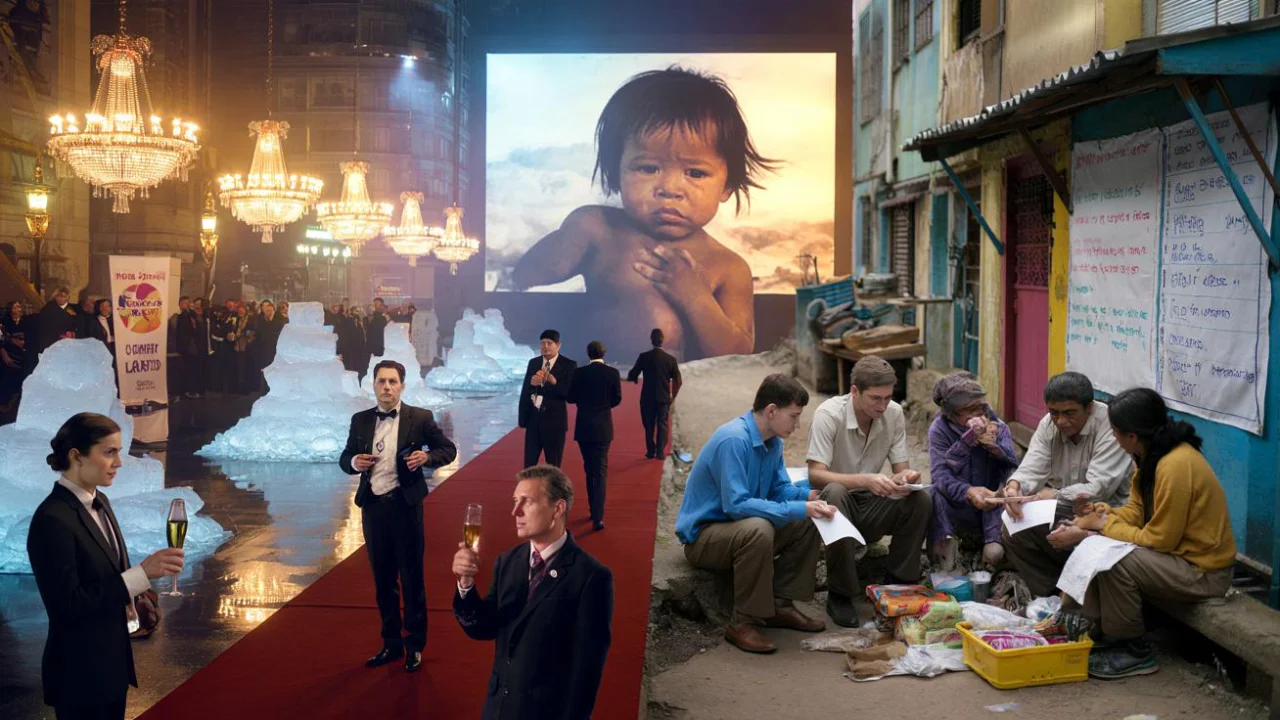
Walk through any wealthy city and you’ll see the transformation. Ice sculptures at $1,000-a-plate dinners “for the children.” Influencers jetting to developing countries for three-day “missions,” posting selfies with local kids. The language is all heart, but the operations are pure business.
“Modern charity has become about making donors feel heroic rather than creating lasting change,” says Maria Rodriguez, who spent 15 years working for international aid organizations. “We’ve built an industry that needs poverty to exist to justify its own existence.”
The numbers tell a troubling story. Many well-known charities spend 30-50% of donations on administration, marketing, and fundraising. Some spend more on their CEO’s salary than they distribute to the communities they claim to help.
The Real Cost of Doing Good
The charity industry operates on a simple formula: emotional manipulation equals donations. Those heart-wrenching TV commercials with starving children aren’t accidents—they’re carefully crafted by the same agencies that sell cars and soft drinks.
Here’s where your “charitable” dollar actually goes at many major organizations:
| Expense Category | Percentage of Donations | What This Means |
|---|---|---|
| Program Services | 60-70% | Money actually helping people |
| Fundraising | 15-25% | Marketing campaigns, events, mail |
| Administration | 10-20% | CEO salaries, offices, consultants |
| Management Fees | 5-10% | Investment management, legal costs |
The most successful charities have learned to weaponize guilt. They’ve discovered that showing people in their worst moments—hungry, sick, desperate—generates more donations than highlighting successful programs or sustainable solutions.
“We call it ‘poverty porn,'” explains David Chen, a former charity marketing director. “The more helpless the subjects look, the more money flows in. It’s ethically questionable, but it pays the bills.”
This approach creates a perverse incentive: charities that actually solve problems lose their most effective fundraising tool. Success means fewer desperate faces for the next campaign.
The Ego Economy of Charitable Giving
The charity industry has mastered the art of ego inflation. Donors aren’t just giving money—they’re becoming “heroes,” “champions,” or “lifesavers.” The language is carefully chosen to make people feel important and morally superior.
Major donors get the full treatment:
- Named buildings and programs
- Exclusive galas with celebrities
- Personal updates from the field
- Tax breaks worth millions
- Social recognition and media coverage
Meanwhile, the actual problems persist. Despite decades of charity work and billions in donations, global poverty rates remain stubbornly high. Many of the children featured in 1980s charity ads would now have grandchildren facing the same issues.
“We’ve created a system where rich people get to feel good about themselves while poor people stay poor,” says economist Dr. Janet Williams. “It’s charity as lifestyle accessory, not genuine social change.”
Who Really Benefits From Your Generosity
The charity industry employs millions of people in well-paying jobs. Executive directors of major charities routinely earn $300,000-500,000 annually. Fundraising consultants command six-figure fees. Marketing agencies build entire practices around charitable campaigns.
This creates a class of professional do-gooders whose livelihoods depend on maintaining the status quo. Real solutions—like addressing root causes of poverty or systemic inequality—would eliminate their jobs.
Consider the water charity sector. Organizations raise hundreds of millions to dig wells in Africa, yet many communities still lack clean water decades later. Why? Because building wells generates better photos and stories than the boring work of training local maintenance crews or addressing government corruption.
“The incentives are all wrong,” explains former aid worker Michael Thompson. “We reward charities for how much money they raise, not how many problems they solve. It’s like paying doctors for how many sick patients they see instead of how many they cure.”
The People Left Behind
While the charity industry thrives, the world’s poorest people see minimal improvement in their daily lives. Many live in what researchers call “aid orphan” communities—too remote or difficult for charities to access, lacking the photogenic appeal of disaster zones.
The most vulnerable populations often receive the least help:
- Elderly people in isolated rural areas
- People with disabilities who can’t participate in photo ops
- Communities affected by chronic, unsexy problems
- Anyone whose story doesn’t fit neat fundraising narratives
The charity industry’s obsession with measurable outcomes—”We fed 10,000 children!”—leads to short-term interventions that look good on paper but create no lasting change. It’s easier to distribute food than build sustainable agriculture. Simpler to build schools than train teachers or develop local economies.
Real change is messy, slow, and hard to photograph. It doesn’t generate compelling fundraising materials or satisfying donor reports. So it rarely gets funded.
Breaking the Cycle
Not all charitable work falls into these traps. The most effective organizations focus on long-term solutions, work directly with communities, and spend minimal money on marketing and administration.
Before donating, ask these questions:
- What percentage goes to actual programs?
- How much does the CEO earn?
- Can they show measurable, long-term impact?
- Do they work with local communities as partners?
- Are their programs designed to eventually become unnecessary?
The charity industry will continue exploiting guilt and ego as long as donors reward emotional manipulation over effective solutions. Real change starts with demanding better from the organizations asking for our money.
FAQs
How can I tell if a charity is legitimate?
Check their financial reports on sites like Charity Navigator or GuideStar. Look for organizations that spend at least 70% on programs and have transparent leadership.
Why do so many charities focus on disasters instead of long-term problems?
Disasters generate immediate emotional responses and media attention, making fundraising easier. Chronic poverty doesn’t create the same urgency for donors.
Are all large charities corrupt?
Not corrupt, but many are inefficient by design. The system rewards fundraising over problem-solving, creating perverse incentives even among well-meaning organizations.
What’s the alternative to traditional charity?
Look for organizations that work on systemic change, support local leadership, and focus on making themselves unnecessary rather than perpetuating dependency.
Should I stop donating altogether?
No, but be more strategic. Research organizations thoroughly, ask hard questions, and consider supporting smaller, local groups that work directly with communities.
How much should charities spend on administration?
While there’s no perfect number, be wary of organizations spending more than 15-20% on administration and fundraising combined. The best charities often operate much more efficiently.


