
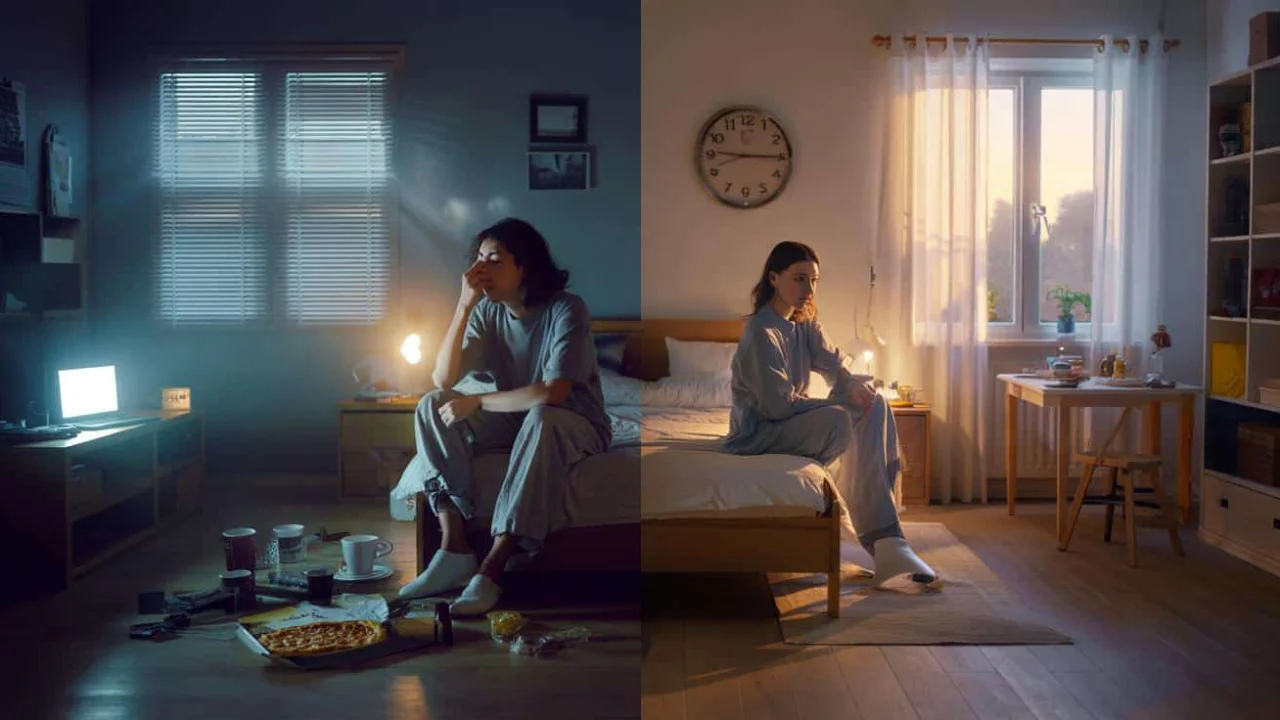
Sarah checked her phone: 2:47 AM. Again. She’d been lying in bed for hours, mind racing despite her exhausted body. Yesterday she woke at 11, grabbed coffee at 2 PM instead of breakfast, and worked until midnight. The day before? Up at 7, skipped lunch entirely, crashed at 9 PM only to wake at 3 AM wide awake.
“I have all the flexibility in the world,” she thought, staring at the ceiling. “So why do I feel like garbage?”
Sarah’s story isn’t unique. Millions of people are discovering that when their days lose rhythm, their bodies rebel in ways they never expected.
Your Internal Clock Is Having a Meltdown
What Sarah was experiencing is called circadian rhythm disruption, and it’s more serious than just feeling “off schedule.” Your circadian rhythm is your body’s internal 24-hour clock, controlling everything from hormone release to body temperature to digestion.
When you wake up at wildly different times, eat meals randomly, and expose yourself to bright screens at midnight, you’re essentially jamming the signals your brain uses to coordinate your entire biological system.
“Think of your circadian rhythm like a conductor trying to keep an orchestra in sync,” explains Dr. Matthew Walker, sleep researcher. “When the conductor can’t predict when each section should play, the whole symphony falls apart.”
The result? You feel tired when you should be alert, hungry at midnight, and wide awake when you desperately need sleep. Your body temperature doesn’t drop properly at night, your stress hormone cortisol spikes at random times, and your digestive system never knows when to gear up or wind down.
The Hidden Costs of Living Without Daily Anchors
Circadian rhythm disruption doesn’t just make you tired. Research shows it creates a cascade of problems that affect your entire well-being:
| Body System | Impact of Disrupted Rhythm |
|---|---|
| Sleep Quality | Fragmented sleep, frequent night wakings |
| Mental Focus | Brain fog, difficulty concentrating |
| Metabolism | Irregular hunger, poor blood sugar control |
| Mood Regulation | Increased anxiety, emotional volatility |
| Immune Function | Higher susceptibility to illness |
| Digestive Health | Bloating, irregular bowel movements |
A 2022 study of remote workers found that those without consistent daily schedules were 40% more likely to report feeling “chronically exhausted” even when getting adequate sleep hours. The problem wasn’t sleep quantity—it was the unpredictability of their daily patterns.
“Your body is constantly trying to anticipate what comes next,” notes circadian researcher Dr. Satchin Panda. “When it can’t predict, it stays in a state of biological uncertainty, which is exhausting.”
The most common signs you’re experiencing circadian rhythm disruption include:
- Feeling tired despite getting enough sleep
- Energy crashes at unexpected times
- Difficulty falling asleep or staying asleep
- Eating at irregular times or loss of appetite
- Mood swings and increased irritability
- Digestive issues like bloating or irregular bowel movements
- Difficulty concentrating or “brain fog”
Who’s Really at Risk and Why It Matters Now
While shift workers have always dealt with circadian disruption, the rise of flexible work has created a new population at risk. Remote workers, freelancers, students, and anyone without fixed schedules can easily slip into irregular patterns without realizing it.
Parents juggling childcare with work-from-home schedules are particularly vulnerable. “I thought I was being efficient by working whenever I had free time,” says Marcus, a father of two who started freelance writing during the pandemic. “But I’d work at 6 AM one day, 11 PM the next. My body never knew what was happening.”
The consequences extend beyond personal discomfort. Research shows that circadian rhythm disruption is linked to:
- Increased risk of depression and anxiety disorders
- Higher likelihood of metabolic disorders and weight gain
- Weakened immune system function
- Reduced cognitive performance and decision-making ability
- Greater risk of cardiovascular problems
Simple Ways to Restore Your Body’s Natural Beat
The good news? You don’t need to become a scheduling robot to fix this. Your body just needs a few reliable anchors throughout the day to reset its internal clock.
Start with these three non-negotiable daily anchors:
- Consistent wake time: Pick a time and stick to it within 30 minutes, even on weekends
- Morning light exposure: Get outside or near a bright window within an hour of waking
- Regular meal timing: Eat your first meal around the same time each day
“You don’t need a perfect schedule,” emphasizes sleep specialist Dr. Rebecca Robbins. “You just need predictable signals that help your brain know what time of day it is.”
Other rhythm-supporting habits include:
- Dimming lights 2-3 hours before bedtime
- Avoiding large meals within 3 hours of sleep
- Creating a consistent wind-down routine
- Limiting screen time in the evening
- Taking short walks during natural daylight hours
The key is consistency over perfection. Even maintaining just your wake time and first meal timing can significantly improve how your body manages energy throughout the day.
Remember, it typically takes 1-2 weeks for your circadian rhythm to adjust to new patterns. Be patient with yourself as your body relearns its natural rhythm. The payoff—steady energy, better sleep, improved mood—is worth the initial effort to establish these daily anchors.
FAQs
How long does it take to reset my circadian rhythm?
Most people notice improvements within 3-7 days of consistent daily anchors, with full adjustment taking 1-2 weeks.
Can I still have flexible work hours and maintain good circadian health?
Yes, but maintain consistent wake times and meal times even if your work schedule varies throughout the day.
What if I’m naturally a night owl—should I force myself to wake early?
Work with your natural tendencies but maintain consistency. A night owl can wake at 9 AM every day rather than forcing a 6 AM schedule.
Do weekends ruin my circadian rhythm progress?
Sleeping in occasionally won’t destroy your progress, but try to stay within 1-2 hours of your regular wake time to maintain your rhythm.
Can light therapy help with circadian rhythm disruption?
Yes, bright light exposure in the morning and avoiding bright lights at night can significantly help reset your internal clock.
What’s the biggest mistake people make when trying to fix their sleep schedule?
Trying to change everything at once rather than focusing on just 2-3 consistent daily anchors first.


